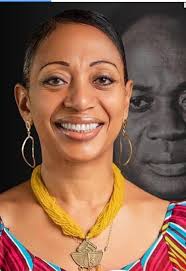

ACCRA — On the 116th anniversary of his birth, Samia Nkrumah, daughter of Ghana’s founding president Dr. Kwame Nkrumah, has reignited long-standing conspiracy theories about her father’s mysterious death, stating it’s “very possible” he was poisoned during his exile in Guinea. In an exclusive interview with The Break Down on September 6, 2025, Samia addressed the persistent whispers that have shadowed Nkrumah’s legacy for over five decades, pointing to the sudden death of his trusted cook and her father’s own haunting premonition as key indicators.
Nkrumah, who led Ghana to independence in 1957 and championed Pan-Africanism through the Organization of African Unity, was overthrown in a 1966 military coup backed by Western interests. He spent his final years in exile in Conakry, Guinea, under the protection of President Sékou Touré, where he served as honorary co-president. Officially, Nkrumah died on April 27, 1972, at age 62 from prostate cancer in Bucharest, Romania, after months of deteriorating health marked by unexplained weight loss and stomach issues. No family members were at his bedside, and his body was embalmed and held in Guinea for nearly two years amid diplomatic wrangling before repatriation to Ghana in 1974.
But suspicions of foul play have endured. Samia, the eldest daughter and former chairperson of the Convention People’s Party (CPP)—Ghana’s oldest political outfit—recounted how her father, after a hospital discharge in Guinea, confided to her mother: “I don’t think I’m going to live long because too much lead has gone into my body and it’s possible that it will eventually poison me.” She linked this to the abrupt death of Nkrumah’s loyal chef, Mr. Amoah, who had accompanied him from Ghana and ensured his meals were secure. “It’s very possible that he was poisoned because his trusted cook, Mr. Amoah, who had traveled with him to Guinea, died suddenly,” Samia said, suggesting the incident opened the door for potential tampering. Amoah’s demise fueled rumors that subsequent cooks, possibly influenced by foreign agents, compromised Nkrumah’s food—echoing broader claims of CIA involvement in his overthrow, though never substantiated.
These revelations come amid heightened tributes to Nkrumah on Founder’s Day, declared a public holiday today by the Ministry of the Interior. Celebrations at his birthplace in Nkroful, Western Region, drew ministers like Emmanuel Armah-Kofi Buah, who decried galamsey (illegal mining) as a betrayal of Nkrumah’s environmental vision, linking it to health crises like heavy metal contamination in newborns. Samia, who fled to Egypt with her family post-coup at age 6, has long advocated for her father’s ideals, founding the Africa Must Unite initiative. At NkrumahFest 2025, she shared another poignant memory: Nkrumah’s phone call from China during the coup, urging his children, “Do not be afraid,” as a call to perpetuate his Pan-African legacy.
The poisoning narrative isn’t new. Nkrumah’s editorial assistant, June Milne, voiced strong suspicions in a 2024 interview, claiming, “He was a fit man, and I think he was helped on his way… I have a strong suspicion that Nkrumah was poisoned in the end in a slow, nasty sort of way.” Milne pointed to cooks possibly tied to the U.S. Embassy in Conakry and Nkrumah’s isolation from trusted aides. Declassified documents hint at U.S. efforts to destabilize his regime, including economic sabotage, but no direct evidence of assassination has emerged. Samia acknowledged multiple factors in her interview, blending cancer with possible toxins like lead from environmental exposure or deliberate acts.
This disclosure arrives as Ghana grapples with Nkrumah’s polarizing legacy. While hailed as the BBC’s African of the Millennium in 1999, critics like her brother Sekou have debated his “dictatorial” tendencies, a charge Samia refutes by citing parliamentary processes. Under President John Dramani Mahama‘s “Reset Ghana” agenda, efforts to restore Nkrumah’s honors—like reinstating Founder’s Day—signal a revival, but challenges persist: The CPP remains fragmented, much like warnings from NPP elders about internal strife mirroring the party’s post-Nkrumah decline.