
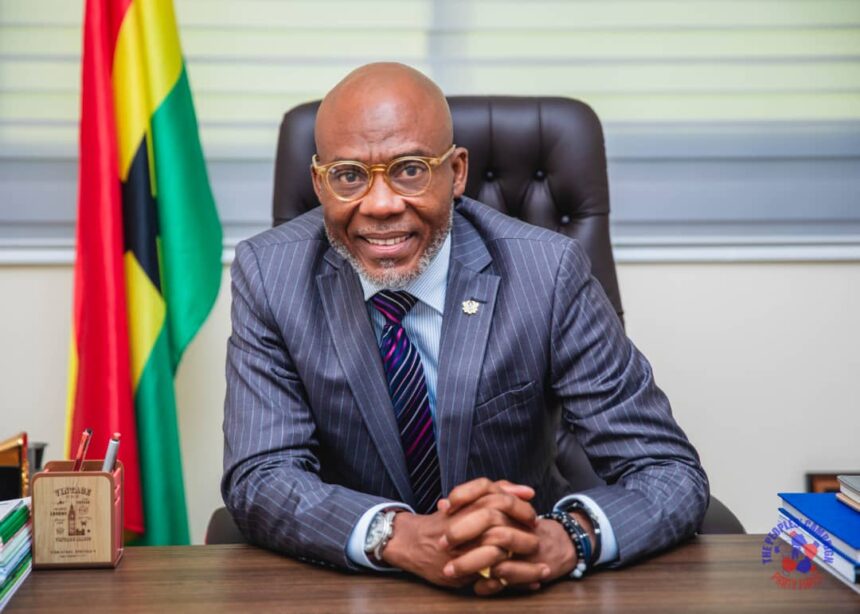

Accra, Ghana, Iddrisu Musah Superior, a well known political activist and former Tamale Metropolitan Chief Executive, has stirred debate within the New Patriotic Party (NPP) with a sharply worded statement on who he believes should be the party’s flagbearer for the 2028 general election.
Musah Superior, who has been active in NPP politics for decades and once served as Deputy Chief Executive Officer of the Forestry Commission, took aim at an unnamed rival in what many observers say mirrors recent comments by outspoken politician Kennedy Agyapong.
In a fiery release that has since gone viral on social media, Musah Superior set up a string of contrasts between two figures in the party. He wrote, “You are condescending, he is humble. You brag, he conceals the good things he does. You are irritatingly loud, he is calm.” The list went on, driving home his point that one leader talks too much while the other thinks before speaking.
He continued, “You become angry when you are criticised. He takes criticisms in good faith. You are close minded, he is tolerant.” In the same breath, he accused the unnamed rival of claiming “ownership” of the party, while praising his preferred candidate for quiet hard work and loyalty.
To some senior party members, the description feels familiar. Calmness under pressure, humility in victory, tolerance of criticism, and quiet confidence were traits often associated with former President John Agyekum Kufuor, under whose leadership the NPP won power by appealing not only to its base but also to floating voters and swing regions.
Kufuor was known for measured speech and restraint, even in moments of provocation. He rarely fought critics head on, choosing instead to project reassurance and stability. Party watchers say the leadership style Musah Superior praises reflects that same tradition, one many believe the NPP needs to reconnect with as it prepares for a tough electoral contest.
Musah Superior said the person he supports is not a first time contender, but someone making a second run with “suitability rooted in history.” He contrasted this with what he called “inexperience in political governance.” He added that his preferred choice “consoles us in our troubled times,” unlike the other who, he claimed, has “hurt us on so many occasions… in unprintable words I cannot repeat.”
The language and pattern of contrast have not gone unnoticed among political watchers. Some social activists believe Musah Superior’s message is aimed at Mr Kennedy Agyapong, the firebrand politician known for blunt critique and loud public interventions. Mr Agyapong is a veteran lawmaker with a reputation for fiery rhetoric both in and outside Parliament.
Musah Superior made his preference clear. “He is the one we want to be our 2028 flagbearer. He is the most suitable to be our President.” He added that delegates would reward loyalty, hard work, determination, and “sense of purpose” when they vote on 31 January, 2026.
Political analysts say the statement signals rising intra party tensions within the NPP, as contenders position themselves early for 2028. One activist told the Daily Graphic that the strong language reflects deeper frustration among some party members with the tone and posture of certain leaders, especially at a time when the party needs to rebuild trust with the wider electorate.
Musah Superior has been no stranger to internal party debates. In past years, he publicly criticised the NPP’s performance in Parliament and its internal organisation, describing parts of the party as ineffective in holding government to account.
At the same time, he has maintained a record of grassroots involvement and party activism stretching back many years, including service at the local level in Tamale and roles in national party strategy.
As the NPP prepares for a crucial elective process, Musah Superior’s comments are expected to add fuel to discussions on leadership style, unity, and whether a return to the calm, reassuring politics associated with the Kufuor era is what the party needs to regain its footing in the next election cycle