
The Minority in Parliament has renewed calls for the resignation of the Minister of Natural Resources Emmanuel Armah-Kofi Buah over what it describes as a major policy failure surrounding the controversial lithium agreement that was recently withdrawn from Parliament.
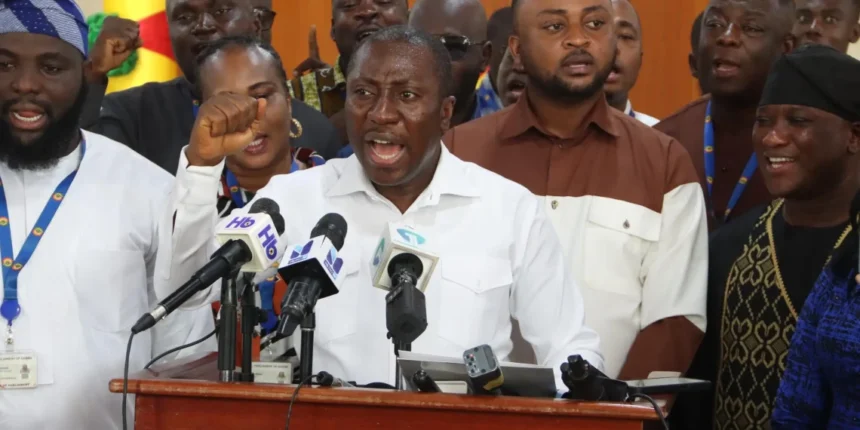
Addressing journalists at a press conference on Monday, Minority Leader Alexander Afenyo-Markin questioned whether adequate consultations were undertaken before the lithium deal was defended on the floor of Parliament.
He challenged the conduct of the sector minister and government representatives, asking whether they were aware at the time that further consultations were required and whether the agreement was transparent enough to justify the strong defense mounted against the Minority.
Mr. Afenyo-Markin further questioned whether the lithium agreement had genuinely been communicated to the Ghanaian people, particularly before civil society organisations joined calls for broader scrutiny.
He recalled that the Minority consistently raised concerns over the reduction in royalties under the lithium deal from 10 percent to 5 percent, warning that the move could result in significant revenue losses to the state. According to him, those concerns were not only dismissed but vigorously defended by the minister responsible.
“The Minority interrogated the reduction in royalties and carried the questions further regarding the losses and the lack of transparency in the entire agreement,” he stated.
He argued that the subsequent withdrawal of the lithium agreement by the same minister who defended it amounts to an admission of error and exposes what he described as “serious mischief” in the policy process.
Mr. Afenyo-Markin insisted that the development represents a clear policy failure for which the Minister of Natural Resources must take responsibility, stressing that ministers cannot evade accountability when decisions of such national importance are mishandled.
The Minority maintains that the controversy surrounding the lithium deal goes beyond parliamentary debate and strikes at the core of transparency, accountability, and the protection of Ghana’s natural resource interests.
Source: happyghana.com