
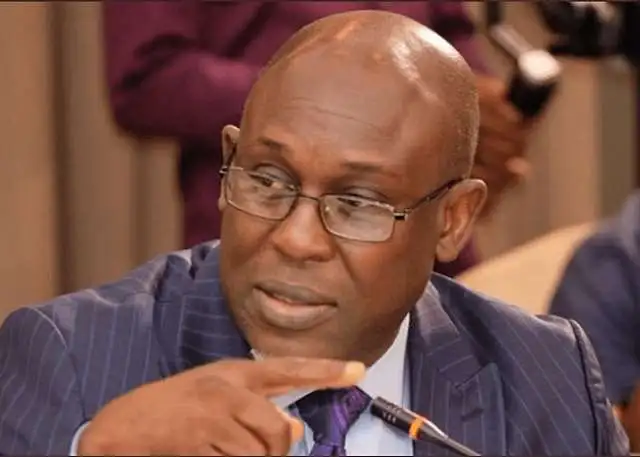

ACCRA — Vice President of think tank IMANI Africa, Kofi Bentil, has endorsed former Chief Justice Gertrude Torkornoo‘s legal challenge against her removal from the Supreme Court, calling it both “legitimate” and essential for clarifying ambiguities in Ghana’s constitution. Bentil’s comments come amid heated debates over the boundaries of presidential power in judicial appointments and removals, following President John Dramani Mahama‘s controversial decision to oust Torkornoo on September 1, 2025.
Torkornoo’s lawsuit, filed at the High Court, specifically questions whether her dismissal as Chief Justice automatically strips her of her position as a Supreme Court Justice. She argues that the president lacks the constitutional authority to remove her from the bench entirely, asserting that the process conflates the two roles in violation of judicial independence. “The court must make a determination on whether removal of a Chief Justice is the same as removal of a Supreme Court Justice,” Bentil stated, emphasizing the need for judicial clarity to prevent future disputes. As a prominent lawyer and vocal critic of governance issues, Bentil urged that Torkornoo be allowed to “exhaust all processes,” framing her action as a safeguard for the rule of law rather than political maneuvering.
The saga traces back to Mahama’s inauguration in January 2025, after his National Democratic Congress (NDC) swept the December 2024 elections, ending the New Patriotic Party’s (NPP) eight-year rule. Torkornoo, appointed Chief Justice by former President Nana Akufo-Addo in June 2023, faced immediate scrutiny from the new administration. In May 2025, Mahama initiated removal proceedings based on a petition alleging misconduct, including claims of procedural irregularities in court administration and bias in case assignments. A constitutional committee reviewed the allegations, recommending her dismissal—a move Bentil previously defended as adhering to due process and not a “witch-hunt.”
“Removal of the Chief Justice is not a witch-hunt; it’s a constitutional process,” Bentil had said in early September, dismissing opposition claims of vendetta. Yet, his support for Torkornoo’s challenge highlights a nuanced stance: While the initial removal followed protocol, unresolved questions about its scope demand court intervention. This duality reflects broader concerns in Ghana’s legal community about judicial autonomy amid political transitions, especially in a democracy ranked highly in Africa but facing critiques over elite capture, as noted by former Nigerian President Olusegun Obasanjo at a recent Accra summit.
Torkornoo’s tenure as the second female Chief Justice was marked by reforms, including digital court systems and efforts to clear case backlogs, but critics accused her of favoritism toward the previous NPP government. Her removal paved the way for Justice Sophia Akuffo, a Mahama appointee, to assume the role on an interim basis, with a permanent successor expected soon. The lawsuit could set a precedent, potentially influencing how future administrations handle judicial shake-ups in a country where the judiciary has often been a battleground for partisan fights.
Implications for Judicial Independence and Governance
Bentil’s backing adds weight to calls for constitutional clarity, aligning with IMANI Africa’s advocacy for transparent institutions. “This challenge is necessary to clarify the law,” he reiterated, warning that ambiguity could erode public trust in the judiciary. Legal experts agree: A ruling could delineate the president’s powers under Articles 144 and 146 of the 1992 Constitution, which outline appointment and removal procedures for justices.
A prolonged legal battle could strain judicial resources, but Bentil insists it’s a worthy pursuit: “Let the courts decide; that’s the essence of our democracy.” The High Court is set to hear preliminary arguments next week, with outcomes likely to reverberate through Ghana’s political and legal spheres.