

Power has a strange habit. When politicians are outside government, they shout about virtue, warn about waste, and promise modest leadership. They lecture everyone about probity and accountability. Then power arrives and the language quietly changes.
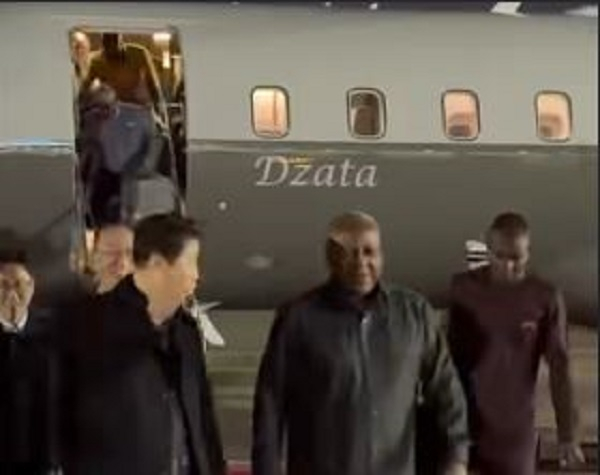
That uncomfortable reality sits at the centre of the growing storm surrounding President John Dramani Mahama and his use of a private jet owned by his brother, businessman Ibrahim Mahama. At first glance the matter appears simple. Government communicators say the president used his brother’s aircraft for some official travel because the state’s Falcon 900 presidential jet is reportedly undergoing major repairs abroad. They insist the arrangement saves the taxpayer money. No charter fees. No expensive invoices.
It sounds neat. Almost clever. But politics is rarely that tidy. This controversy is not just about a jet. It is about memory, influence, and political consistency. It also exposes an old Ghanaian story, the endless battles over presidential aircraft.
Ghana’s history with presidential jets has always been noisy. Every government that has touched the issue has felt the heat. The story stretches back to 1962 when Kwame Nkrumah acquired the country’s first presidential aircraft, a DH125 jet. Even then critics attacked the purchase. They argued that a young socialist republic preaching sacrifice should not spend scarce resources on a luxury aircraft for its leader. Yet the aircraft remained in use and established the precedent that the presidency required specialised aviation support.
The controversy never truly disappeared. During the military era of Ignatius Kutu Acheampong the government operated the Fokker 28. Over time critics raised safety concerns about the ageing aircraft. Later, in 1998, the government of Jerry John Rawlings acquired a Gulfstream GIII. The purchase generated criticism because of questions about transparency and parliamentary oversight. When John Agyekum Kufuor assumed office in 2001, he initially refused to use that aircraft due to the political controversy surrounding it.
Presidential Jet Use Debate Ana…
But the most revealing chapter arrived in 2008. That year the Kufuor administration ordered a Falcon 900 EX presidential jet for Ghana. The opposition at the time was the National Democratic Congress. Their criticism was fierce and relentless. They called the purchase wasteful, extravagant, and insensitive to the struggles of ordinary citizens. The moral language was loud and clear. Leaders, they argued, must show restraint.
Then politics turned full circle. When the aircraft was finally delivered in 2010 under the administration of John Evans Atta Mills, the same political tradition that had condemned the purchase embraced it with ceremony and pride.
Presidential Jet Use Debate Ana…
The story did not end there. Years later another fierce debate erupted during the presidency of Nana Akufo-Addo. When his government relied on long range charter aircraft for international travel, critics within the NDC erupted again. Among the loudest voices was Samuel Okudzeto Ablakwa, who repeatedly described the travel arrangements as offensive and wasteful.
Fast forward to today. President Mahama now travels on a private aircraft owned by his brother. The explanation from government communicators is that the arrangement costs the taxpayer nothing. But aircraft do not fly on goodwill. Flying a modern long range business jet is extremely expensive. Fuel alone for a long intercontinental journey can exceed sixty thousand dollars per leg. Add crew salaries, insurance, landing fees, navigation charges, and maintenance reserves and the cost quickly climbs.
Presidential Jet Use Debate Ana…
If the state is not paying those bills, someone else is. That someone is Ibrahim Mahama. And this is where the issue becomes larger than aviation logistics. Ibrahim Mahama is not simply a brother lending his aircraft. He is one of Ghana’s most powerful businessmen with interests in sectors deeply connected to government policy, particularly mining and heavy industry. His presence around the corridors of power has also become increasingly visible. Though he holds no official position, he appears frequently at major national events and state functions.
In politics, proximity to power is rarely neutral. When a businessman with significant economic interests effectively underwrites presidential travel, even temporarily, questions naturally follow. Ghana’s Constitution warns public officials against placing themselves in situations where personal relationships may conflict with official duties.
Presidential Jet Use Debate Ana…
The issue is not only whether improper influence occurs. The issue is whether the public believes it might.
Supporters of the president dismiss these concerns as political exaggeration. They argue that family members helping each other should not automatically be treated as corruption. They also point out that the Falcon 900 aircraft reportedly requires major repairs and cannot currently handle long distance missions. A head of state must travel. Diplomacy does not pause because a jet is grounded.
Yet the defence leaves deeper questions hanging in the air. One of them is security. Aircraft designed for presidential transport are more than vehicles. They function as mobile command centres. Military communications systems allow the president to remain connected to national security networks while airborne. Private jets operate under different technological conditions. Many rely on commercial satellite communication systems that security researchers say may leave transmissions vulnerable to interception if not properly encrypted.
Presidential Jet Use Debate Ana…
Even a small vulnerability matters when the passenger is the Commander in Chief.
Another puzzle concerns the role of the Ghana Armed Forces. The Air Force holds the formal mandate to transport and protect the president, and its communication squadron exists precisely to manage the security protocols around presidential travel. Yet the military leadership has offered little public explanation about how a privately owned aircraft fits into those arrangements. Silence in national security matters can sometimes signal caution. At other times it signals discomfort.
Beyond the technical questions lies the issue of symbolism. A presidential aircraft represents more than transport. It is a floating symbol of the state. When a head of state arrives in another country aboard a plane owned by a private individual, even a family member, the symbolism becomes complicated. It quietly raises questions about the distance between private wealth and public authority.
International history offers warnings. In South Africa, aircraft linked to the powerful Gupta business family became part of the wider scandal known as state capture, a crisis that deeply damaged public trust in government institutions. Ghana’s situation is clearly different, yet the lesson remains relevant. When private wealth moves too close to the machinery of state power, suspicion inevitably follows.
Perhaps the most striking feature of the current controversy is the sudden quiet from individuals who once dominated similar debates. Political memory in Ghana may be short, but the public record remains clear. The same voices that once condemned presidential travel as extravagant now defend an arrangement in which a private businessman absorbs aviation costs that could easily run into millions of dollars.
For many citizens the issue therefore goes beyond aircraft. It touches credibility. When politicians preach restraint in opposition but practise convenience in government, the public notices. When yesterday’s critics become today’s defenders, the public remembers.
Supporters of the government insist the controversy is exaggerated and politically motivated. They point out that every administration in Ghana’s history has faced disputes over presidential aviation. That observation is correct. But it is precisely why the present moment matters. Presidential aircraft in Ghana have never been just machines. They have always been symbols of power, accountability, and political honesty.
Today the jet carrying President Mahama may travel thousands of miles across continents. Yet the questions surrounding it remain firmly grounded at home.