
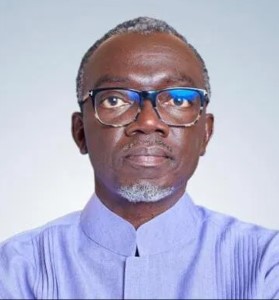

Douglas Boateng, an adjunct professor of Industrialisation and Value Chain Development at the University of Mines and Technology, has urged Ghana to adopt long-term national planning beyond electoral cycles if it hopes to achieve meaningful industrialisation.
Speaking on the Asaase Breakfast Show on Thursday (5 March), Prof Boateng said Ghana’s continued reliance on exporting raw materials remains the biggest barrier to economic transformation.
According to him, although the country gained political independence in 1957, its economic emancipation remains incomplete.
“We like to ship out most of our raw materials which get converted outside and come back to us at a premium,” he said.
He stressed that Ghana possesses both the natural resources and human capital to industrialise but lacks long-term planning.
“You cannot industrialise if you think in four-year cycles,” Prof Boateng said. “Industrialisation requires thinking five, ten, even fifteen years ahead.”
He noted that countries such as China, South Korea, Singapore and the United States built strong industrial economies by sustaining policies across political administrations.
The professor argued that Ghana must prioritise value addition across its resource sectors, including gold, cocoa and coconut.
“I don’t see why we cannot refine gold in Ghana or produce jewellery locally,” he said.
Prof Boateng emphasised that industrialisation should not be limited to manufacturing alone but should extend to sectors such as tourism, healthcare, education and financial services.
He added that Ghana’s strategic location in West Africa positions it to become a regional hub for services if the country adopts a broader industrial vision.
“The best of Ghana is still ahead of us,” he said. “But we must think strategically and generationally about development.”
Source: asaaseradio.com