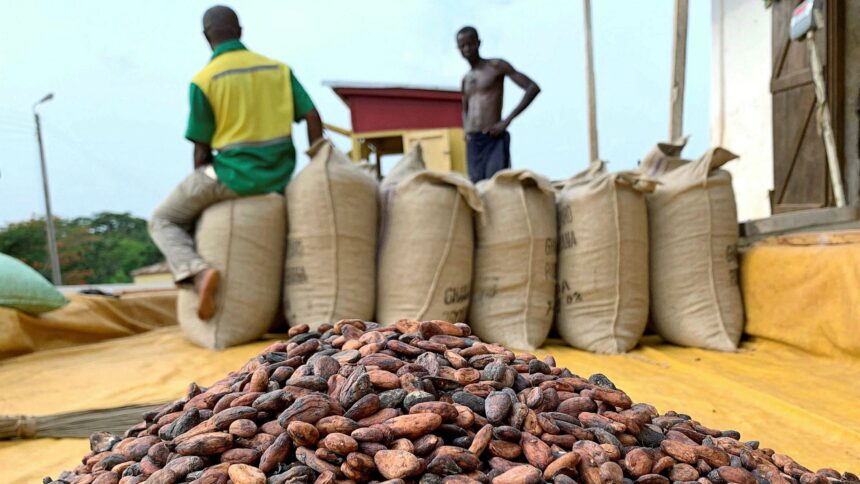

Ghana’s young cocoa farmers are threatening to abandon the sector, warning that a “toxic mix” of payment delays and rumors of further price cuts could push them toward illegal mining.
In a press statement released on Friday 13th of March, 2026, the Young Cocoa Farmers Association (YCFA) accused the government of playing “cocoa politics” while thousands of producers struggle to afford basic necessities.
According to the group despite official assurances that funds have been disbursed to Licensed Buying Companies (LBCs), many farmers have not been paid for beans sold more than four months ago.
“We Feel Abandoned”
The frustration marks a significant turning point for a demographic the Ghanaian government has spent years trying to recruit into the agricultural sector to replace an aging farming population. “We are not asking for favors—we are only demanding what we have rightfully earned,” said Mad. Adwoa Mensah, Executive Secretary of the YCFA.
“After all the hard work, sacrifices, and dedication that go into cocoa farming, it is painful to find ourselves in such a difficult position.” The association noted that the timing of the liquidity crunch is particularly perilous.
As the lean season approaches, farmers lack the capital to hire labor for essential maintenance, including weeding, pruning, and spraying. Without these interventions, the next harvest yield is at high risk.
The Galamsey Threat
The standoff comes at a time of heightened environmental concern in Ghana caused mainly by illegal small scale mining activities. The YCFA warned that if the government fails to stabilize prices or proceeds with rumored further price reductions, the economic vacuum will be filled by galamsey—the local term for unregulated, small-scale gold mining. “Any further reduction in cocoa prices will only encourage more people to release their lands for illegal mining,” the statement warned, noting that such a shift would cause “greater damage to our cocoa industry and the environment.
“For years, galamsey has decimated cocoa plantations across Ghana’s Western and Ashanti regions, polluting water bodies and degrading soil quality. For young farmers, the choice is becoming a matter of survival over sustainability.
A Sector on Edge
Ghana, the world’s second-largest cocoa producer, has faced a turbulent few years characterized by fluctuating global prices and the systemic impact of the swollen shoot virus. While the government has previously adjusted farm-gate prices to reflect market realities, the YCFA claims the current management of the sector is destroying the “hope” required to keep the youth engaged.
“Enough of the cocoa politics; pay us our money now,” said Martin Adu, the group’s Convenor. He warned that the “total collapse of youth interest” is imminent if the government or sector regulators proceed with any further downward revision of prices.