

By Prof. Jonathan Laryea
Every few months, Ghana wakes up to a familiar, tragic headline. A prominent citizen, a pregnant mother, or a young accident victim has died in the back of an ambulance. They didn’t die because medical science failed them; they died because they spent their “Golden Hour”, the critical window between life and death, touring the gates of hospitals that had no room to receive them.
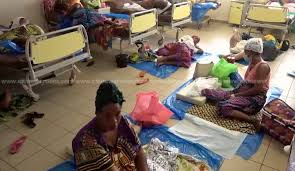
The public outcry follows a predictable script: anger at the hospitals, calls for “compassion” from doctors and nurses, and a frantic directive from the minister of health and parliament. A few years ago, the directive was simple: No hospital can turn a patient away. The result? We didn’t create more beds; we simply moved the crisis from the ambulance floor to the hospital floor. That also created another outrage.
It is time to stop blaming the frontline workers and start looking at the math. The “No Bed Syndrome” is not a failure of healthcare workers; it is a failure of a country that has not matched its resources to its population growth. Most recently, an engineer lost his life after being involved in an accident. The ambulance drove around for hours before getting to Korle Bu. Though the outcome was sad, I would venture to say that even if Korle Bu had a bed to treat this patient, the outcome would likely have been the same given the time between the accident and when the ambulance got to Korle Bu. When you have a patient exsanguinating, time is of the essence. Even if he got to the right place in time, the other question is would they have enough blood to resuscitate him without requiring family to donate prior to administering the blood?
The Impossible Equation
Consider the capital city. Accra has a population of approximately 2.9 – 4 million people, depending on who you ask. To serve this massive, high-density population, there are fewer than 400 dedicated emergency room beds across major public facilities.
Let’s do the math: that is roughly one emergency bed for every 10,000 citizens. That is not a recipe for success. When a system is constantly operating at 110% capacity, “No Bed” isn’t an excuse, it is a physical reality. When we force doctors and nurses to treat patients on the floor, we aren’t “solving” the problem; we are compromising hygiene, dignity, and clinical outcomes. You cannot perform a high-quality resuscitation on a crowded floor. This is a capacity issue. We cannot expect this issue to fix itself. There is the need to increase emergency capacity across the metropolis and indeed across the country.
A System in Need of Coordination
The second failure is logistical. Ghana has made strides in developing a National Ambulance Service (NAS), but we have failed to give that service a “brain” to coordinate it. Currently, an ambulance driver picks up a patient and begins a desperate, manual search for a vacancy. They drive from Ridge Hospital to 37 Military Hospital to Korle-Bu, burning through the patient’s oxygen and time. In an era of digital transformation, it is inexcusable that our ambulances do not have a real-time, cloud-based dashboard showing exactly where the nearest available specialized bed is located. An ambulance without a coordinated dispatch system is just a high-speed hearse.
Beyond the Furniture: The “Emergency Mindset”
A bed, however, is just a piece of furniture if it is not backed by an emergency pathway. The true “No Bed Syndrome” includes a lack of specialized systems. In modern medicine, the “Golden Hour” dictates that, for example:
• For a heart attack: We must be able to perform cardiac catheterization within 60 to 90 minutes.
• For a stroke: We must have the ability to perform a CT scan and administer clot-busting medication within an hour.
In Ghana, if you have a stroke or heart attack, your survival depends more on your luck and your traffic route than on a standardized medical protocol. If a patient reaches a bed but the CT scanner is broken or there is no Cath lab or the Cath lab is unstaffed/unresourced, the “syndrome” has simply moved from the ambulance to the ward. We have failed to develop the specialized “hubs” required to treat these time-sensitive killers. Accident cases are even worse. The ability to give blood emergently to exsanguinating patients does not exist. Some patients need immediate surgery; for example, patients with gun shot wounds and stab wounds. Sending such patients to a facility where they cannot do emergency surgery is unhelpful. We must develop a system for triaging patients to the right facilities. There is a need to do a thorough evaluation of our healthcare delivery system and redesign a system that works for Ghanaians. It looks like we have done a patchwork of modifications to what Governor Guggisberg left us and after 69 years of self-governance, we have failed to redesign a system that works for modern-day realities.
The Call to Action
We must move beyond the cycle of temporary outrage. I propose a four-point blueprint for the Ministry of Health and the government:
1. A Digital Bed-Tracking Command Center: Legally mandate all public and major private hospitals to update a live, digital bed-registry every hour. The NAS must be able to see a vacancy before they move. This must be matched with the available resources and services so that the right patient will be sent to the right facility.
2. Strategic Capacity Expansion: We must stop building “prestige projects” and start building high-volume stabilization centers. We need a targeted investment to triple the ER bed count in Accra and Kumasi within 24 months. This should then be extended to other regional capitals.
3. Specialized Emergency Hubs: Designate specific hospitals as “Centers of Excellence” for Cardiac and Stroke care (and for other health emergencies), ensuring they have 24/7 imaging and intervention capabilities as well as the requisite expertise to manage these conditions. Policy makers must incentivize public-private partnerships to ensure that a heart attack in Accra or Kumasi can be treated with the same urgency as one in New York.
4. Develop a nationwide trauma system: This is extremely important because trauma is a major cause of deaths in Ghana. In the US, each state has a statewide trauma system with three levels. Level 1 trauma centers are usually University Teaching hospitals that provide comprehensive trauma care and also play an important role in local trauma system development, regional disaster planning, increasing capacity and advancing trauma care through research. Level II trauma centers are expected to provide initial definitive trauma care for a wide range of injuries and injury severity. Level III centers provide definitive care to patients with mild trauma. Having such systems is imperative to ensure proper treatment of trauma patients. Even for those who survive trauma, disability is a major assault on economic potential and viability. Importantly all this cannot happen with a cash and carry system. Emergencies should be managed under a different model to save life and limb first. Obviously, there is a need to ensure that healthcare facilities will be able to recover their investments in emergency care, and that balancing act needs careful consideration.
Frontline clinicians are often forced to bear the public’s anger for infrastructure deficits they did not create and cannot fix. This is a failure of governance, not a lack of clinical care. Responsibility lies with the policy makers who manage the nation’s resources.
The “No Bed Syndrome” is a systemic disease. It cannot be cured with a directive from the Ministry of Health, parliament or a lecture on ethics. It requires a blueprint, a budget, and the political will to treat this like the menacing threat it is.
It is safe to say that non-emergent healthcare is excellent in Ghana for the most part if you can afford it. However, emergency care is suboptimal. We had a sitting president die from an emergency health issue and a former vice president also die from an emergency. If that is not enough warning, it is clear that anyone can be a victim of an emergency.
If we do not act, the next ambulance driving aimlessly through the streets of Accra could be carrying anyone, including the very people who have the power to fix this issue.