
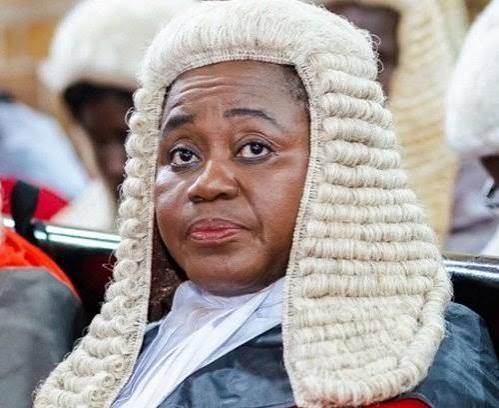

ACCRA, Sept 17- Former Chief Justice Gertrude Araba Esaaba Sackey Torkornoo has filed a lawsuit at Ghana’s High Court seeking to nullify her recent removal from the Supreme Court bench, escalating a high-stakes legal battle that has gripped the nation’s judiciary.
Torkornoo, who served as Ghana’s third female chief justice from June 2023 until her ouster last week, argues in the suit that the process leading to her dismissal violated constitutional safeguards and was marred by procedural flaws. The filing, dated Sept. 16 and made public on Wednesday, names the attorney general and members of the investigative committee as respondents, according to court documents reviewed by Reuters and confirmed by her legal team.
The case marks the latest salvo in a contentious saga that began earlier this year, underscoring tensions over judicial independence in Africa’s largest gold producer. Torkornoo was removed on Sept. 1 under Article 146(9) of Ghana’s 1992 Constitution, following a recommendation from a five-member committee probing allegations of misconduct, the presidency announced in a statement. President John Dramani Mahama, who took office in January after a disputed election, acted on the panel’s findings stemming from at least three petitions filed against her in April.
The petitions, lodged by private citizen Daniel Ofori, senior police officer Ayamga Akolgo and the civic group Shining Stars of Ghana, accused Torkornoo of stated misbehaviour, including misuse of public funds, improper interference in judicial appointments and abuse of authority in staff transfers, sources familiar with the documents told Reuters. Ghana’s constitution defines “stated misbehaviour” broadly, allowing for interpretations that critics say can be politically exploited.
Torkornoo’s suspension on April 22 – the first of a chief justice in Ghana’s history – followed a prima facie review by the Council of State, triggering the committee’s probe. The panel, chaired by retired Supreme Court Justice William Atuguba and including legal scholars and former judges, conducted closed-door hearings that Torkornoo decried as opaque and biased.
In her High Court application, Torkornoo seeks declarations that the removal process was “arbitrary, capricious and unconstitutional,” her lawyer Godfred Yeboah Dame said in an interview with Reuters. Among 12 reliefs outlined in the suit, she requests an order quashing the committee’s report, reinstating her as a Supreme Court justice and awarding damages for reputational harm. “This is not just about one individual; it’s about protecting the sanctity of the judiciary from executive overreach,” Dame added.
The dispute traces back to Torkornoo’s tenure, during which she oversaw key rulings on electoral disputes and anti-corruption drives. Nominated to the Supreme Court in 2019 by then-President Nana Akufo-Addo and elevated to chief justice in 2023, she had a 25-year judicial career, including stints as a High Court and Court of Appeal judge. Her nomination followed consultations with the Judicial Council and parliamentary vetting, as required under Article 144.
Legal experts view the case as a test for Ghana’s separation of powers. “The constitution’s removal provisions aim to balance accountability with independence, but vague terms like ‘misbehaviour’ invite abuse,” said Prof. Kwaku Asare, a constitutional law expert at Cornell University, in comments to Reuters. A separate civil society suit by the Centre for Citizenship, Constitutional and Electoral Systems challenging the process’s constitutionality was filed at the Supreme Court in May, highlighting broader concerns.
Torkornoo has pursued parallel remedies, including a May 21 Supreme Court suit seeking to halt the probe – which was dismissed on procedural grounds on May 29 – and a July ECOWAS Court filing demanding $10 million in compensation for alleged rights violations, according to a report by MyJoyOnline.
The High Court suit arrives amid political flux. Mahama’s National Democratic Congress secured a narrow victory in December 2024 elections, but opposition claims of irregularities persist. Judicial impartiality remains a flashpoint, with rights groups warning that the episode could erode public trust in institutions.
A hearing date is yet to be set. Attorney General, Dr. Dominic Ayine is yet to make any pronouncement, citing ongoing litigation. Torkornoo’s team anticipates a ruling within weeks, potentially paving the way for appeals to the Supreme Court – now without her – or regional bodies.
The outcome could reshape Ghana’s legal landscape which will ultimately impact the structure and shape of Ghana’s democracy, particularly, the concept of separation of powers.