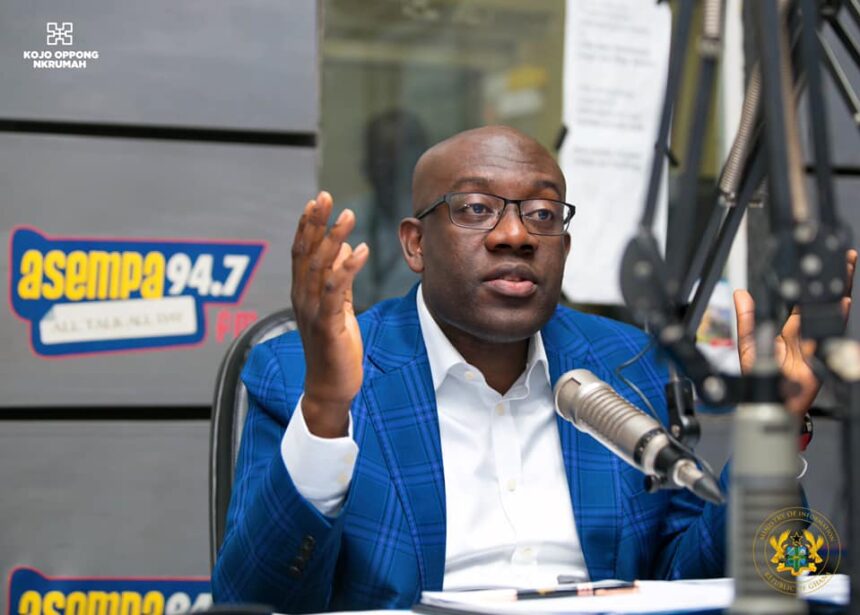

The Member of Parliament for Ofoase Ayirebi, Mr Kojo Oppong Nkrumah, has asked Parliament to stop applauding short-term economic gains and instead focus on building stronger and safer foundations for Ghana’s future. He delivered this message during the post-budget debate, where he encouraged the Majority to highlight real reforms that protect the economy, not just numbers that look good for a moment.
Mr Oppong Nkrumah reminded the House that Ghana has seen bright macroeconomic figures in the past, yet the country still slipped whenever pressure came from global markets or domestic shocks. He argued that progress only lasts when the structure beneath the numbers is strong.
He pointed to the period when Dr Kwabena Duffuor served as Finance Minister under the NDC. Headline inflation fell to about 8.5 percent around 2010 and 2011, and many praised the government at the time. But the economy later struggled when conditions changed, showing that single-digit inflation alone could not carry the country forward.
He also referenced the work of Mr Yaw Osafo-Maafo under the NPP, when core inflation moved into single digits from April 2006 according to Bank of Ghana data. It was an important moment that eased pressure on households, but the gains did not fully shield the economy from later shocks.
Mr Oppong Nkrumah went on to highlight the early reforms of Mr Ken Ofori-Atta in 2017, when the NPP government removed or adjusted about 14 taxes to reduce the cost of doing business. This, he said, gave real relief to firms and helped growth. He noted that the NPP’s record of tax reforms still stands higher than what the NDC achieved, especially in the area of supporting private enterprise.
He explained that while these achievements are worth noting, Ghana must now build the kind of system that can hold firm even in difficult times. This includes better revenue mobilisation, careful spending, strong public institutions, and buffers that can protect citizens from hardship.
He encouraged the Majority to focus on the deeper issues that make an economy stable, not only on headline numbers that rise and fall. Members on his side of the House signalled agreement, noting that the 2026 budget needs strong support from Parliament to push long-term reforms.
The intervention strengthened the NPP’s position that responsible management, discipline, and solid policy choices remain the surest way to secure Ghana’s economic future.