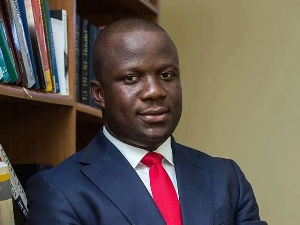

ACCRA — The MP for Damango and ranking member of Foreign Affairs Committee of Parliament, Samuel Abu Jinapor, has renewed his demand for the government to submit a controversial agreement with the United States on accepting deportees to parliament for ratification, citing constitutional requirements and national security risks.
The call follows reports that the U.S. Department of Homeland Security plans to deport a Salvadoran national to Ghana under the deal, raising fresh concerns about the scope of Ghana’s commitments. In a social media post, Jinapor, the Member of Parliament for Damongo, insisted that the arrangement must be laid before parliament under Article 75 of the 1992 Constitution, which mandates legislative approval for international agreements executed by the executive.
“The constitutional requirement that such agreements be laid before Parliament is intended to safeguard the sovereignty of our Republic and ensure that executive actions remain consistent with the rule of law,” Jinapor wrote, emphasizing the need for transparency to assess benefits, risks and potential amendments.
Ghana’s agreement with the U.S., struck amid President Donald Trump’s immigration crackdown, positions the country as a reception point for West African nationals deported from America, often on humanitarian grounds rather than for criminal reasons. Foreign Affairs Minister Samuel Okudzeto Ablakwa clarified that the deal covers a limited number of non-criminal deportees and excludes those linked to terrorism or Interpol notices. Since July, at least 14 such individuals have arrived in Ghana, with President John Dramani Mahama indicating up to 40 more are expected.
Jinapor’s renewed push echoes earlier criticisms from the Minority Caucus in September, when he first labeled the pact “unconstitutional and unlawful” for bypassing parliamentary scrutiny. He referenced Supreme Court precedents, including the 2016 Banful v. Attorney-General ruling on Guantanamo Bay detainees, which affirmed that all international pacts — including memoranda of understanding — require ratification by a majority vote in parliament.
The opposition has urged an immediate suspension of deportations until ratification, arguing the deal could turn Ghana into a “dumping ground” for unwanted migrants, straining resources and posing security threats without adequate safeguards. “We need to know what Ghana is getting out of this arrangement,” Jinapor stated previously, questioning diplomatic reciprocity, such as eased U.S. visa restrictions hinted at by Ablakwa.
Government officials maintain the agreement is a non-binding MoU that does not necessitate parliamentary approval, framing it as a pan-African gesture rather than endorsement of U.S. policies. Ablakwa noted vetting processes for arrivals and Ghana’s recent citizenship grants to people of African descent as context for the humanitarian approach.
Parliament resumes on October 21, providing a window for the government to present the document. The Minority has threatened parliamentary questions and potential legal action if ignored, underscoring tensions in Mahama’s administration over foreign policy accountability.
The dispute highlights broader frictions in U.S.-Africa relations under Trump’s deportation drive, with similar pacts facing pushback in countries like Nigeria. Analysts warn that unresolved, it could erode public trust and complicate Ghana’s diplomatic balancing act.