
While disinformation and its damaging effects are a worldwide concern, the bulk of research focuses overwhelmingly on the Global North. Yet the phenomenon is even more prevalent in the Global South. “And this dates back to well before Donald Trump’s 2016 election win!” said Herman Wasserman, a journalism professor at Stellenbosch University, in South Africa.
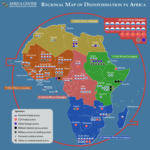
Wasserman is leading a project that documents the specific context of the Global South and that is funded by IDRC. A comprehensive early report, available online, provides an overview of the situation and identifies promising initiatives taken in response to the phenomenon in each major region of the Global South: Asia, Latin America and the Caribbean, the Middle East and North Africa and sub-Saharan Africa. Québec Science took a closer look at this last region, seldom covered by our own media.
Disinformation takes many forms. Political parties, for example, hire trolls and digital targeting firms to try to influence election results. Hate messages qualifying specific ethnic groups as “vermin” are ineffectively detected or removed from social networks because they are expressed in local languages. Furthermore, half of the 452 people questioned in an online survey conducted in Cameroon, Nigeria and Senegal felt that the abundance of conflicting information about COVID-19 made them reluctant to adopt public health recommendations.
Beyond “fake news”
A rapidly evolving media universe plus an increasingly fragmented and populist political universe: the perfect cocktail for generating information disorder. According to Herman Wasserman, this involves a “large-scale contamination of the public sphere by rumours, hate speech, dangerous conspiracy theories, harmful misconceptions and disinformation campaigns.”
Misinformation: sharing false information without malicious intent.
Disinformation: deliberately sharing false information with malicious intent.
Malinformation: sharing true information with malicious intent by leaking documents and disclosing political opponents’ personal details on social networks, for example.
A history that has left its mark
Herman Wasserman pointed out that disinformation in sub-Saharan Africa existed long before social networking. “During the colonial era, journalism was highly controlled by the established powers.” Since the media was unreliable, parallel communication channels were set up — and still exist today. Rumours, popular music, humour, satire: every means were used to undermine the dominant narrative and support political struggles.
Even in the post-colonial era, states have kept a tight grip on information. The few media that existed were often part of the government. In the 1990s, the media was somewhat liberalized but political non-transparency and the repression of journalists are still commonplace to this day. As a result, in Africa, “people still greatly mistrust even legitimate and independent media,” explained the researcher, who is also a former journalist.
Whereas the West has widespread access to the Internet and news media, Africa feature marked inequalities between urban and rural areas. Countries like South Africa are vastly connected while others, like Burkina Faso, have a very low Internet penetration. “It’s essential to consider the interactions between what happens online and offline. In particular, what is said in places of prayer can amplify certain messages of disinformation,” emphasized Scott Timcke, a political economist and researcher at Research ICT Africa. This South Africa-based think tank specializes in communications and digital issues.
In addition, colonial history has also produced two distinct disinformation “ecosystems”: French-speaking West Africa and English-speaking East Africa.
The WhatsApp effect
Another distinctive African trait is the wide popularity of WhatsApp messaging, where content spreads from individual to individual or within closed discussion groups. Since communications on WhatsApp are encrypted (confidential), the platform cannot moderate or ban problematic content or users.
Group administrators are the ones who need to do that — but this produces very mixed outcomes. The fact that the members of these groups typically know one another in real life makes things trickier: “You may very well support equality for LGBTQ+ people yet not want to debate it with your community,” explained Scott Timcke. So, group members let slide insulting comments or myths about that community.
The decentralized nature of WhatsApp communications also complicates the “watchdog” role of journalists and fact-checking organizations. Because these actors don’t always know what hate speech or fake news is being spread, they struggle to counter its influence.
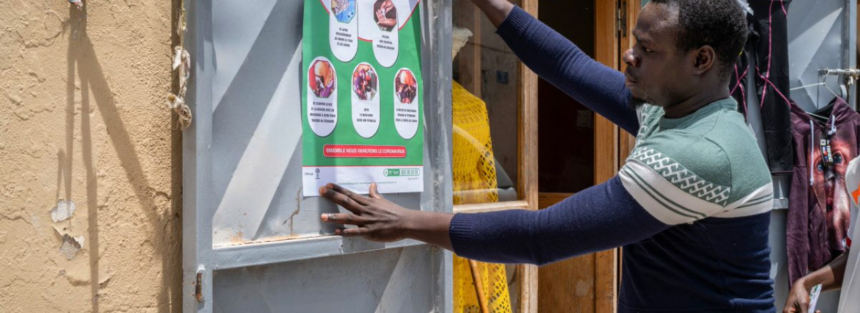
During the pandemic, in Africa as elsewhere, disinformation about COVID-19 was rife. “Generally speaking, decision-makers do not have scientific knowledge,” said Penka Marthe Bogne, a researcher who works for eBASE Africa, a Cameroonian NGO that leads health and education projects. “Without access to the right information, they may be more inclined to respond to pressures from an anxious public than to make the best science-based decisions. It’s not enough for leaders to have access to data: they must be ready to take that data into account,” she wrote in another report, funded by the Rachel DesRosiers Alumni Award, offered by the IDRC Alumni Association.
Media

Québec Science/Danielle Sayer/Shutterstock
The power of stories
This expert holds that, compared with scientists, producers of disinformation better understand how to appeal to the public. “They use what people know: videos, songs, easy-to-understand information. Meanwhile in science, we typically communicate our results with complex statistics, hard-to-access webinars or studies hidden behind paywalls. That won’t capture the attention of thousands of people!”
So what can be done? For one, we can harness the power of stories, ideally by asking individuals to share their personal experience. “People will imagine themselves in the described situation.” When people can’t provide evidence based on direct experience (for example, when no one in a community has been vaccinated), then we can use fictional stories.
This is the approach taken by Africa Check, a fact-checking organization. Its radio-drama project aimed to combat vaccine disinformation during the COVID-19 pandemic. After listening to a short drama performed by actors, audience members could phone in during the show, “stand in” for a character, and explain what they would have done differently. The program was broadcast in Wolof in Senegal and in Pidgin in Nigeria. This is a promising approach for a continent where, for millions of people, literacy levels and Internet access are limited.
Penka Marthe Bogne believes that a very “factual” style of official communication typically does a poor job of changing behaviour. “In Africa, many people doubt science,” she said. Fiction factors in the local context to create a message that resonates better with the audience.
Foreign interference?
At a time when Africa’s resources are attracting all forms of greed, should we fear foreign interference? A number of actors are in fact conducting disinformation campaigns on the continent. Yet Scott Timcke noted a “tendency to overestimate the geopolitical impact.” He added: “I doubt that millions of Africans will be convinced by such messages, which are unlikely to change the outcome of national elections.”
In his view, there is a better explanation for events like the 2020 to 2023 coups d’état in Gabon, Niger, Burkina Faso, Guinea, Chad and Mali: the complicated relationship between France and its former colonies, and the political failure to serve the common good. Factors such as Russia- or China-led opinion campaigns were simply not as significant.
“Those who blame foreign actors may not have as discerning a grasp of African affairs as they should! Much more fundamental social forces can explain these events.”
The number of message views is a poor indicator of its impact. “To be alarmed because millions of Africans have seen this or that pro-Russian video clearly reveals Western prejudices,” continued the specialist. I have yet to see evidence that [highly partisan videos] actually transform people’s beliefs. They really just confirm what people already think.” In this context, some experts fear that warnings about fake news could have the perverse effect of reducing general confidence in the media.
And perhaps that’s where the real power of disinformation lies: not in changing election results, but in destroying public confidence. “Creating uncertainty among a population encourages the emergence of leaders who promise answers and certainties.”
Cultivating trust
In her study, the researcher found that misinformation takes root when public health interventions fail to consider the local context. “If you send health-care workers to a remote community, nobody knows them so nobody trusts them.”
The situation is worse in conflict areas. There, people hold the government responsible for their problems. How can they trust its mask or vaccine recommendations?
In Bogne’s opinion, the key is to build bridges with communities, starting with local leaders like village chiefs and religious authorities. “Last year, we organized a testimonial session in a remote Indigenous community in Cameroon: 400 people attended. The most educated people interpreted the session into the local language.” It was a success. The researcher is currently working on a PhD to see how such initiatives can combat vaccine hesitancy.
The price of democracy
Several African countries have adopted “anti-fake news” laws. Herman Wasserman deplored that all too often, however, those laws are used to muzzle the media or criminalize criticism of the government. “The risk of abuse is very real as freedom of expression and democratic debate are still fragile here.”
Governments all too often resort to blocking the Internet. This was the case during Benin’s legislative election of April 28, 2019. As well, during the civil war in Tigray, Ethiopia, 5 million people were deprived of telecommunications — for two years!
To counter information disorder, action is needed at several levels: “By checking the facts, yes, but also by supporting media education and investigative journalism,” deemed Herman Wasserman. Quality information needs certain conditions to flourish.
“We shouldn’t see everything in black and white,” said Scott Timcke. “I don’t believe that all disinformation is necessarily a threat to democracy.” The right to be wrong is pretty much part of freedom of expression! “But too much disinformation signals that democracies haven’t fulfilled their mandate as well as they ought to.”
To remedy the problem, it is more worthwhile to work on promoting democracy. “Instead of fighting hard to make social networks more accountable, we should be strengthening institutions, teaching why democracy is important, what civil rights are, what elections are for and so forth.”
Herman Wasserman, who is pursuing his research on the subject, noted that “economic and racial inequalities, exacerbated in the Global South, provide fertile ground for disinformation: the themes and messages that constantly recur are linked to local social issues.” In this sense, the perspective provided by the Global South could inspire Western democracies in their fight against their own information disorder.
Prevention is better than cure
Once false information spreads, it’s almost impossible to correct it. African organizations are therefore increasingly involved in preventive demystification. For example, during election periods, they will early on publish clear and correct information about polling stations and election dates. According to Scott Timcke, this action is relevant but its effectiveness is hard to quantify. “When nothing terrible happens, one wonders afterwards if all the effort was really necessary.” Somewhat like with public health…
The research project described in this article and the production of this report were made possible with the support of Canada’s International Development Research Centre.
This article was originally published in French in the July-August 2024 edition of the magazine Québec Science.