
Financial analyst Kweku Adoboli says the 2026 budget presented by Finance Minister Cassiel Ato Forson is ambitious and heavily anchored on the government’s ability to eliminate leakages, enforce spending discipline and convert recent macroeconomic gains into jobs.
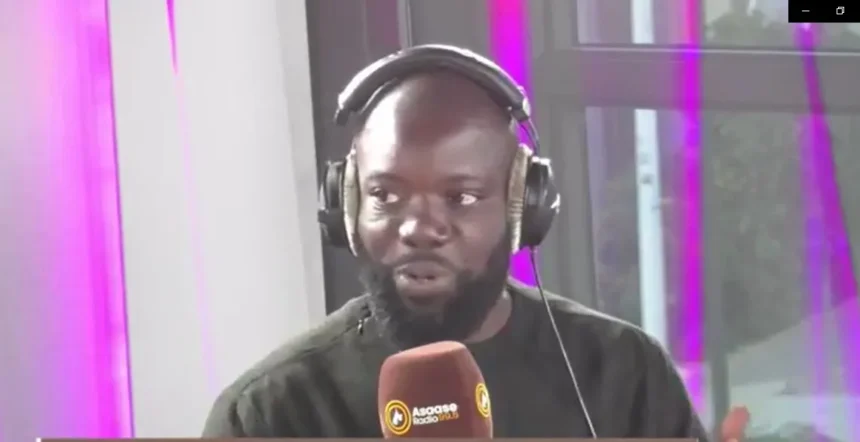
Speaking on the Asaase Breakfast Show on Friday (14 November), Adoboli said the Finance Minister projected the image of a public servant “determined to do his best for Ghana,” but the viability of his plan depends largely on whether government can sustain fiscal controls beyond the IMF programme.
Adoboli noted that the budget attempts to answer a key question Ghanaians have asked for months: how macroeconomic stability translates into improved livelihoods. According to him, the minister’s response came in three forms — tax cuts, infrastructure expansion, and job creation.
He highlighted the removal of the COVID levy, the reduction of VAT from 22% to 20%, and a massive GHC30 billion infrastructure investment to support roads, agriculture and logistics. According to the minister, these interventions, together with a GHC250,000 job programme in the oil palm value chain, are expected to drive the creation of nearly 800,000 jobs.
But Adoboli questioned funding sources. “As he was talking, the question that kept coming to me was: how is he going to pay for all of this?” he said.
He explained that the minister’s argument rests on shutting down leakages — including the suspension and auditing of billions in questionable payments at GRA and MDAs — as well as curbing wasteful expenditure such as ministerial travel.
Adoboli said the minister’s confidence comes partly from progress already made. Inflation has dropped from 54% at the peak of the crisis to 8.1%, he noted, adding that both the previous and current administrations deserve credit for stabilisation efforts under the IMF-backed reforms.
He also pointed to the staggering revelation of US$33 billion in “fake imports” between April 2020 and August 2025 — a loophole he believes the minister intends to close to recover significant revenue. “The level of exploitation he pointed to shows how much resources are available if loopholes are blocked,” Adoboli said.
He argued that job creation targets are achievable only if government remains uncompromising on fiscal discipline and focuses heavily on agriculture-led industrialisation, particularly the development of transport corridors like the proposed Accra–Kumasi Expressway.
Despite his cautious optimism, Adoboli warned that Ghana’s history of policy slippages means citizens must remain vigilant.
“Ghanaians should hold this government to account,” he said. “If they maintain this discipline, they can get there; if not, it will be business as usual.”
Source: asaaseradio.com