
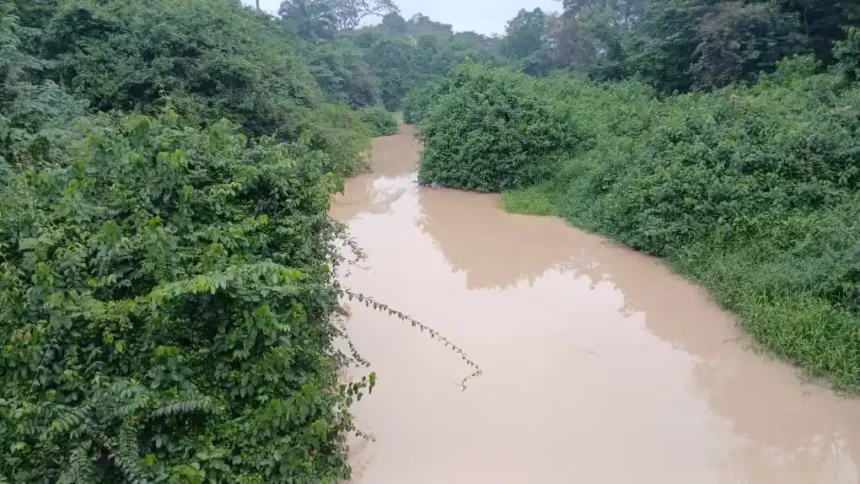

Residents of the Sunyani Municipality were left struggling for days after taps ran dry for nearly a week, a disruption widely blamed on pollution of the Tano River linked to illegal mining activities.
For five consecutive days, households, businesses and institutions across parts of the municipality faced severe water shortages as supply from the Ghana Water Company Limited (GWCL) was interrupted.
The crisis has reignited concerns about the environmental consequences of illegal mining locally known as galamsey along the river’s catchment.
The Tano River serves as the municipality’s primary source of raw water for treatment and distribution. However, recent contamination is believed to have been triggered by heavy rains washing sediments and debris from lands degraded by illegal mining operations upstream in parts of the Ahafo Region.
Sources familiar with the situation say the influx of muddy sediments and mining waste clogged sections of the water company’s pipeline and intake systems, making it difficult for engineers to pump and treat water for distribution to consumers.
For residents, the impact was immediate and deeply disruptive.
Many households were forced to search for alternative water sources, while others relied on stored water or purchased water from vendors to meet basic daily needs such as cooking, bathing and sanitation.
“This situation has been very difficult for families,” a resident lamented. “For almost a week we had no water from our taps, and we had to move around looking for water just to manage our homes.”
The days-long disruption has heightened anxieties about sanitation and public health within the municipality.
The recent shortage is not an isolated incident. Earlier in January this year, similar pollution of the Tano River disrupted water production in Sunyani, prompting renewed calls for stronger action against illegal mining activities within the river basin.
In response to growing environmental concerns at the time, the National Anti-Illegal Mining Operations Secretariat intensified its crackdown on illegal mining in parts of the Ahafo Region.
The operation involved what officials described as a comprehensive sweep of suspected galamsey hideouts across sections of the Tano North Municipality.
The targeted exercise followed weeks of surveillance and intelligence reports pointing to persistent illegal mining activities in communities such as Sukuumu, Subrisu No. 2 and Adrobaa.
Officials of the Secretariat said the deployment of the task force was intended to prevent imminent pollution of the Tano River and halt the destruction of farmlands and forest reserves.
However, barely two months after the operation, the impact of illegal mining activities, once again threatening the integrity of the river and the municipality’s water supply.
Efforts to obtain official comments from the Ghana Water Company Limited on the recent disruption were unsuccessful.
Meanwhile, community members and environmental advocates are calling for sustained enforcement and stronger protection of the Tano River basin to safeguard Sunyani’s primary water source.
For many residents, the crisis highlights a growing and uncomfortable reality—that the fight against illegal mining is no longer only about protecting forests and farmlands, but also about securing safe and reliable water for thousands of people who depend on the river for their daily survival.
Source: asaaseradio.com