

DUBAI — Hamas has indicated openness to U.S. President Donald Trump‘s ambitious 20-point Gaza peace plan, describing it as a proposal it is “examining responsibly” amid intensifying pressure from key Arab and Muslim nations to end the nearly two-year war with Israel. The militant group’s measured response, conveyed through intermediaries in Qatar and Egypt on Tuesday, comes as Trump issued a stark ultimatum: Accept within “three or four days” or face “a very sad end,” including escalated military consequences and isolation from regional allies.
Trump unveiled the plan on Monday alongside Israeli Prime Minister Benjamin Netanyahu at the White House, framing it as a “historic” blueprint to dismantle Hamas’s control, secure hostages, and rebuild Gaza under international oversight. Key elements include an immediate ceasefire, the release of all remaining Israeli hostages (estimated at 100, including deceased) within 72 hours in exchange for Palestinian prisoners, a phased Israeli withdrawal, full Hamas disarmament, and amnesty for compliant members willing to integrate peacefully or emigrate. Post-agreement, Gaza would transition to a technocratic Palestinian committee supervised by a “Board of Peace” chaired by Trump—potentially involving figures like former UK Prime Minister Tony Blair—and backed by an Arab/Muslim security force. Humanitarian aid would surge, focusing on infrastructure like hospitals and water systems, with no Palestinian displacement and a pathway to a two-state solution integrating Gaza with the West Bank.
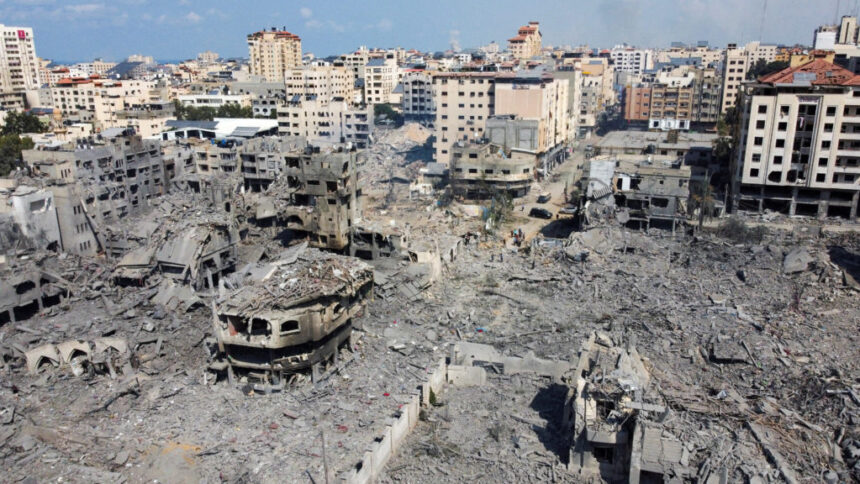
The plan has garnered swift endorsements from a coalition of eight Arab and Muslim states—Saudi Arabia, Jordan, UAE, Qatar, Egypt, Turkey, and others—whose foreign ministers issued a joint statement pledging to “realize” it through unrestricted aid, security guarantees, and Israeli withdrawal. Qatar’s Prime Minister noted it requires “clarification and discussion,” while Turkey’s intelligence chief arrived in Doha for talks with Hamas, marking a rare multilateral push. Analysts like Dr. Ofer Guterman of Israel’s Institute for National Security Studies credit this for shifting dynamics: “Israel now sees Arab states as partners,” pressuring Hamas amid its military setbacks and humanitarian catastrophe in Gaza, where over 453 deaths from famine have been reported.
Hamas officials, including Mahmoud Mardawi, confirmed they received the document late Monday but emphasized no formal consultation occurred prior to its rollout. A senior figure in Gaza told Reuters the group is weighing options “responsibly,” with military commander Ez al-Din al-Haddad reportedly resistant to disarmament but sidelined by external leadership’s pragmatism. Palestinian residents remain skeptical: Abu Mazen Nassar called it “manipulation” lacking war-end guarantees, while others fear it rewards aggression without addressing root grievances. UN Secretary-General António Guterres urged “all parties” to commit, but critics like the Palestinian National Initiative decry external figures like Blair’s potential role as neo-colonial.
Netanyahu, facing domestic war fatigue and hostage family demands, secured amendments like no Hamas governance role and continued IDF operations in non-compliant areas, satisfying his far-right coalition while aligning with Trump’s vision. Trump, campaigning in 2024 on swift resolution, warned rejection would isolate Hamas, with aid flowing only to “terror-free” zones. European leaders like UK’s Keir Starmer and France’s Emmanuel Macron echoed calls for acceptance, while Brett McGurk, ex-Biden NSC official, stressed “all international pressure must now come down squarely on Hamas.”
This breakthrough, if realized, could halt a conflict that has killed tens of thousands and displaced millions since October 7, 2023. Yet, with Hamas’s internal divisions and Netanyahu’s coalition risks, skeptics like Steven Cook of the Council on Foreign Relations caution: “Qatar must put the screws to Hamas, and Netanyahu needs to sell it to his cabinet.” As mediators convene in Doha, the next 72 hours could redefine the Middle East—or prolong the agony.