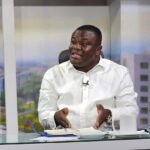
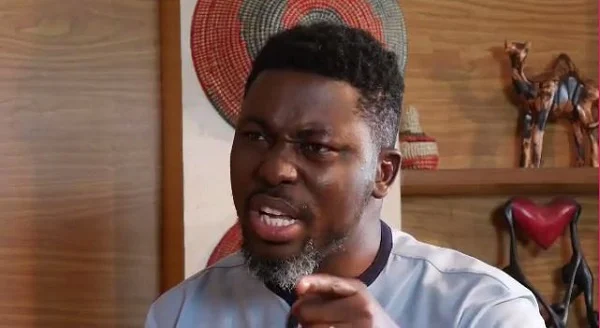

The Member of Parliament for Gomoa Central, Kwame Asare Obeng, has ignited a fresh political storm with remarks that cut across justice, corruption, and the credibility of the government he serves.
His opening claim landed hard. People are not in prison because they are guilty, he suggested, but because they are poor. In one stroke, he reframed criminal justice as an economic condition rather than a legal outcome.
It is a powerful argument. It is also a dangerous one.
Because if poverty is the real crime, then the entire justice system stands accused of selective punishment, where those without means face consequences while those with influence walk free.
He did not stop there.
The MP went further, alleging that individuals within the current government have acquired state lands and completed private developments since assuming office. He claims to know them. All of them.
That assertion changes the tone completely.
This is no longer social commentary. It is an allegation of abuse of public office, delivered not by an outsider, but by a sitting lawmaker with proximity to power.
Yet no names were mentioned.
And that silence matters.
Because in a country where land ownership disputes already carry deep political and economic tensions, such a claim without specifics risks becoming both explosive and conveniently untestable.
At this point, the burden shifts to the state.
Institutions such as the Ghana Police Service, Economic and Organised Crime Office, the Office of the Attorney General, and the Office of the Special Prosecutor cannot remain passive observers to such claims.
A sitting Member of Parliament has alleged knowledge of potential wrongdoing involving state assets. That is not casual talk. It is a trigger for inquiry.
These agencies carry the legal authority to invite him for questioning, demand evidence, and compel disclosure of the individuals he claims to know. Silence, in this context, begins to look like tolerance.
Then came the most striking line.
The MP declared that ORAL, the government’s anti corruption drive, is effectively dead. Not weakened. Not struggling. Collapsed. In his words, “we have collapsed it.”
That phrasing raises its own questions.
Who is “we”? A faction within government? A broader political class? Or a quiet admission that the very system designed to ensure accountability has been undermined from within?
He offered one more warning.
If pushed, he says, he will release documents detailing land acquisitions by individuals in power. It is a threat wrapped as a promise, hanging over the political class like a sealed envelope waiting to be opened.
The implications are unsettling.
If true, it suggests knowledge of potential wrongdoing held back for strategic reasons rather than reported through formal channels. If untrue, it raises concerns about the casual use of serious allegations in political discourse.
Either way, the damage is real.
Because public trust does not collapse only through proven corruption. It erodes through statements like these, where insiders hint at misconduct but stop short of accountability.
And so the questions begin to gather.
If the MP has evidence, why has it not reached investigators? If ORAL is indeed collapsed, who allowed it? And if poverty is the real crime, what does that say about the fairness of the system he helps govern?
For now, the claims sit in the open, untested but impossible to ignore.
And in Ghana’s current political climate, sometimes the most revealing thing is not what is proven, but what is boldly said without fear.