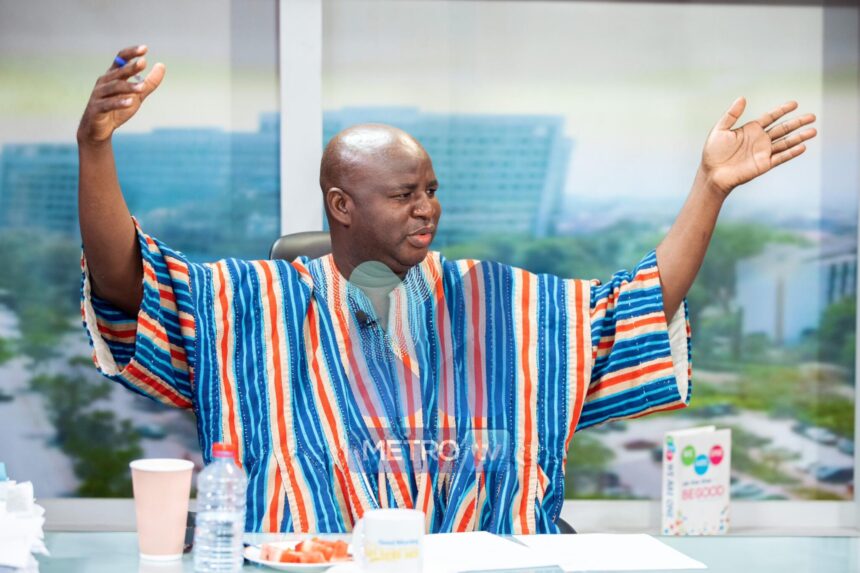

ACCRA — A prominent law lecturer at the University of Professional Studies, Accra (UPSA) Law School, Ishaq Ibrahim, has urged Ghana’s two dominant political parties—the National Democratic Congress (NDC) and the New Patriotic Party (NPP)—to overhaul their flagbearer election processes by empowering ordinary members to directly choose their presidential candidates. Speaking on Metro TV’s Good Morning Ghana on September 17, 2025, Ibrahim slammed the current delegate-based system as outdated, arguing it stifles internal democracy and limits the voice of grassroots supporters in shaping the nation’s political future.
Since Ghana’s return to multiparty democracy in 1992 under the Fourth Republic, both the NDC and NPP have relied on a select group of delegates—often numbering in the thousands—to pick their presidential candidates. This setup, Ibrahim contends, is a relic that no longer serves a maturing democracy. “For me, it is an anomaly that even up to now, it is still a small number of people who decide the flagbearer,” he said, emphasizing that expanding participation would align the parties with modern democratic ideals. With over 60% of Ghana’s 33 million people eligible to vote, giving rank-and-file members a say could reshape political accountability.
Ibrahim’s call comes amid ongoing debates about political party reforms in Ghana, where the NDC and NPP dominate the electoral landscape, collectively securing over 95% of votes in recent presidential races. The lecturer praised the NPP’s recent move to expand its electoral college for selecting flagbearers, calling it a step toward broader inclusivity. In 2024, the NPP increased its delegate base for primaries, a decision Ibrahim hailed as progress. “I think the party, by expanding this, is moving toward there,” he noted, urging both parties to see such changes as part of a larger push for democratic reform.
The UPSA lecturer argued that opening flagbearer elections to all party members would lend greater legitimacy to the chosen candidate. “Those current executives have the democratic mandate,” he said, stressing that party leaders must respect the will of the broader membership, not just a privileged few. A wider voter base, he added, would ensure flagbearers command genuine support, strengthening their mandate to lead the party into national elections. This is critical in a country where political loyalty runs deep, yet frustrations over elite control often spark voter apathy—evident in the 60% turnout in the 2024 general election.
Acknowledging potential pushback, Ibrahim admitted that transitioning to an open primary system could stir disagreements over logistics and timing. “Change is difficult, and that’s why people will always talk,” he said on Metro TV. Yet he encouraged both parties to embrace open dialogue and tolerate criticism as they navigate the shift. “What I will urge the party to do is give them the freedom to discuss, to criticize,” he advised, framing such debates as healthy for refining the process.
Ghanaians have already begun weighing into the conversation. A section of Ghanaians back Ibrahim’s push. Others, however, worry about the cost and complexity of nationwide primaries, especially in rural areas with limited infrastructure. Political analysts note that expanding primaries could also intensify factionalism, as seen in past NDC and NPP contests where rival camps clashed bitterly.
As Ghana gears up for the 2028 election cycle, Ibrahim’s proposal adds fuel to the debate over how parties can better reflect the will of their base. With the NDC’s John Mahama now in office and the NPP regrouping after its 2024 loss, both parties face pressure to modernize.
Source: metrotvonline.com