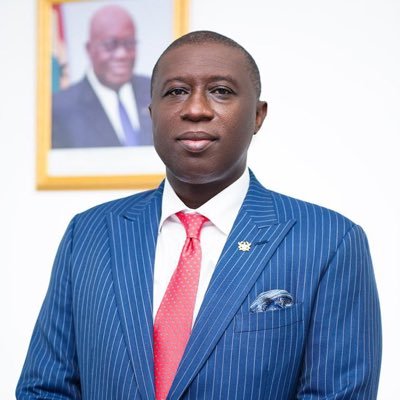

The Chairman of Parliament’s Subsidiary Legislation Committee, Patrick Boamah, has warned that Ghana’s current mining fiscal regime could discourage investment in the sector if government fails to implement promised reforms.
Speaking to journalists outside Parliament of Ghana on Tuesday (10 March), the lawmaker said recent developments indicate that Ghana is becoming less competitive in attracting mining investment.
According to Boamah, Ghana currently ranks among the least attractive jurisdictions for mining investors due to high fiscal burdens on mining companies.
“When Ghana ranks number one in that regard, it means we are the highest, and it simply suggests that we are not being attractive to the investment required to come into the mining sector,” he said.
He argued that the situation could negatively affect the growth of the industry and undermine efforts to attract new capital into the country’s mining operations.
Promise to reduce levy
Boamah disclosed that during deliberations at the committee level, the Cassiel Ato Forson, Ghana’s Finance Minister, assured stakeholders in the mining industry that government would reduce the Growth and Sustainability Levy to 1% to ease the burden on companies.
However, he said that commitment has not yet been fulfilled.
“As we speak, that hasn’t happened. So it tells you that government has not been honest with the mining community,” Boamah said.
He noted that government had also commissioned a report by consulting firm Ernst & Young to assess the impact of the tax regime on the mining sector.
Call for supportive fiscal regime
The legislator urged government to adopt policies that would support mining companies while maintaining the sector’s contribution to national development.
He emphasised that the mining industry is highly capital-intensive and requires a stable and competitive fiscal environment to thrive.
Boamah also pointed out that Ghana’s efforts to promote greater local participation in mining could be undermined if fiscal policies discourage investment.
According to him, several major mining concessions are expected to expire later this year, creating opportunities for Ghanaian investors to take over some of the assets.
However, he cautioned that local investors may struggle to raise the capital needed to operate the mines if the fiscal environment remains unfavourable.
“Mining is a very capital-intensive sector and we need to put in place the right fiscal regime to support mining companies to retain jobs and grow the economy,” he said.
Boamah therefore called on government to take the mining sector seriously and introduce measures that will make Ghana more attractive to investors while protecting employment and economic growth.
Source: asaaseradio.com