
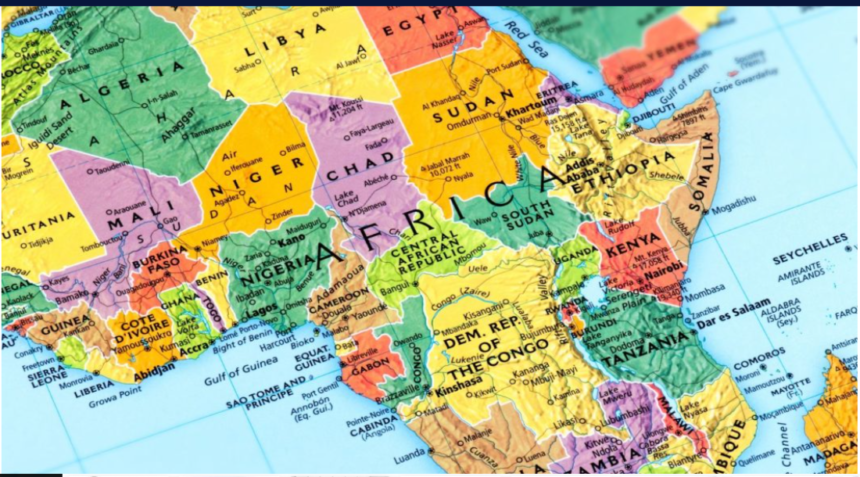

Archaeologists have now shown that African port towns traded across the Indian Ocean between 1000 and 1500 AD, linking inland producers to markets in India and beyond.
When new buildings, workshops, and trade goods later vanish from many regions, the silence marks a violent rupture that helps explain why this chapter barely appears in standard history books.
Clues from coastal ruins
Walls, wells, and broken ceramics at Gedi on Kenya’s coast show a Swahili city tied to Indian Ocean trade.
Following that trail, Chapurukha M. Kusimba, Ph.D., at the University of South Florida (USF) linked coastal finds to inland suppliers.
His review described towns that imported luxury goods while exporting gold, ivory, and timber. That mix of local building and far-off goods makes later gaps in pottery, iron, and housing harder to dismiss.
African trade crossed the ocean
Glass beads of Indian origin turn up across sub-Saharan sites, including places with no stone buildings.
Seasonal winds carried ships between East Africa and South Asia, while pack animals and people moved cargo inland.
“My work and the work of others shows that before the African slave trade, which reached the continent’s interior with slave caravans starting in the 17th century, Africans were trading with other cultures,” said Dr. M. Kusimba.
Even modest settlements left imports that match distant records, so archaeologists can map connections without palaces or written archives.
Proof in local crafts
At many coastal towns, 96 percent of artifacts like pottery, metals, and beads are local, not imported from abroad.
Local workshops supplied daily needs, and imported items stayed rare enough to signal status across neighborhoods and households.
Measured by built space, Gedi covered about 48 acres, yet it still held mosques, wells, and a planned street grid.
Counting only large stone cities would miss these African-built networks, and that blind spot feeds the gaps readers notice today.
Ivory funded cities
From at least 800 C.E., coastal traders moved mostly cut ivory, and that choice changed how value traveled.
Cut pieces let merchants weigh and grade each shipment, so prices matched quality before caravans reached port markets.
Archaeological layers later show whole tusks replacing cut pieces, and signs of weaving and ironwork fade at the same time.
Losing control of processing handed leverage to outside buyers, and it set the stage for wider social violence.
Slavery triggered collapse
In the 17th century, slave caravans reached East Africa’s interior, and people moved from open plains into defensive terrain.
Before that era, Kenya and Somalia had 250 thriving coastal towns, yet fewer than ten remained after 400 years.
“Slavery and the slave trade led to a loss of knowledge, of power, of memory,” said Kusimba. Such disruption leaves few new buildings to excavate, and it helps explain why later history looks blank.
An inland building silence
Inside Tsavo National Park in Kenya, archaeologists found abandoned villages and orchards but few later houses.
Fear pushed families toward hillsides and mountains, and mud-and-thatch homes there often rotted before anyone could record them.
With inland fields unsafe, coastal ports lost food supplies, and ruins grew as trade partners looked elsewhere for staples.
That long pause in durable architecture turns into a hole in maps, especially when later bulldozers erase traces.
African trade evidence vanished
Across the Sahara, deep sand buries camps from wetter times, and archaeologists struggle to find them under moving dunes.
Running an archaeological survey, a systematic search for sites across land, becomes slow when wind and heat hide landmarks.
Low populations meant many groups stayed mobile, so they left fewer thick layers of trash, ash, and foundations.
Missing city walls can still hide complex lives, but it requires time, training, and patience to read small clues.
Heritage faces demolition
Today Kenya’s population tops 56 million, and housing construction often lands directly on unprotected ruins.
Without heritage management, plans that protect sites and collections, local officials struggle to stop looting and demolition.
As people relocate for work and safety, newcomers may not know which places hold sacred knowledge and community memories.
Once bulldozers scrape away walls and burials, later researchers lose the chance to test ideas about how towns worked.
Searching for reasons
More African-born archaeologists now lead field teams, and they often prioritize overlooked sites beyond famous fossil discoveries.
Growing Indigenous archaeology, research planned with descendant communities, can keep excavations respectful while sharing benefits from tourism and museums.
Yet many projects still rely on grants from the United States and Europe, and sudden cuts halt seasons.
Without steady training and pay, many young scientists choose other work, leaving fewer teams to document threatened sites.
Evidence from ruins, imports, and abandoned farms shows Africa’s medieval trade and later collapse, even when records look thin.
Protecting sites before construction, funding local teams, and sharing stewardship with communities will decide how much of that story survives.
The study is published in Annual Review of Anthropology.
Source: www.earth.com