
On June 26, 1979, at the Teshie Military Firing Range, a senior Ghanaian military officer faced the final moments of his life not on a battlefield, but before a firing squad.
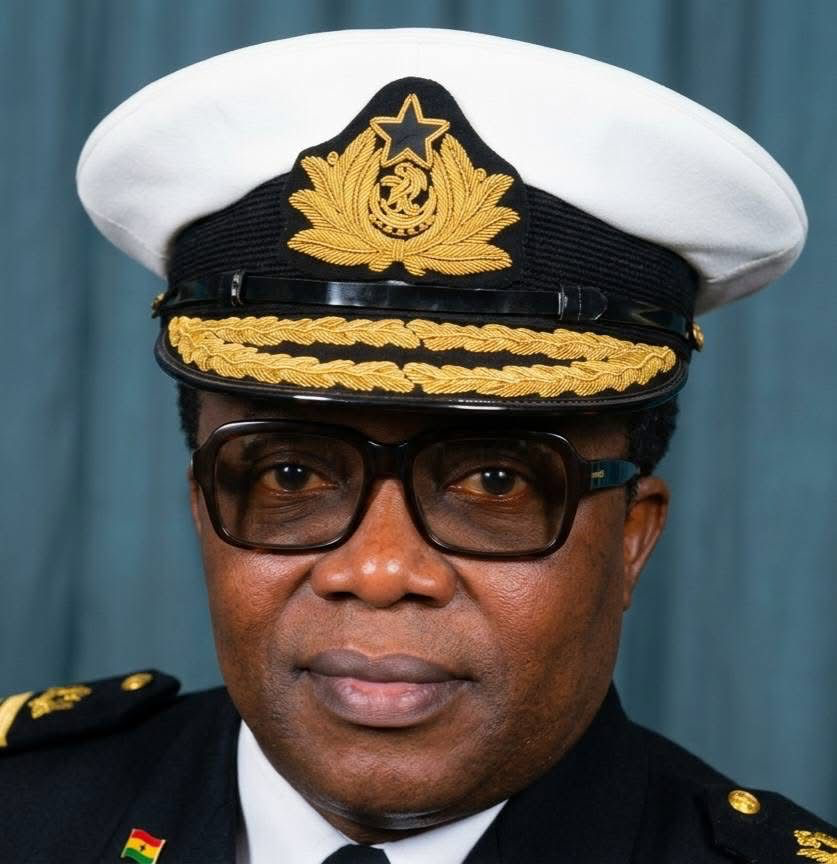
Rear Admiral Joy Amedume, a respected Navy Commander, was executed during one of the most turbulent periods in Ghana’s history.
His crime?
According to the ruling military regime at the time, he had abused his position for personal gain. One of the most cited allegations was that he used his influence to secure a bank loan reportedly around 50,000 old cedis which is five cedis today. To the authorities, this was corruption. To others, it raised deeper questions.
This happened under the rule of the Armed Forces Revolutionary Council (AFRC), led by Jerry John Rawlings, during what was described as a nationwide “house-cleaning exercise.”
The aim was clear purge the system of corruption, indiscipline, and misuse of power. But the methods were harsh. Swift arrests. Quick trials. And in many cases… executions.
Rear Admiral Amedume was among six senior officers executed that same day, alongside former heads of state like Fred Akuffo and Akwasi Afrifa.
There was no long courtroom battle. No extended defense.
Many critics later described the process as a “kangaroo court” a system where judgment had already been decided.
Even years later, debates continue.
Was he truly guilty?
Or was he a victim of a political storm?
Rawlings himself would later suggest that these executions, though painful, were meant to prevent something worse a possible uprising by angry junior officers that could have led to mass bloodshed.
But for families, loved ones, and many Ghanaians, the questions never really ended.
How does a decorated officer go from command… to condemnation… in such a short time?
The story of Rear Admiral Joy Amedume is not just about corruption allegations.
It is about power, justice, fear, and the heavy cost of political transitions.
A reminder of a time in Ghana when accountability came swiftly… and sometimes, irreversibly.