
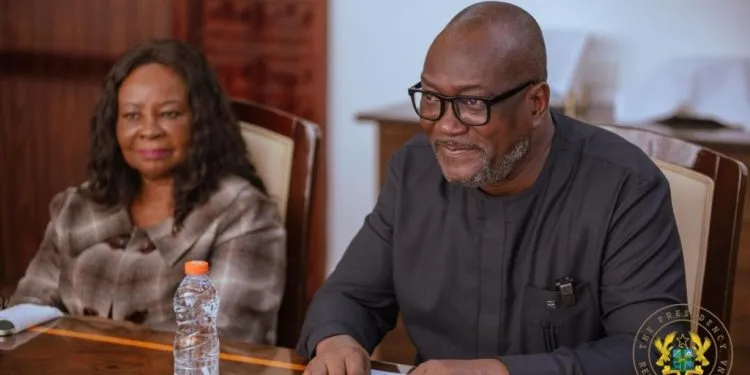

Chairman of the Constitutional Review Committee, Professor H. Kwasi Prempeh, has cautioned that perceived selective application of the law is steadily undermining public trust in Ghana’s anti-corruption framework, weakening the very institutions meant to protect accountability and the rule of law.
Speaking on the state of governance and accountability, Prof Prempeh argued that when anti-corruption efforts appear politically skewed or inconsistently enforced, citizens lose confidence in both the justice system and democratic institutions.
According to him, corruption cannot be tackled effectively if prosecutions are seen as targeting only certain individuals while others remain untouched.
He stressed that the legitimacy of anti-corruption agencies depends not only on legal authority, but on fairness and consistency.
“Once the public believes justice is selective, anti-corruption becomes a political tool rather than a national cause,” he noted.
Prof Prempeh further observed that Ghana’s strong legal architecture including constitutional safeguards and oversight bodies risks becoming ineffective if enforcement lacks transparency and impartiality. He called for a renewed commitment to due process, equal treatment before the law and institutional independence.
The governance expert also urged political leaders to refrain from interfering in investigations and prosecutions, warning that political influence erodes professional integrity within state institutions.
He emphasized that rebuilding trust requires clear accountability, open communication and visible consequences for wrongdoing, regardless of status or political affiliation.
His comments come amid growing public debate over corruption cases and the credibility of enforcement agencies, with civil society groups echoing concerns about double standards in the fight against graft.
Prof Prempeh concluded that without credible, even-handed justice, Ghana’s anti-corruption agenda risks losing public support a setback, he warned, that could have lasting consequences for democracy and national development.
Source: asaaseradio.com