
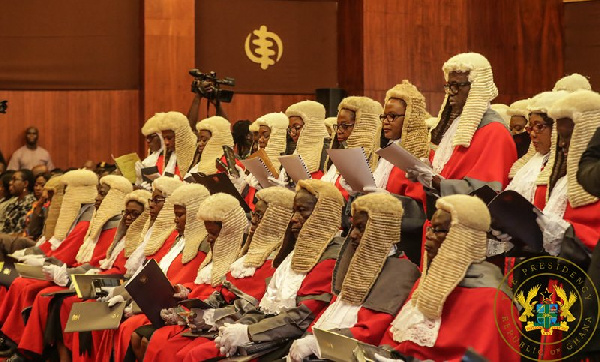

Ghana’s constitutional history offers a sobering lesson on the dangers of unchecked executive power over the judiciary. The First Republican Constitution of 1960, under Article 44(3), granted the president sweeping authority to dismiss the Chief Justice at will, without requiring justification. Other enabling provisions of the 1960 Constitution were infamously invoked to remove three distinguished justices, Edward Akuffo Addo, Kofi Adumua Bossman, and Robert Samuel Blay, in a manner that cast a shadow over judicial independence. Notably, Justice Akuffo Addo’s dismissal followed his role in acquitting a defendant in a high-profile treason trial, which also led to the removal of Chief Justice Sir Arku Korsah. These actions underscored how easily judicial impartiality could be compromised when leaders wield arbitrary power to silence dissent or influence legal outcomes.
Three decades later, the framers of the 1992 Constitution sought to correct this flaw. Article 146 established a critical safeguard: the president may only initiate the removal of a Chief Justice or superior court judge after a prima facie case of misconduct or incapacity has been independently established. This reform was no accident. It reflected a hard-won recognition that an independent judiciary is the bedrock of democracy, ensuring that no branch of government, executive, legislative, or judicial usurps unchecked authority.
The Perils of Politicizing Judicial Tenure
While the 1992 reforms marked progress, the risk of politicising judicial removals persists. A president’s ability to “sanction the process” under Article 146, even after a prima facie finding, leaves room for abuse if exercised without scrupulous adherence to due process. History reminds us that when leaders weaponise judicial appointments or removals to settle political scores, they erode public trust in the courts. Judges must never fear that rulings unfavorable to the government could cost them their positions. Likewise, removal proceedings must never be exploited to intimidate the judiciary into alignment with executive agenda.
Democracy Demands Compromise, Not Conquest
Ghana’s democracy thrives only when institutions are respected as neutral arbiters, not pawns in political battles. The judiciary’s role in interpreting laws and checking governmental excesses is vital to maintaining the rule of law. To undermine this through arbitrary removals or even the perception of such is to destabilise the very foundation of our social contract.
True democracy requires tolerance for dissent and compromise in governance. Leaders must resist the temptation to conflate legal accountability with political retaliation. The removal of a judge should be an extraordinary measure, reserved for grave offenses like proven corruption or ethical violations, not a tool to silence independent voices. Similarly, opposition actors must avoid cynically framing legitimate accountability processes as political persecution.
A Call for Vigilance and Integrity
As Ghana continues to strengthen its democratic norms, citizens and leaders alike must remain vigilant. The Judicial Council, Parliament, and civil society have a duty to ensure that any removal process under Article 146 is transparent, evidence-based, and devoid of partisan influence. The media and public must hold power to account, demanding that the judiciary’s independence remains inviolable.
Democracy is not merely the act of voting; it is a culture of respecting institutions, upholding checks and balances, and prioritising the common good over short-term political gains. Let us honor the lessons of our past by committing to a future where judicial independence is sacrosanct; a future where compromise, fairness, and tolerance define our pursuit of justice.
The Road Ahead
Ghana’s journey since 1960 proves that constitutional guardrails matter. Let us defend them fiercely, for a democracy that cannot protect its judges cannot protect its people.