
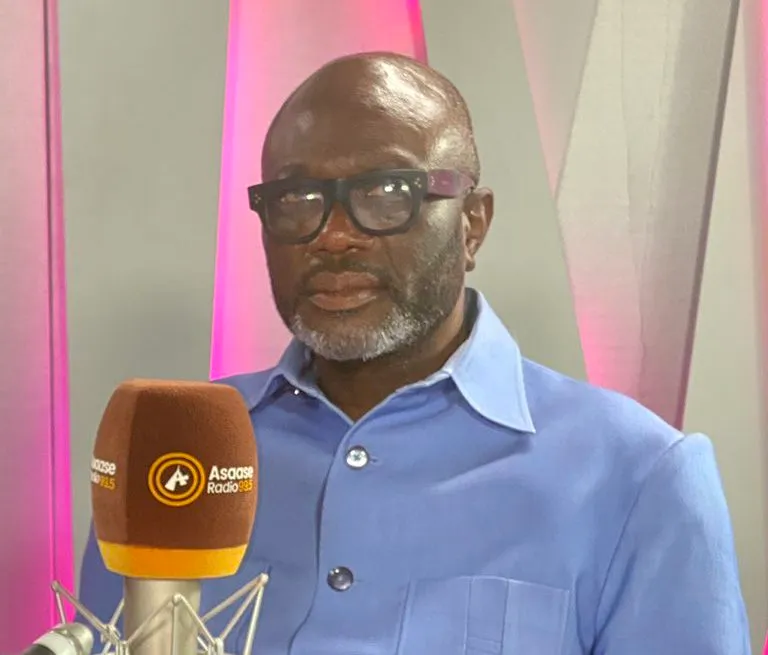

The President of the Ghana Union of Traders’ Associations (GUTA), Joseph Obeng, says the government’s new VAT restructuring will create severe distortions in the retail market and undermine the very compliance the policy seeks to achieve.
Speaking on the Asaase Breakfast Show on Monday (17 November)following the presentation of the 2026 Budget, Dr. Obeng dismissed suggestions that traders will automatically reduce prices because of the VAT rationalisation. Instead, he warned that the new threshold and rate changes could trigger unfair competition and discourage compliance.
According to him, the shift from a 4% flat rate to the standard 20% VAT will significantly increase operating costs for many traders — especially since the government has raised the exemption threshold from GH¢200,000 to GH¢750,000 annual turnover.
“What this means is that some traders in the same market space will not pay VAT at all, while others will be forced to charge 20%,” he said. “Taxes should not be discriminatory. You cannot have people selling the same goods in the same vicinity, with some charging VAT and others completely exempt.”
He warned that consumers, being rational, will naturally purchase from VAT-exempt traders, leaving VAT-registered sellers “victimised” and unable to compete.
“The consumer has discretion. If you go to a place where VAT isn’t charged, you’ll get cheaper prices. So those who must charge VAT will lose customers,” he noted.
Dr. Obeng argued that the government should have been “bold enough” to apply the modified tax system universally across the informal sector instead of creating a split market where some traders pay a 30% turnover tax at year-end while others face the full VAT regime.
He added that the new threshold also incentivises under-reporting.
“A person selling GH¢2,500 a day must pay VAT, but someone selling GH¢2,200 is exempt. People will manipulate figures just to remain below the threshold. This will make compliance impossible,” he said.
Touching on the government’s plans to fight under-invoicing through digitised customs systems and artificial intelligence, the GUTA president insisted that without first reducing duty rates, digital enforcement will only lead to mass default and seizure of goods.
“Why do people under-declare? Because duties are between 55% and 65% of invoice value. If you bring AI without reforming the system, people simply cannot pay,” he warned.
Dr. Obeng, however, welcomed the recent exchange rate stability, saying it has given importers temporary relief after years of heavy capital losses.
GUTA is expected to meet the Finance Ministry to demand adjustments before implementation, with Dr. Obeng cautioning:
“If government wants compliance, it must first create fairness. Otherwise, traders will find a way around it — that is human nature.”
Source: asaaseradio.com