
They told us there would be a reset.
Not the slow, buffering kind, but the sharp, dramatic one. 120 days, they said, but they went on a honeymoon
We counted those days like tenants counting down to a promised roof repair. Rain came. Buckets returned to their old positions.
The Galamsey That Refused to End
They shouted, “We will end galamsey.”
Bulldozers will burn. State of emergency.
They will shoot to kill. Forests breathing again.
Rivers would return to blue.
Instead, we got launches.
Tree for Life, Blue Water
beautiful banners, greener logos,
while the rivers continued their new career
as brown soup or tea brewed in anger
our rivers still drip poison like a bad cough
The law allowing mining in forest reserves?
A vow was made to repeal it.
The vow enjoyed parliamentary tourism.
In the meantime, the Pra and Ankobra
flow like resigned civil servants
showing up, but tired.
The GoldBod, The New Cash Cow
Instead of shutting down illegal mining,
they appointed a CEO to the Ghana Gold Board (GoldBod)
A CEO. Because when a house is on fire in Ghana, sometimes we appoint a fire management consultant to supervise the flames.
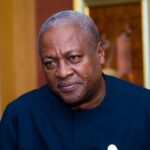
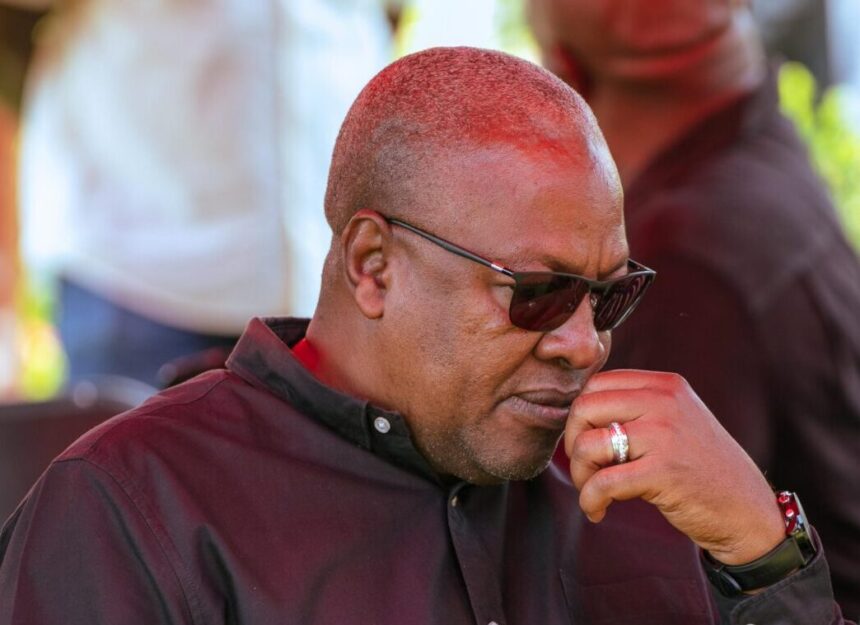
And while promises echoed about ending the Galamsey scourge, John Mahama is building his family legacy from Galamsey while the CSOs and the NPP debate river pollution.
Sammy Gyamfi’s wife now has a gold jewellery shop in Dubai, and sceptics everywhere stroke their beards and ask: If we were serious about cleaning up gold, why is this gold shining abroad? The gold is moving. The rivers are not healing.
The Cathedral That Was Corruption—Until It Wasn’t
They shouted about corruption in the National Cathedral project. They marched, they thundered, they swam in the pool, and they promised exposure.
Audit reports later complicated the narrative.
The cathedral money was counted, measured, and accounted for. The audit reports contradict the noise from Okudzeto in Parliament and leave the ordinary Ghanaian asking:
Was the outrage about corruption… or just good theatre to win votes?
The Jet That Was “Fit for Purpose”—Until It Wasn’t
We were told Ghana’s presidential jet was fit for purpose. Fit. For. Purpose. Today, the president reportedly flies in a luxury private jet costing $17,000 per hour. Apparently, the purpose has evaporated
ORAL and the Echo
Operation Recover All Loot.
They said ORAL would bite
A name with courtroom drama.
We heard echoes. We leaned forward.
We saw press briefings.
A few files shuffled.
Many headlines rehearsed.
What came was mostly throat-clearing
Recovery is quieter than rhetoric.
And so far, rhetoric is winning.
Justice, once again, was “in progress”.
In Ghana, “in progress” is a comfortable sofa.
Promises lie there often.
Goat Meat and Gout
They said headmasters would receive funds
to feed SHS students properly,
even goat meat, they said.
Yet more students developed gout than got goats. Because promises, like menus, are easier to announce than to serve.
The Photocopy Machine and 50,000 Gallons
We were told Okudzeto Ablakwah built his wealth from humble beginnings.
A photocopy machine, hard work, discipline.
Now he is able to supply 50,000 gallons of fuel free of charge to his constituents. The irony is that the fuel prices are cheap, but his constituents cannot buy
Ghanaians are good at maths. Even if we are bad at budgets. A photocopy machine prints paper. It does not refine petroleum. So the question lingers, not shouted, just asked quietly: Where did Okudzeto get the money from?
Cocobod and the Theatre of Cocoa
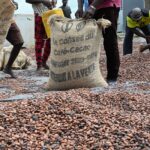
They said cocoa farmers would smile again.
Better prices. Better days. But the farmer still stands in his field, hands cracked like dry earth, pockets empty. calculating fertiliser against school fees. Waiting for “adjustment” to adjust.
The adjustment came, and it is downwards from 3,600 to 2,500.
Cocobod was supposed to stabilise the cocoa sector. Instead, it increasingly resembles a media production house.
Press conferences have increased more than cocoa prices for farmers. Farmers still struggle.
Cocoa once built this nation. Now it builds talking points. Randy Abbey, indeed, talk is cheap.
A Million Coders or Abegistans
They said one million coders every year.
A digital revolution. Silicon Accra.
What multiplied instead were tiktokers, betting slips,
crypto heartbreak, and WhatsApp messages beginning with “Abeg Sir”.
No new jobs, just more unemployed. Abegistans
The 24-Hour Economy in the Pipeline
They said jobs. They said 24-hour economy.
They said productivity would hum through the night. Yet dismissal letters have their own 24-hour policy. They arrive without sleep.
Teachers, Nurses, and Doctors
Have gone months without pay; all wait in the waiting room of another 3-month salary scandal
The Broken Promises
They said vigilantes would leave the uniforms.
Security would be professional, neutral, and trusted.
The National Security does not secure the nation; it terrorises innocent Ghanaians with criminals hiding behind the masks of national security. The police do not maintain law and order; they protect order from above.
They said scholarships would no longer be
a family-and-friends enterprise. Transparency would reign. Merit would prevail.
Yet whistleblowers like Kofi Ofosu Nkansah, who alleged corruption at the Scholarship Secretariat, found themselves arrested and reportedly mistreated.
In the new Ghana, exposing corruption can come with handcuffs. The message travels fast: silence is safer than truth.
They said roads and hospitals.
Drive a few kilometres outside the manifesto, the budget and the state of the nation address.
Some potholes now qualify as heritage sites.
They have survived administrations. They know our cars by name.
Scandals That Whisper, Then Disappear
And then the quiet scandals…
There is a peculiar genre of Ghanaian drama.
It begins with sirens. It ends with silence.
Under the archive titled “Breaking News That Broke Nothing”,
We were given missing ECG containers. Entire shipments allegedly disappearing into administrative fog. Containers. Not teaspoons. Not paper clips. Containers. Millions of dollars’ worth of public assets floated somewhere between port and explanation. Mr Jinapor, how far?
Allegations of cocaine trafficking tied to individuals linked to the government and the NDC party. Dark questions. Very brief outrage.
The cocaine story sank beneath the next headline.
Stacks of U.S. dollars discovered in a container linked to an NDC financier. Not coins in a drawer. Not savings under a mattress. A container. Of dollars. The dollars became a rumour with no courtroom sequel. What was the noise about Cecilia Dapaa?
It is a peculiar magic trick: a scandal enters roaring like a lion and exits like a disciplined house cat. Like the sanitary pad saga, where even the dignity of schoolgirls became procurement theatre. In this NDC republic, even basic hygiene must pass through a committee.
In the presence of these unresolved questions, some civil society voices declare confidently…
There are no scandals yet. Perhaps the scandals are shy. Perhaps they dissolve when stared at too long. Or perhaps, in Ghana, if a scandal is not pursued, it graduates into normalcy.
The Economy of Two Realities
They say fuel prices are down. Inflation is easing. The dollar is cooperating. The graphs are smiling. But at Makola tomatoes are still stubborn.
The consumables glare at you from the market stall like unpaid school fees. At Kumasi magazine, the spare parts are pricey. You cannot cook a line graph. You cannot fry statistics. The IEA report came out; 7 out of 10 Ghanaians are concerned about high food costs. But the Aban papa choristers shout… Inflation and exchange rates are down. Just like how NPP shouted “Free SHS” to opposition.
Electricity bills do not read economic briefings.
Fuel may dip. Water bills do not. Rent does not.
School fees do not.
Meanwhile, the president tours, speaks, and assures. The microphones nod.
Perhaps the economy is indeed healing… in spreadsheets, in briefing rooms, and in PowerPoint transitions.
But on the ground floor of the republic,
People are not PowerPoints. They are mothers pricing kenkey twice. They are young graduates refreshing job portals. They are farmers who cannot eat policy drafts.
They are civil servants calculating light bills
with the seriousness of constitutional lawyers.
The Paradox
The data says improvement.
The street says endurance.
The podium says launched.
The people ask, “Completed?”
The spreadsheets say “improving”.
The streets say: enduring.
The promise says reset.
The roof still leaks.
So tell me,
when you step outside the speech,
when you enter the market,
when you pay the bill,
when you watch the river pass by the village
Are you living in the Ghana of the graphs and statistics? Or the Ghana of the ground?
Written By James McKeown
Helsinki, Finland