
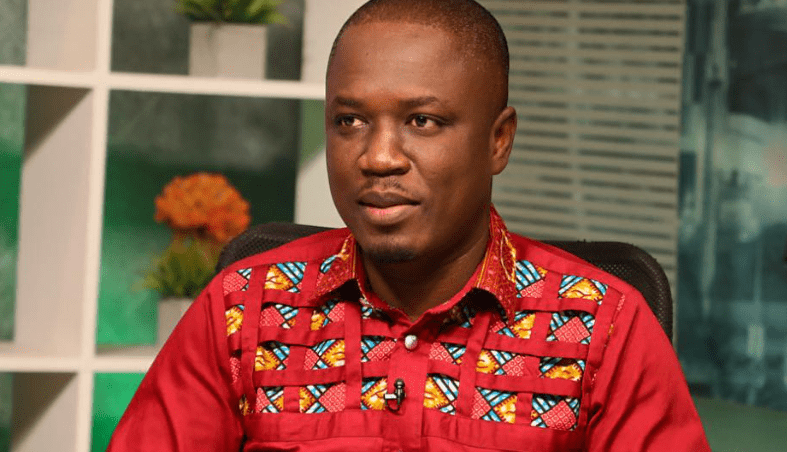

Senior Research Fellow at the Institute of Economic Research and Public Policy (IERPP), Dr. Frank Bannor, has cautioned that although the government’s recent tax cuts may feel politically rewarding and offer citizens short-term relief, they pose serious long-term risks to Ghana’s economic health.
Speaking during a detailed discussion of the 2026 Budget Statement, Dr. Bannor urged the public to look beyond the headlines and examine the technical appendices of the budget, which he said reveal the true picture of Ghana’s fiscal outlook.
Citing Appendix 3A, he highlighted that interest servicing remains the second-largest component of government expenditure. In 2025, out of the GH¢57.7 billion allocated to interest payments, a staggering GH¢50 billion will go toward domestic debt servicing.
“That is shocking,” he stressed. “It reflects both the heavy borrowing undertaken by the current government in its first year and the debt legacy inherited from the previous administration. It also signals significant borrowing expected in the coming years.”
Dr. Bannor noted that the comparatively low allocation of GH¢7.6 billion for external debt servicing is misleading. External payments are only lower because Ghana’s external debt obligations are currently suspended. These payments, he warned, will resume strongly from late 2026, with steep schedules expected through 2027, 2028, 2029 and beyond.
“This presents a major threat to fiscal discipline,” he said. “It will test the government’s ability to reduce borrowing—something Ghanaians have demanded for years.”
Turning to the government’s decision to abolish certain taxes—including the COVID-19 levy—Dr. Bannor acknowledged that such measures are popular because they reduce the financial burden on households. However, the fiscal consequences are substantial.
The COVID-19 levy alone was projected to contribute GH¢3.21 billion to the government’s GH¢229 billion total revenue target for 2025.
Source: metrotvonline.com