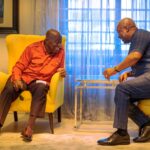


Minority Leader in Parliament, Alexander Afenyo-Markin, has strongly criticised contractors supplying the Ghana School Feeding Programme for deliberately bypassing local rice farmers in favour of cheaper imported rice, despite clear presidential directives to support domestic production.
Speaking at the Kwahu Business Forum on Friday, April 3, 2026, Afenyo-Markin described the actions as a serious setback to Ghana’s push for agricultural self-reliance and food security.
“Contractors engaged to supply the School Feeding Programme with locally produced rice are bypassing farmers who had prepared their produce following a direct presidential directive,” he stated.
The School Feeding Programme, a multi-million-cedi government initiative, was designed to serve as a guaranteed market for Ghanaian rice growers under the “Buying Ghana” agenda. Instead, many contractors are reportedly sourcing rice from abroad, leaving local farmers with unsold produce, mounting debts, and significant post-harvest losses.
Afenyo-Markin accused the contractors of undermining the rice value chain and sabotaging national efforts to strengthen local agriculture. He pointed out that despite repeated calls from the Peasant Farmers Association of Ghana, the National Food Buffer Stock Company (NAFCO) has refused to disclose the identities of the contractors involved.
“The Peasant Farmers Association of Ghana has repeatedly requested that NAFCO publish the names of those contractors. NAFCO has not responded,” he said. “What has been described is not a market failure. It is a procurement betrayal.”
The Minority Leader emphasised that true economic progress requires prioritising local producers, creating real opportunities for Ghanaian farmers, and ensuring government programmes deliver value to citizens rather than foreign suppliers. He warned that continued preference for imports erodes trust between the state and rural communities while stalling the country’s journey toward genuine self-sufficiency.
Afenyo-Markin called for greater transparency and accountability in public procurement. He announced that the Minority Caucus in Parliament plans to push for a formal inquiry to compel the release of all active supply contracts and identify the beneficiaries.
“Let us choose accountability over secrecy,” he urged, adding that procurement practices must align with the government’s stated commitment to protecting the livelihoods of local farmers.
This development highlights the urgent need for policies that genuinely empower Ghanaian businesses and farmers, ensuring that public funds circulate within the local economy to create jobs and build resilience in the agricultural sector.