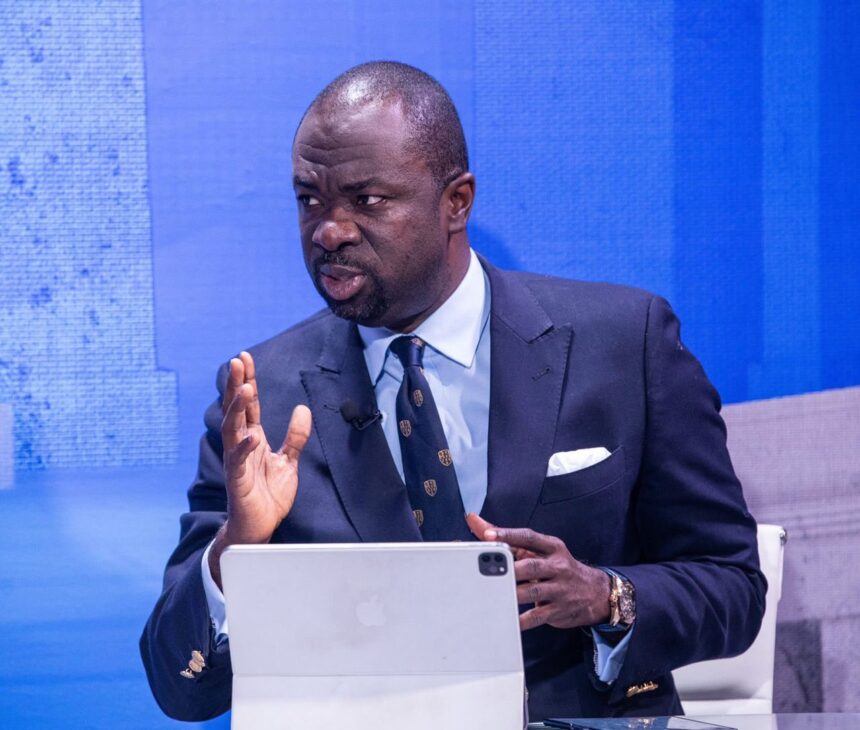

A private legal practitioner and the Member of Parliament for Manhyia North, Nana Agyei Baffour Awuah has a sharp critique of the Attorney-General’s decision to challenge the prosecutorial independence of the Office of the Special Prosecutor (OSP), describing it as poorly thought out and potentially damaging to Ghana’s anti-corruption architecture.
The lawyer and a legislator told the Attorney-General that his move against the OSP is “not strategic.”
The Attorney-General, Dr. Dominic Ayine, has mounted a constitutional challenge arguing that Parliament exceeded its authority by granting the OSP independent prosecutorial powers without the oversight of the Attorney-General. This position is contained in the government’s response to a suit at the Supreme Court questioning aspects of the OSP Act, 2017 (Act 959).
The development has raised grave concerns that the NDC government is attempting to weaken an institution specifically created to fight high-level corruption independently. The OSP was established under the previous NPP administration with strong bipartisan support precisely to address the long-standing problem of selective prosecution and political interference in corruption cases.
Under the NPP, the OSP was allowed to operate with a reasonable degree of autonomy to investigate and prosecute corruption without constant interference from the executive. The current Attorney-General’s aggressive stance risks reversing this progress and returning the country to an era where anti-corruption efforts were subordinated to political control.
Critics argue that weakening the OSP at this time sends the wrong signal to both local and international partners who expect Ghana to demonstrate genuine commitment to fighting graft. Independent institutions like the OSP are essential for building investor confidence and ensuring that public resources are protected from abuse.
Strong governance demands robust, independent institutions that uphold accountability and the rule of law. Any attempt to centralise prosecutorial power in the Attorney-General’s office — particularly when occupied by a political appointee — risks creating the perception of executive overreach and selective justice.
The Attorney-General must reconsider this approach. A more strategic path would be to strengthen the OSP through proper funding, operational support, and clear coordination mechanisms rather than seeking to clip its wings through constitutional challenges.
Ghana cannot afford to politicise the fight against corruption. Effective anti-corruption architecture requires institutions that are seen to be independent and competent. The current move by the Attorney-General falls short of that standard and risks undermining public confidence in the government’s commitment to good governance.