
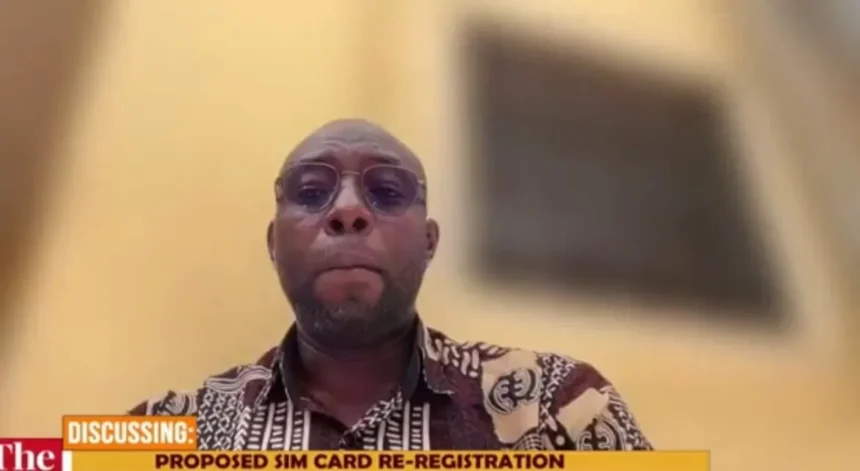

A cybersecurity expert has raised concerns over proposals to use short codes for the upcoming SIM card registration exercise, warning that such methods may not support biometric verification requirements.
Abubakar Issaka, President of the Cyber Security Experts Association Ghana, said while authorities are planning an upgraded registration system, the technical process must be clearly defined to avoid confusion.
“From the technical point of view, you cannot use a USSD code to follow the procedure to successfully satisfy a biometric process. You can satisfy a biodata process… but to verify biometrically using a USSD code, I am yet to see a technology that does that,” he said on Asaase Radio’s The Forum.
His comments follow President Mahama’s comments that aspects of the new SIM registration could involve short code verification, a claim he said may not align with biometric requirements such as fingerprint validation.
IMEI numbers
Issaka noted that the upgraded system is expected to incorporate device-level identification through IMEI numbers and introduce a consent-based approach for registering multiple SIM cards.
He indicated that the process is likely to involve physical biometric verification, which could require users to interact with devices in person.
“The objective is to ensure that every mobile device is duly registered using their unique identifier, which is the IMEI number,” he said, adding that additional SIM registrations would require user approval via a one-time password sent to a primary number.
“If this is going to be a contact verification process… then there will be some level of queues, because users will need to verify their identity physically,” he said.
Issaka called for clearer communication from authorities on how the process will be implemented, particularly on whether biometric verification will be contact-based.
The planned SIM registration overhaul is part of broader efforts to strengthen digital security in Ghana, amid rising concerns over mobile money fraud and identity verification gaps.