
M.A. Y Kulewosi
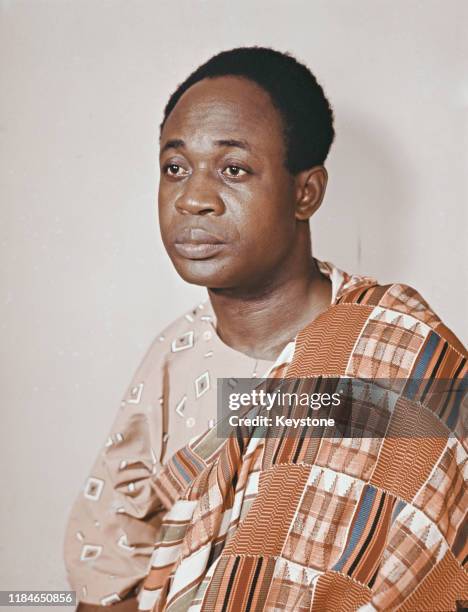
Nkrumah took over the management of this Country in 1951, from that time until 1957, Nkrumah had the opportunity to learn on the job on how to govern a country. So that he could do better when he is finally handed power in 1957.
In that year, Ghana’s net reserve stood at $269million, Ghana had Zero debt and was described as a very prosperous nation with strong fiscal discipline and out look. Some even described Ghana as a country that could be run without a president and still be successful.
This was not because the British were not spending.They were paying themselves handsomely, paying civil servants, building railways, schools, roads and were providing electricity to selected towns and villages.
They had established a West African Currency board WACB (better than IMF) to regulate our spending and ensure that our currency remained at par with the British pound just as the Arab states have done with the dollar today which has kept their currencies strong and stable.
But even without first creating an industrialized society that could make us net exporters or major foreign exchange earners, Nkrumah wanted to be given the freedom to print more paper money and spend recklessly without supervision.
Mind you this was after WWII and many nations were still relying on IMF for loans to pay workers and undertake reconstruction. Even France which was a colonial power and controlled huge swathes of Africa lands and its resources went to IMF for $25million but somehow Nkrumah thought he could build a magic economy.
By 1963 Nkrumah got what he asked for. He got the bank of Ghana establishedhad and had the freedom to print his own currency to pursue all the developmental agenda he thought he wanted.
Strangely, the only major project he chalked after this freedom was the Tema motorway. Everything from the Akosombo Dam to the Tema port and township project and oil refinery were achieved under the pseudo-IMF WACB supervision which he had just exited with no way back.
By 1965 Ghana’s economy began to suffer. Our currency had lost so much value that from spending only 9.5% of GPD to run the country of 6million people in 1957 we began to spend close to 26% of GDP in 1965 to do the same things.
From a government budget surplus of 14.5% of GDP in 1957 we now recorded a deficit of 6.5% of GDP in 1965. In context our net reserve when we got independence was $269million with zero debt, but by 1965 our public foreign debt was estimated at $700million, with inflation around 26.4% (IMF, 1966). The annual GDP growth was 1.4% in 1965 and by 1966 it was -4.3%. Ghana’s public debt had risen from zero to 25% of GDP in 1965, when even France which was reconstructing after the destruction of WWII had a debt to GDP of 17.6% in 1965.
Many of the companies that we spent money building were running at a lost. Others were also not viable because of lack of raw materials and non availability of markets to sell what we produced. And strangely Nkrumah went to ask the French, who themselves had taken loans from IMF, for aid.
Whilst this was going on Nkrumah cracked down on dissenting voices. Even the finance minister A.K Gbedema who gave Nkrumah his first major electoral victory and gave us all the Akosombo hydroelectric dam, was not safe. Nkrumah took the friendly advise as a threat to his presidency and dream of being the president for life, and quickly accused Gbedema of corruption sending him into exile immediately.
Those who did not have the courage to speak just stayed quiet and waited for Kotoka, the Hero and Father of Ghanaian Democracy, to give Ghana the needed freedom so that they too could defect from the CPP. Which they did gracefully.
Needless to add that, in the face this problems, Nkrumah and his CPP henchmen were determined to establish a one party state that would get him declared president for life.
The mess Nkrumah created is still with us today. Our weak currency means that after School, young will people queue up at embassies to go to the West and even to Arab countries whose economies had succeeded just because they made similar deals that were already granted us free of charge in the form of the WACB, and all we needed was to negotiate for a little leverage at a time until that time when we could finally break free.
Today, because of our sorry state, we go to IMF voluntarily and offer more leverage than WACB ever asked for. What did we gain! And how can any right thinking person tell us that the leader who put us through this mess is our Messiah that we should name everything in this country after!