
I have been watching this cocoa situation closely. I have listened to the farmers. I have read the statements from the government. I have followed Franklin Cudjoe’s commentary. The picture is disturbing.
Let me start with the farmers. They are angry. They have reason to be.
The government cut the producer price from GH¢3,625 to GH¢2,587 per bag. That is a drop of more than GH¢1,000 on every single bag. A farmer with 100 bags loses GH¢103,800. That is school fees. That is fertiliser. That is survival.
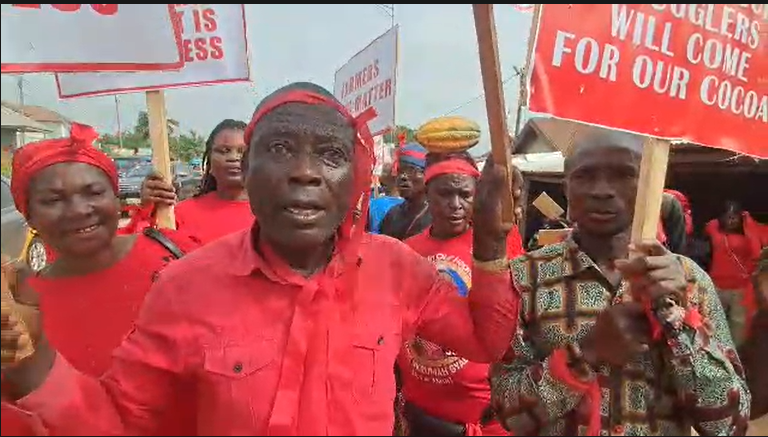
The farmers are protesting in Kadjebi. They are protesting in Assin North. They are protesting in Dodo-Amanfrom. They are protesting in Western North. They say this has never happened before. They are right.
The government says the world market price dropped. Prices fell from over $11,000 to around $4,100. That is true. But that explanation is dishonest. It is incomplete.
COCOBOD was created to protect farmers from exactly this kind of shock. The entire system exists to absorb global price volatility. Farmers are not supposed to bear the full weight of every market swing. That is the purpose of a Cocoa Board.
Majority Leader Mahama Ayariga admitted something important in Parliament. He said forward sales cover about 70 per cent of annual output. That means most of the crop was already sold. That means the government had a buffer. They chose not to use it.
The farmers themselves have made this point. Richard Wodzra from Dodo-Amanfrom said something powerful. Producer prices are not always adjusted upward when international prices increase. Farmers remember this. They know the government only applies market logic when it hurts them.
The government blames the global market. But every cocoa-producing country faces the same global market. The difference is how you manage it. The previous model absorbed shocks. The current model passes them directly to farmers.
There is something else the farmers in Kadjebi said. During the 2024 campaign, the then opposition party promised GH¢6,000 per bag. They voted based on that promise. Now they have a price cut instead. They feel deceived. That is a dangerous thing.
Now let me turn to Franklin Cudjoe.
He has always criticised COCOBOD. He says the system is bloated. He says it is financially unsustainable. He wants deregulation. He wants farmers to form cooperatives and negotiate directly with buyers. Those are legitimate views.
But look at what he says about this crisis. He does not defend the farmers. He defends the government.
He says the price reduction is reality catching up with unsound payment policy. He says cocoa operates in a global futures market. He says adjustments simply reflect international trends.
He compares this to the NPP’s financial sector haircuts. He calls those wicked and criminally imposed. But this price cut, he says, is different. This is simply market reality.
Notice the pattern. When the NPP was in power, he was their fiercest critic. When the NDC cuts farmer incomes by 29 per cent, he becomes an economics lecturer. He explains why it is necessary.
He did not ask why the forward sales could not cushion the blow. He did not demand that the government absorb the shock instead of passing it to struggling farmers. He did not question why the buffer was abandoned. He simply validated the government’s decision.
This is not the behaviour of an independent policy analyst. This is the behaviour of a propagandist.
His role is now clear. When the government takes a painful decision, he steps forward. He frames it as unavoidable. He attacks the old government to distract from the failures of the new one. He provides intellectual cover for policies that hurt ordinary Ghanaians.
The farmers have spoken. They say the government deceived them. They say the new price is unfair and untimely. They say this has never happened before.
Franklin Cudjoe should be amplifying their voices. Instead, he is amplifying the government’s talking points.
That is the difference between a CSO leader and a propagandist. A CSO leader stands with the people. A propagandist stands with the power.