
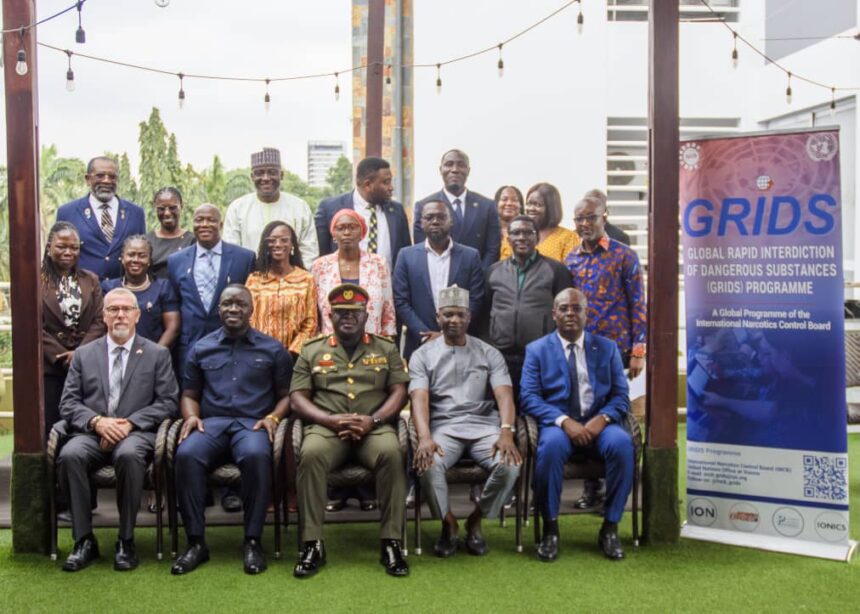

In a significant step toward curbing the illegal trade of dangerous substances, the Narcotics Control Commission (NACOC) of Ghana hosted a two-day twinning mission in Accra from September 11 to 12, 2025. The event, organized in collaboration with the International Narcotics Control Board’s (INCB) Global Rapid Interdiction of Dangerous Substances (GRIDS) program, brought together law enforcement agencies from Ghana and Nigeria, alongside private sector partners like courier services and e-commerce providers. The mission aimed to tackle the growing misuse of e-commerce platforms and internet services for trafficking new psychoactive substances (NPS), synthetic opioids, and their precursors.
The program focused on fostering regional cooperation and sharing expertise to strengthen efforts against the exploitation of legitimate online services for illicit purposes. Discussions centered on the challenges posed by non-medical synthetic opioids and their chemical precursors, which have emerged as critical concerns for regulators in West Africa and beyond. By uniting stakeholders from both public and private sectors, the event underscored the urgency of innovative strategies to address this complex global issue.

In his opening address, NACOC’s Director-General, Brigadier General Maxwell Obuba Mantey, emphasized the critical need for collective action. “This gathering reflects our shared commitment to tackling the trafficking of dangerous substances through e-commerce and internet platforms,” he said, as reported by NACOC. He highlighted the dual nature of the digital ecosystem, which offers immense opportunities for connectivity and commerce but also serves as a conduit for criminal activities. “Criminal networks are increasingly exploiting digital platforms, social media, and online marketplaces to traffic NPS, synthetic opioids, and other controlled substances,” Mantey noted.
West Africa faces unique challenges in this fight, including limited border resources, sophisticated trafficking techniques, and cross-border vulnerabilities. Mantey stressed that these issues demand regional collaboration and forward-thinking approaches. He praised the INCB-GRIDS program for equipping participants with essential tools, intelligence support, and a collaborative framework to counter these threats effectively. “NACOC remains steadfast in our mandate under Act 1019 to protect public health and national security,” he added, citing the commission’s efforts in enhancing digital forensics, expanding public-private partnerships with e-commerce platforms and Internet Service Providers (ISPs), and prioritizing capacity-building and cross-border cooperation.
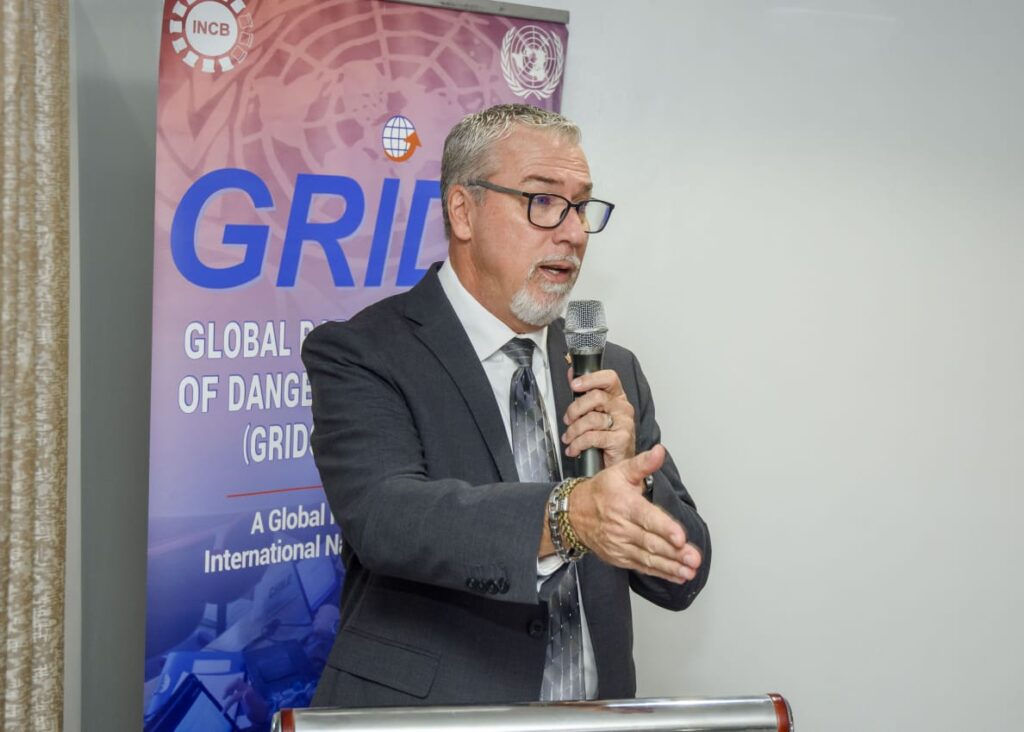
Clarence “Chip” Duncan, Law Enforcement Advisor to Ghana from the U.S. International Narcotics and Law Enforcement (INL), echoed Mantey’s call for collaboration. Speaking at the event, Duncan expressed INL’s pride in supporting the INCB-GRIDS initiative, which he described as a pivotal step toward strengthening West Africa’s response to online trafficking. “The issue is one of great urgency and complexity, requiring robust cooperation between law enforcement agencies and internet service providers,” he said, according to INL’s official statement. Duncan highlighted the evolving nature of cybercrime, noting that the internet serves as both a tool and a battleground in the fight against illicit trafficking.
The trafficking of hazardous substances online poses a significant threat to public health and safety, often crossing borders with speed and anonymity. Duncan emphasized that the initiative goes beyond enforcement, prioritizing prevention and education. “Our joint efforts aim to create a framework that enables cyber specialists and law enforcement to swiftly identify and dismantle networks engaged in these illicit activities,” he explained. A key component of the program is training, with a focus on equipping law enforcement officers with advanced digital skills to enhance investigative and operational capabilities.
The twinning mission also underscored the importance of public-private partnerships. By engaging e-commerce providers and courier services, the program sought to address vulnerabilities in legitimate supply chains that traffickers exploit. Participants explored best practices for monitoring and regulating online platforms, with an emphasis on real-time intelligence sharing and cross-border collaboration. The initiative aligns with NACOC’s broader efforts to strengthen digital forensics and cyber-enabled investigations, ensuring that law enforcement stays ahead of perpetrators.
Duncan urged participants to remain committed to leveraging cutting-edge technologies and data analytics to combat trafficking networks. “By fostering innovation and building capacity, we can create a safer and more secure future,” he said, as quoted by INL. The event marked a milestone in regional efforts to address the growing threat of online drug trafficking, with Ghana and Nigeria leading the charge in West Africa.
The INCB-GRIDS program continues to play a vital role in supporting global efforts to interdict dangerous substances. By fostering collaboration and providing critical resources, the initiative empowers nations to tackle the challenges of cyber-enabled drug trafficking head-on. As Mantey concluded, “Together, we can protect our communities and ensure that the digital age serves as a force for good, not exploitation.”
Sources: Statements from NACOC and INL, September 2025.