
Sunday, 15 Mar 2026
  • About us
  • Our policy
  • Blog
  • Contact
Subscribe
thepatriotnewsonline.com
  • Home
  • Politics

    THE PRESIDENT, THE BROTHER, AND THE JET: A QUESTION GHANA CANNOT IGNORE

    By Thepatriotnewsgh

    Young Cocoa Farmers Association Issue Ultimatum Over Payment Delays and “Galamsey” Threat

    By Agyemkum Tuah

    Reduction in utility tariffs collapses the propaganda that IMF conditionality caused the increase – Miracles

    By Agyemkum Tuah

    Wontumi deserves national chair role – Upper East NPP chairman

    By Agyemkum Tuah

    NPP rolls out online registration portal to streamline party registration

    By Agyemkum Tuah

    You cannot promise what you cannot offer – Amankwa-Manu on security recruitment

    By Agyemkum Tuah
  • Business
  • Opinion

    Mahama rules out 2028 bid, pledges to uphold two-term limit

    By Thepatriotnewsgh

    Afenyo-Markin rejects reserve plan as “theory,” presses government on jobs

    By Agyemkum Tuah

    Top COCOBOD directors ordered to stay home, NDC affiliates step in – Fiifi Boafo alleges

    By Thepatriotnewsgh

    ‘Any attempt to cut expenditure is welcome’ — Collins Adomako-Mensah

    By Agyemkum Tuah

    Afenyo-Markin pledges Minority support for Bawumia’s leadership

    By Agyemkum Tuah

    Minority caucus blasts gov’t over LGBTQ vote

    By Thepatriotnewsgh
  • Health

    Monitoring street food in Ghana costly and difficult – FDA

    By Agyemkum Tuah

    Kidney disease is a “silent killer” affecting many unknowingly – Dr Tanor

    By Agyemkum Tuah

    Dialysis costs pushing kidney patients into financial crisis – Renal Patients Association

    By Agyemkum Tuah

    “I walk freely without arrest or intimidation despite NDC claims in opposition” — Former Health Minister hits back at critics

    By Agyemkum Tuah

    The Emerging Hemp Industry: Why Every Ghanaian Must Embrace It

    By Agyemkum Tuah

    Five days without water: Pollution of Tano river sparks fresh fears over illegal mining in Sunyani

    By Agyemkum Tuah
  • Pages
    • About us
    • Our policy
    • Contact US
  • Health
  • Sports
  • World
  • Lifestyle
  • Travel
  • Health
  • Sports
  • World
  • Lifestyle
  • Travel
Font ResizerAa
thepatriotnewsonline.comthepatriotnewsonline.com
  • My Saves
  • My Interests
  • My Feed
  • History
  • Travel
  • Opinion
  • Politics
  • Health
  • Technology
  • World
Search
  • Home
  • Politics
  • Business
  • Sports
  • Opinion
  • Health
  • Travel
  • World
Have an existing account? Sign In
Follow US
© The Patriot News Network. All Rights Reserved.

Home » Opinion: Journal entry III — The waste of our hands

EnvironmentLifestyleOpinion

Opinion: Journal entry III — The waste of our hands

Agyemkum Tuah
Last updated: September 29, 2025 10:22 am
Share
SHARE

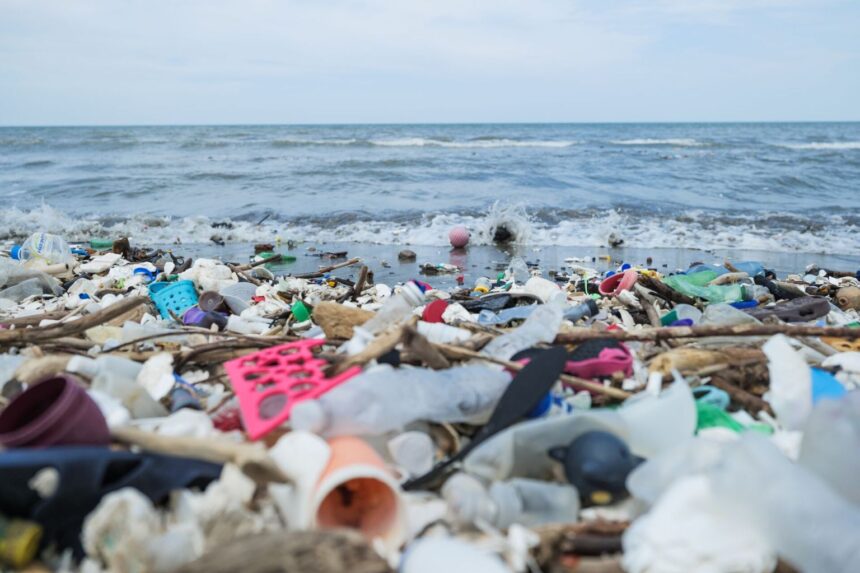
The city does not end where the pavement stops. It spills into the gutters, the canals, the rivers. Today I walked along the edge of a lagoon near Accra, and I saw what the city leaves behind: plastic bottles, market refuse, animal waste, broken electronics, and leaking batteries.

The water was sluggish, green with algae, carrying the smell of rot. No fish broke the surface. The silence was its own verdict.

We speak often of climate change and mining, but waste is the quiet third force turning our waters sour.

Unlike galamsey, it is not carried out with machines. Unlike global CO₂, it does not arrive unseen from the skies. It is our daily act of neglect. We drop, we dump, we pour, and the rivers bear it.

The chemistry is simple, cruel, and relentless. Organic waste from farms and markets washes into rivers, feeding algae with nitrogen and phosphorus.

The blooms look harmless at first—green swirls on the surface, fish hiding beneath. But when the algae die, they decompose, consuming oxygen and releasing CO₂ into the water.

The oxygen falls, the CO₂ rises, and the river acidifies. Fish suffocate not only from lack of air but from water turning corrosive. This is eutrophication —the cycle of excess, collapse, and decay.

I have seen it in lagoons from Benin to Côte d’Ivoire. Once, fishers cast their nets near the mangroves, pulling up tilapia, catfish, and prawns.

Now the nets come back slimy, clogged with weeds, or worse, empty. Women who smoke fish for market complain of scarcity, of prices too high for buyers. Children carry buckets heavier with waste than with catch.

But it is not only food waste. Landfills leak their poison, too. In Accra, Kumasi, Lagos, and Abidjan—every rainy season, the dumpsites bleed.

Black water, called leachate, flows into streams. It carries acids, heavy metals, and plastics broken down into invisible fragments.

It lowers the pH of wetlands, making fish nurseries into graveyards. It seeps into groundwater, making wells taste bitter. The communities living closest know the taste; they drink it when no other option remains.

Factories add their own chapter to this story. Tanneries, breweries, and textile plants discharge effluents, sometimes untreated, into rivers.

The water foams with detergent, stings with acid, and reeks of ammonia. Governments have rules, but rules dissolve where bribes flow.

The river becomes a dumping ground, cheaper than treatment plants. The price is paid not in corporate accounts but in poisoned ecosystems and sickened children.

Plastics float everywhere, a new form of sediment. They do not cause acidification directly, but they suffocate wetlands, block oxygen exchange, trap heat, and release toxins as they degrade.

Microplastics lodge in fish gills, in stomachs, and in the flesh sold at the market. The fishers tell me, “We open the belly, and it is full of plastic.” Acidification and plastics are not separate; they are partners in weakening the resilience of life in the water.

Science names it all with precision: eutrophication, leachate, biochemical oxygen demand, pH decline, microplastic bioaccumulation. But the fishers, the market women, the children by the shore—they know it in their own terms. They say: “The river is sick.”

I often think of the injustice of this sickness. Waste is not evenly made, nor evenly suffered. The wealthier districts have trucks that collect their refuse. The poorer districts are left with burning dumps and overflowing gutters.

In coastal villages, where infrastructure fails, the lagoon becomes the dump. The very communities most dependent on fish are those forced to poison their waters with waste.

And still, we build. Still, we consume. Still, we turn our backs when the waste leaves our hands. We believe it has disappeared because it is out of sight.

But the rivers remember. They carry our neglect to the sea, where acidification from CO₂ meets acidification from waste, a confluence of global and local wounds.

The fishers notice. In conversations from Lamu to Freetown, they tell me the same story in different words: “The fish are fewer. The water is dirty. The children fall sick.”

Their testimony is more than anecdote; it is the frontline record of ecological decline. It deserves to be read with the same seriousness as scientific surveys, because it is knowledge carried in lived experience.

Sometimes I wonder if we will only understand when the silence grows too loud. When the markets run out of fish. When the lagoons are nothing but sludge.

When cholera and typhoid spread after every rain. Waste is not a side issue; it is a central threat. Yet it hides behind the glamour of climate conferences and mining scandals.

It is too ordinary, too daily, too close to be seen for what it is: a slow acid burning through the foundation of our food security.

But writing these words, I feel a flicker of hope. Waste is not like CO₂; it is not invisible or global beyond our reach. It is made by us, and it can be managed by us. Composting, recycling, sewage treatment, and bans on dumping—all are possible.

The science is clear, the solutions known. What is missing is the will and the honesty to see that waste is not disappearing when it leaves our hands.

I close my notebook as the sun sets over the lagoon. The water glows red with the last light. From a distance, it looks beautiful. But beauty is not health.

I know what flows beneath that glow. The waste of our hands has written itself into the chemistry of this water. It has made the river sick.

The silence deepens.
Mare nostrum, vita nostra.

Richard Dablah

Email: richard.dablah@gmail.com

Source: asaaseradio.com
Disclaimer: The content published on this website is for informational purposes only. The views, opinions, and positions expressed by individual authors or contributors are theirs alone and do not necessarily reflect those of [patriotnewsonline.com]. While every effort is made to ensure accuracy, [patriotnewsonline.com] does not assume any responsibility or liability for any errors, omissions, or outcomes resulting from the use of this information. Readers are advised to verify facts independently and seek professional advice where necessary.

Share this:

  • Click to share on Facebook (Opens in new window) Facebook
  • Click to share on X (Opens in new window) X
TAGGED:ghanaJournal Entry IIISanitation in GhanaWaste Management
Share This Article
Email Copy Link Print
Previous Article Bekwai MP, Ralph Poku-Adusei, fulfills scholarship pledge to constituents
Next Article Opinion: The black box and the truth we deserve
Leave a Comment

Leave a Reply Cancel reply

Your email address will not be published. Required fields are marked *

Your Trusted Source for Accurate and Timely Updates!

Our commitment to accuracy, impartiality, and delivering breaking news as it happens has earned us the trust of a vast audience. Stay ahead with real-time updates on the latest events, trends.
FacebookLike
XFollow
InstagramFollow
LinkedInFollow
MediumFollow
QuoraFollow
- Advertisement -
Ad image

Popular Posts

I have retired from domestic politics – Gabby Otchere-Darko

A stalwart of the New Patriotic Party, Gabby Asare Otchere-Darko, has revealed that he has…

By Thepatriotnewsgh

Gov’t galamsey progress doesn’t reflect reality on the ground – A Rocha Ghana

ACCRA - Deputy Director of A Rocha Ghana, Daryl Bosu, has questioned the government’s claims…

By Agyemkum Tuah

“From Kumasi to Dallas: Lalas Abubakar’s Rise as a Ghanaian MLS Star”

From Mohammed Salisu at Monaco to Alexander Dijku at Spartak Moscow to Jerome Opoku at…

By Agyemkum Tuah

You Might Also Like

Opinion

OPINION: Bank of Ghana in the pockets of the political class!

By Thepatriotnewsgh
OpinionPolitics

The ECOWAS Court: Justice Torkornoo’s ‘last hope’ to save her job?

By Thepatriotnewsgh
BusinessGovernanceLegalNewsOpinionPolitics

Kow Essuman to Justina Nelson: Your claims about MIIF 2024 audited report palpably false

By Agyemkum Tuah
CrimeEnvironmentGeneral newsPolitics

What we know about 2 NDC MP’s links to threatening attack of soldiers over galamsey

By Thepatriotnewsgh
thepatriotnewsonline.com
Facebook Twitter Youtube Rss Medium

About US

ThePatriotnewsonline.com: Your instant connection to breaking stories and live updates. Stay informed with our real-time coverage across politics, tech, entertainment, and more. Your reliable source for 24/7 news.

Top Categories
  • World
  • Opinion
  • Politics
  • Tech
  • Health
  • Travel
Usefull Links
  • Contact Us
  • Advertise with US
  • Complaint
  • Privacy Policy
  • Cookie Policy
  • Submit a Tip

© The Patriot News Network.

All Rights Reserved.

Welcome Back!

Sign in to your account

Username or Email Address
Password

Lost your password?