

A full belly is useless if the spirit is starved. But try telling that to a man staring at a crumbling cedi and a mountain of national debt.
The Ghana Catholic Bishops’ Conference has just fired a warning shot across the bows of the Jubilee House, and the target is President John Mahama’s recent attempt at strategic foot-dragging.
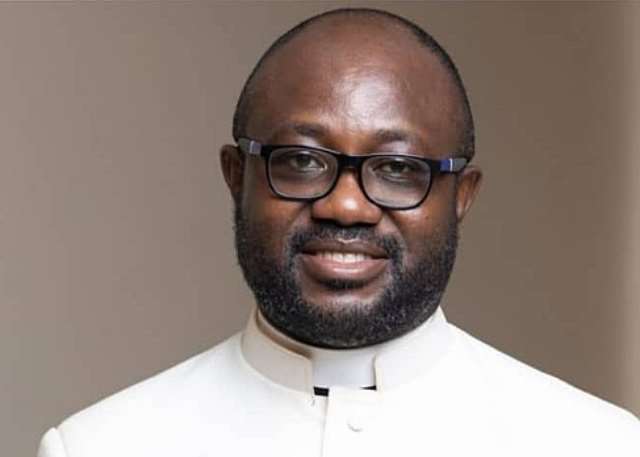
Rev. Fr. Michael Quaicoe, speaking for the Bishops, isn’t buying the government’s new favorite excuse. He argues that economic excellence and moral values are not rival siblings fighting for limited attention.
The data of history suggests he has a point; prosperous nations are rarely built on material wealth alone while their cultural and moral foundations are left to rot in the sun.
“A nation truly prosperous is the combination of the pursuit of both economic excellence and the upholding of moral values.”
The President recently told civil society that the anti-LGBTQ+ bill—reintroduced in the 9th Parliament—is “not among the most pressing priorities” right now. He wants to talk about inflation. He wants to talk about jobs.
But the Bishops see this as a false choice, a clever political sleight of hand designed to push an uncomfortable moral debate into the long grass while chasing IMF benchmarks.
It is a classic “this and that” versus “this or that” scenario. The church insists that governance is not a buffet where you can choose the economy and ignore the family.
The irony is sharp. The very administration that rode to power on a “Reset” agenda is now being accused of resetting its own convictions to avoid international pressure and economic sanctions.
“So it is not one over the other. It is not a question of this or that. It is more a question of this and that.”
If the state can find time to negotiate complex mining leases and debt restructurings, why does it suddenly lack the legislative clock-speed to address a bill that carries massive public sentiment?
The Bishops are effectively calling the President’s bluff. They are reminding him that a leader who prioritizes the pocket over the soul eventually loses the trust of the people who own both.
Is the government truly focused on “pressing priorities”? Or is it simply afraid that passing the bill will turn the international taps off at a moment when the bucket is empty?
The church’s disappointment is quiet but firm. It is the look of a parent watching a child hide behind a textbook to avoid doing their chores. Accountability cannot be postponed.
One question remains: If moral values are not a priority in a time of crisis, when exactly do they become convenient enough for the halls of power to care?
Development is more than just a rising GDP; it is the courage to stand for something even when the wallet is thin.
You cannot fix a house by painting the walls while the pillars are being eaten by termites.