
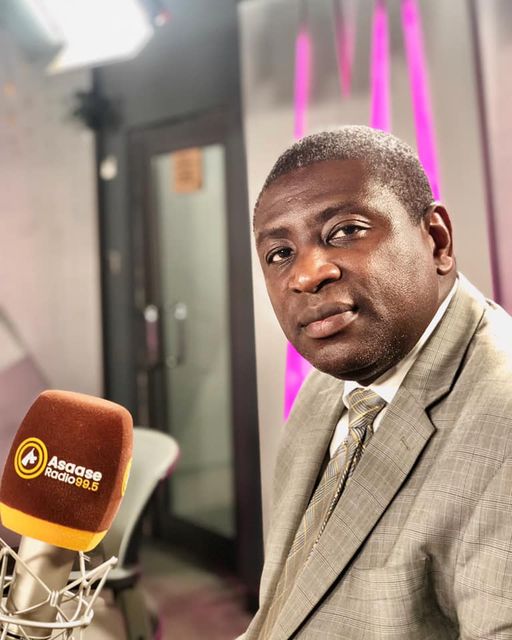

Energy analyst Kwadwo Poku says government’s projected US$250 million savings from renegotiated PPAs should not be celebrated as a major achievement, arguing that the situation reflects long-standing energy sector mismanagement stretching back more than 15 years.
Speaking on the Asaase Breakfast Show on Thursday (20 November), Poku said Ghana should never have reached a point where renegotiations became necessary.
“You sign agreements with private investors with the expectation that you can pay them,” he said. “If you can’t pay and must renegotiate, it shows deep structural problems. This shouldn’t be praised as success.”
ECG Efficiency, not cash waterfall, is driving the gains
Poku challenged recent claims that the cash waterfall mechanism is responsible for ECG’s improved revenue flow.
“The cash waterfall only works if ECG collects the money in the first place,” he said. “It distributes what comes in—it doesn’t generate the revenue. ECG’s improved mobilization is what made the numbers rise, not the mechanism itself.”
He said the public must understand that the mechanism is a “sprinkler system”—useful only when the inflow is strong.
A history of debt accumulation
Poku said Ghana’s energy debt crisis predates recent governments, arguing that the issues trace back at least 15 years.
“The indebtedness has always been there,” he said. “What we must avoid going forward is repeating the same cycle—building debts and renegotiating out of them.”
Post-IMF future requires discipline
With Ghana expected to exit its IMF programme in 2026, Poku warned that the sector must adopt strict financial discipline.
“When we exit IMF, our budgets must prioritise debt reduction,” he said. “If we return to heavy borrowing and loose spending, the energy sector will fall back into crisis.”
He added that the bright spots in the budget must be backed by credible long-term policies, “not short-term fixes.”
Source: asaaseradio.com