

The law looks settled. Until power feels watched. Then interpretation begins to bend. Suddenly, what once worked becomes questionable, and institutions built for scrutiny find themselves under scrutiny instead.
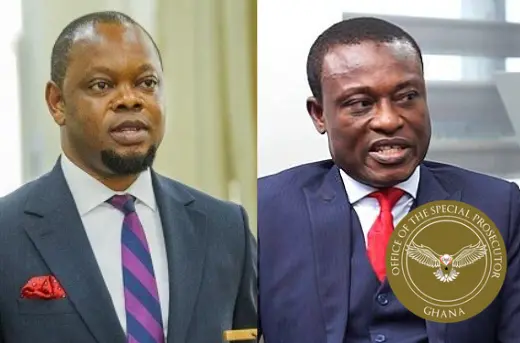
At the center is Srem Sai, now serving as Deputy Attorney General, advancing arguments that the Office of the Special Prosecutor cannot prosecute without authorisation from the Attorney General.
On paper, it sounds tidy. The Constitution vests prosecutorial authority in the Attorney General. No ambiguity. No duplication. A single gatekeeper ensuring legal order remains intact and controlled.
But governance is not lived on paper alone. The Office of the Special Prosecutor was created precisely because that centralised authority had lost public trust in politically exposed investigations.
Its purpose was clear. Step outside influence. Investigate power without fear. Prosecute without waiting for permission from the very structure it may need to examine.
Now that independence is under threat.
If the Deputy Attorney General’s position holds, the Special Prosecutor becomes subordinate in practice, forced to seek approval before acting. A watchdog tied to a leash held by the system it watches.
That raises a troubling question about accountability.
How does the Special Prosecutor investigate government appointees if the Attorney General, also a political appointee, controls prosecutorial consent? The conflict is not theoretical. It is immediate and structural.
Supporters of this view will argue constitutional supremacy must prevail. That no institution, however noble its purpose, can operate outside the clear authority granted to the Attorney General.
Yet timing complicates this argument.
The Office of the Special Prosecutor has operated under this same constitutional arrangement for years. Its mandate did not suddenly change. Its tensions with the Attorney General are not new discoveries.
So why has this become urgent now?
Under the administration of John Dramani Mahama, this constitutional question is rising with fresh intensity, forcing many to look beyond doctrine into motive and political calculation.
Because accountability shifts when control shifts.
If prosecutions depend on the Attorney General’s approval, investigations into powerful figures may slow, stall, or quietly disappear. Independence becomes conditional, shaped not only by evidence but by institutional permission.
That is where public suspicion begins to grow.
Is this a genuine constitutional correction, long overdue and finally addressed? Or is it a convenient tightening of control at a moment when scrutiny of power feels increasingly uncomfortable?
The law may soon provide answers.
But until then, one question hangs heavily over the debate, refusing to go away. When the system begins to restrain the institution meant to investigate it, what exactly is it afraid of?