

On Tuesday, November 11, 2025, Asanteman quietly reached one hundred and one years since the return of Otumfoɔ Akwasi Agyeman Prempeh I (Kwaku Dua Asamu) from exile. The date passed without major public events, yet the history behind it still carries great weight, especially for those who follow the story of the Asante nation.
Historical records show that on Tuesday, November 11, 1924, Prempeh I arrived at the Takoradi Harbour at around 5 PM. He came by ship after spending twenty eight years in exile. Once he stepped onto the harbour, he boarded a special train arranged to take him to Kumase.
The train made a significant stop at Sekondi. Thousands of people had gathered there to welcome him. Representatives from the Asante Kotoko Society, the Aborigines Rights Protection Society (ARPS), the Congress of British West Africa, and chiefs from the Western Province were all present. Their presence showed the deep respect many Africans held for him. At that time, many saw him as an important symbol of African resistance and a leader who had stood firm against British rule.
Prempeh I was exiled after the British deposed him on January 20, 1896. His twenty eight years away from his people were spent in three locations: one year in Elmina in the Gold Coast, three years in Freetown in Sierra Leone, and twenty four years in Mahé, Victoria, in the Seychelles Islands.
History across the continent shows that many African rulers exiled by colonial powers never returned home. Samori Touré died in Libreville in Gabon. Mogo Naba Wobogo of Mossi Wagadugu died at Zongoiri near Bawku while fleeing French forces. Kabaka Mwanga of Buganda and Omukama Kabalega of Bunyoro both died in the Seychelles after long years in exile. Gbehanzin of Dahomey died in Algiers, Algeria. Prempeh I’s return in 1924 therefore stands out as one of the few cases where an African king came back to his people after such a long exile.
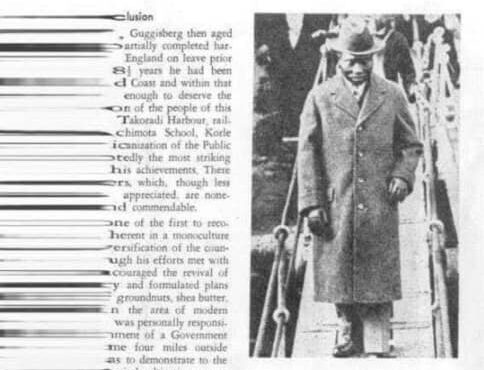
A known photograph from that period shows him disembarking at Liverpool after arriving from Bombay in September 1924, before boarding another ship for the final journey to Takoradi.
He reached Kumase on Wednesday, November 12, 1924. His return restored a leadership space that had been empty for almost three decades. It also helped rebuild confidence among his people and reestablished the traditional structures that had been disturbed by colonial actions.
Although there was no major commemoration this year, the passing of 101 years remains an important reminder of a turning point in Asante history. It continues to show the resilience of the Asante Kingdom and the determination of its people to hold on to their identity in difficult times.