
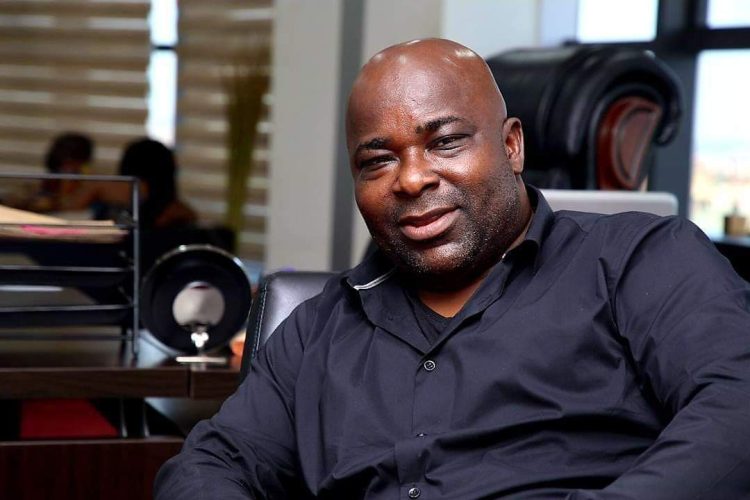

The Member of Parliament for New Juaben South, Michael Okyere Baafi, has strongly defended the government’s flagship industrialisation policy, insisting that recent audit findings suggesting financial irregularities under the One District One Factory (1D1F) initiative are “misleading” and fail to reflect the programme’s actual structure.
Speaking on the Asaase Breakfast Show on Friday (20 March), Baafi—who previously served as Deputy Minister of Trade and Industry—maintained that while the Minority fully supports accountability, the conclusions drawn by the Auditor-General of Ghana regarding alleged “fictitious transactions” and “deliberate diversion of funds” are questionable.
Baafi emphasised that the Minority is not opposed to investigations or sanctions where wrongdoing is proven.
“We believe in accountability… if anybody misbehaved or diverted public funds, those people should be prosecuted,” he stated.
However, he argued that the audit report does not accurately reflect the operational realities of the 1D1F financing model and may have misinterpreted key transactions.
How the 1D1F financing model works
According to Baafi, the 1D1F initiative was designed as a private sector-led industrialisation policy, aimed at transforming Ghana from a service-driven economy into a manufacturing hub.
He explained that:
- Businesses (both new and existing) apply for financing through participating commercial banks
- Government does not directly disburse loans
- Instead, government provides interest rate subsidies—covering about half of the interest on loans approved by banks
- All payments are processed through the Bank of Ghana and the Controller and Accountant-General’s Department
“This was always budgeted, approved by Parliament, and executed through state institutions. So how does that become illegal?” he questioned.
‘No loans, no subsidy’ – Baafi explains disputed transactions
Addressing the core audit concern involving about GHC 89.4 million, Baafi clarified that the issue stems from loans that were never disbursed.
He explained that some financial institutions did not ultimately approve or release loans to certain 1D1F companies.
He added that because no loans were disbursed, no interest obligations arose.
“If no loan was given, there is no interest to subsidise. So how can there be a fictitious transaction?” he argued.
Baafi suggested that auditors may have interpreted the initial request and approval process as completed transactions, even though the final stage—loan disbursement—never occurred.
The MP welcomed the referral of the matter to Parliament’s Public Accounts Committee, expressing confidence that a detailed review will clarify the discrepancies.
“We are sure that when the committee does its work, the truth will come out,” he said.
Beyond the audit controversy, Baafi also addressed concerns about the sustainability of the 1D1F model, particularly given high commercial lending rates—sometimes exceeding 30%.
He defended the subsidy framework as necessary to stimulate industrial growth, arguing that no country achieves advanced economic status without deliberate investment in manufacturing.
“Every developed country—whether the US, UK or China—got there through industrialisation,” he noted.
Minority stance on sanctions
Baafi reiterated that the Minority would support any punitive measures if investigations uncover genuine wrongdoing.
“If anyone diverted funds, they should be prosecuted. We stand for that,” he stressed.
The MP also raised concerns about the current status of the 1D1F initiative, claiming that many of its operations have been halted following a policy shift toward a proposed 24-hour economy model.
Despite the controversy, Baafi insisted the core vision of 1D1F remains valid, describing it as a critical pathway to job creation and economic transformation.
Source: asaaseradio.com