
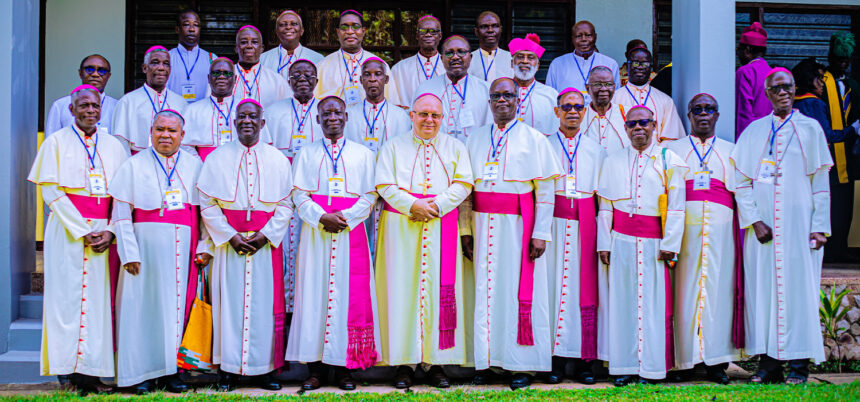

The Ghana Catholic Bishops’ Conference (GCBC) has called for a comprehensive review and audit of the country’s curriculum development processes following the inclusion of LGBTQ-related content in a Senior High School teacher’s manual.
In a press statement issued on Friday, 16 January 2026, the Bishops described the development as “intentional” and deeply troubling, warning that it exposed systemic weaknesses in oversight, consultation and value alignment within the education sector.
“We call for a comprehensive review of curriculum development and editorial processes, with particular attention to transparency, accountability, and value alignment,” the statement said.
The GCBC was reacting to public controversy over a Physical Education and Health teacher’s manual for Year Two Senior High Schools, which contained content on gender identity and sparked widespread public outrage.
While welcoming the decision by the National Council for Curriculum and Assessment (NaCCA) to withdraw the material and issue a revised manual, the Bishops said the incident pointed to deeper structural problems that required urgent attention.
“Nevertheless, we remain convinced that this incident reveals deeper weaknesses in oversight, consultation, and value alignment within curriculum development processes,” the statement noted.
According to the Bishops, the content in question was inconsistent with Ghana’s “cultural, biological, and moral understanding of the human person.”
The Conference said it has prepared a detailed position paper on the matter, which will be formally submitted to the Government, NaCCA, the Ministry of Education and the Ghana Education Service.
As part of its recommendations, the GCBC proposed regular stakeholder dialogue involving parents, teachers, religious bodies, traditional authorities and education experts. It also called for the establishment of ethical oversight committees to vet educational materials that deal with sensitive issues such as personal identity, relationships and sexuality.
The Bishops commended Professor Godfred A. Bokpin and Mr. Moses Foh-Amoaning for their public advocacy on the issue, saying their calls for a formal apology and an independent review reflected the concerns of many Ghanaians.
“Public trust in education depends on transparency, accountability and fidelity to constitutional and moral principles,” the statement emphasised.
The Conference stressed that education must go beyond the transmission of skills to include the formation of upright citizens guided by conscience and committed to the common good.
Source: asaaseradio.com