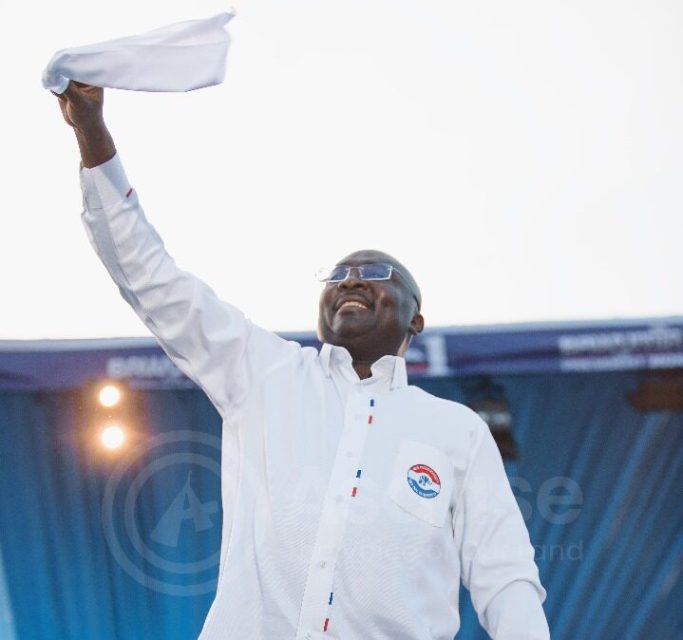

Former Vice-President Dr Mahamudu Bawumia accounted for more than half of all media coverage during the New Patriotic Party’s presidential primary campaign period, according to a new study by researchers at the University of Media, Arts and Communication (UNIMAC).
The study, led by Dean of Journalism and Media Studies Prof Etse Sikanku, analysed media narratives around the contest and found that Bawumia received the largest share of exposure across major media platforms, followed closely by Kennedy Agyapong.
Speaking on the Asaase Breakfast Show on Friday (30 January), Sikanku said the dominance likely reflects incumbency advantage, higher name recognition and the newsworthiness of campaign activities rather than deliberate media bias.
“If your campaign has more events that are considered newsworthy, the media will naturally cover them,” he explained.
Despite the imbalance in volume, the study found that the overall tone of coverage across candidates was largely neutral.
Kennedy Agyapong’s mentions, for instance, were described as “overwhelmingly neutral,” with minimal positive or negative framing — a pattern Sikanku said suggests improving professionalism within mainstream media.
“The differences in tone weren’t that great. Most of the coverage was neutral, which means the media tried to be fair,” he noted.
The research also found that reporting was heavily political and strategy-driven, with many stories framed around campaign tactics, polling strength and electability rather than substantive policy issues.
Such “horse-race” coverage, he warned, could limit deeper public understanding of candidates’ ideas and governance plans.
“We saw a lot of strategy and competition stories, but less in-depth explanatory reporting on policy,” Sikanku said.
The study further evaluated how candidates were portrayed on leadership traits such as humility, honesty, competence and ability to unify the party. On several of these indicators, Bawumia scored highest in media narratives.
Sikanku said these perceptions matter because they shape how delegates and voters assess credibility and readiness for office.
“Media exposure contributes to how people evaluate a candidate’s competence and leadership qualities,” he explained.
He added that improving issue-based and policy-centred journalism would strengthen democratic decision-making, particularly as Ghana approaches future elections.
Source: asaaseradio.com