

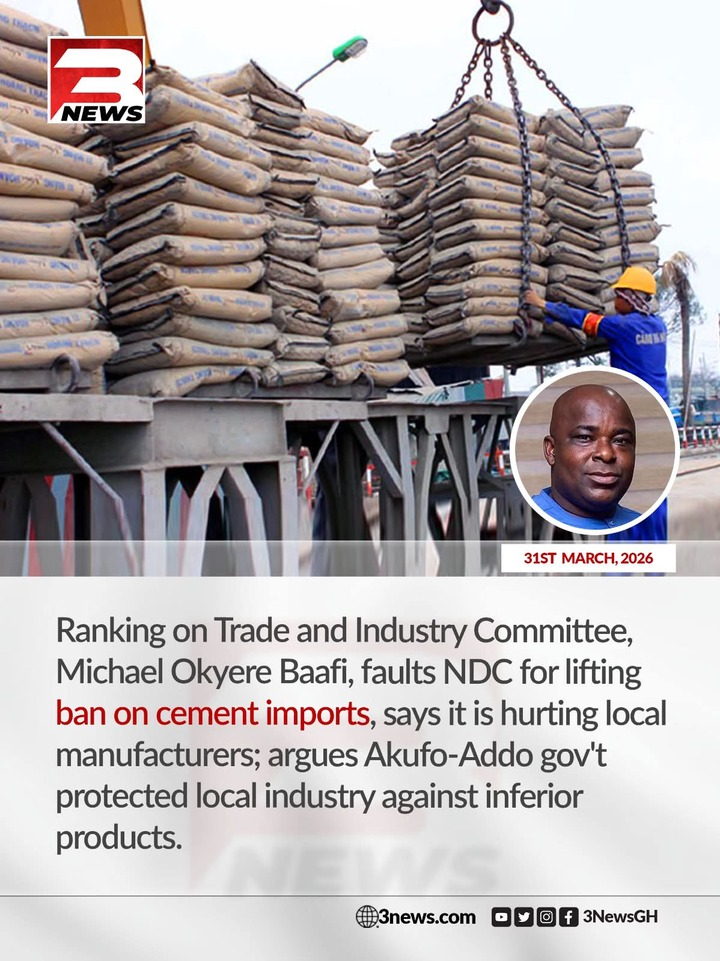
For thousands of Ghanaian workers, this is not just about policy—it is about their livelihoods. Baafi argues that by opening the doors to cheap, imported cement, the government is deliberately undermining companies that have invested millions in Ghana.
View pictures in App save up to 80% data.A Death Sentence for Local Jobs
According to Michael Okyere Baafi, the move to allow more cement imports is a direct slap in the face to Ghanaian business owners. He points out that local factories are already fighting an uphill battle with high utility costs, fuel prices, and the rising cost of production.
“How can we claim to support local industry while doing everything possible to collapse it?” Baafi asked during a recent parliamentary session. The Minority maintains that the government is choosing foreign interests over the Ghanaian worker, and they are demanding an immediate reversal of the decision.
The Real Impact on You
The government, however, often defends these imports by claiming they are necessary to force down the price of a bag of cement for the average Ghanaian building a home. But the Minority is calling this a “deceptive excuse.” They argue that once local factories are pushed out of business, these same foreign suppliers will hold the market hostage and charge whatever prices they want.
It is a tense standoff. Construction companies are now caught in the middle: do they buy the cheaper, imported cement and help kill off local industry, or do they pay more to support “Made in Ghana” products?
What Do You Think, Ghana?
This is the big question for everyone in the construction sector today:
Should the government protect local manufacturers even if it keeps cement prices high?
Or is the Minority just playing politics with a decision that could actually make housing more affordable for the common person?