
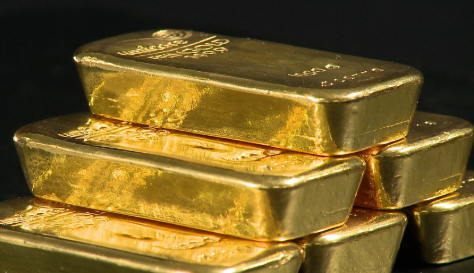

The Bank of Ghana reported that its gold reserves dropped from 37.1 tons to 18.6 tons in the fourth quarter, prompting public concern over the disposition of these assets.
The Governor has since clarified that this sale was part of a planned asset reallocation strategy, aimed at reducing gold’s share in gross international reserves from an anticipated 38% to below 20%.
The proceeds from this transaction were used to diversify into other foreign assets, which are expected to generate interest income, as gold itself does not yield returns when held.
The decision to rebalance holdings in gold to other foreign assets appears prudent. Over the past year, gold prices have increased significantly; however, they have also exhibited notable volatility.
For example, the CBOE Gold Volatility Index (GVZ) has surged by 88.36% in just the last three weeks. The underlying objective to reduce overall risk within foreign reserve portfolio (vega) is well-founded, especially considering the heightened exposure to gold price volatility.
If the main aim was to limit possible drops in gold prices, using a mix of risk management tools could have offered stronger downside protection. However, this approach would also have reduced portfolio returns, as option premiums tend to be costly when an asset price becomes volatile. Looking back, delaying the portfolio rebalancing into the new year could have resulted in an extra $400 million in profit from what was sold.
Because of the timing, these gains were not realized—although the outcome could have been negative as well. This missed opportunity highlights the trade-off between reducing price volatility and selecting assets that offer more consistent returns.
Although the previous explanation is reasonable, I suspect there might be another underlying reason. In addition to portfolio rebalancing, I believe the sale could have been strategically timed to convert mark-to-market gains into realized gains before the year end, possibly to counterbalance previous losses from open-market operations ahead of annual financial reporting. I remain interested in seeing how much the bank’s government securities holdings have grown over the past year.
In my assessment, the primary focus should not be on the reduction in gold holdings. Rather, the key takeaway from the report is that reserves have increased by only $4.7 billion compared to the closing balance of the previous year. About $1.7 billion of this rise is due to the increase in gold prices, while further gains have come from non-dollar holdings that have risen in value compared to the US dollar.
After adjusting for price changes, this growth is underwhelming, despite trade and current account balances increasing by $10 billion and $6.5 billion respectively over the past year. Based on these figures, one would expect reserves to reach at least $17–19 billion, as opposed to the reported $13.8 billion.
Some argue that if the Real Effective Exchange Rate had not risen—resulting in $2 billion in added import expenses and reduced remittances—foreign reserves might have climbed to $21 billion. This would have covered nine months of imports instead of just 5.7 months.
In my view, this is a missed opportunity, as the $7 billion gap reflects assets depleted to support the recent value of the currency. Considering the environmental cost associated with gold production for export, which appears to significantly benefit reserves, a unique opportunity to significantly increase our reserves would, at minimum, partially offset some of this cost.
Many people ask why nations keep foreign exchange reserves. What purpose does it serve to have enough reserves to cover months of imports? What are these nations preparing for? Import cover is not an abstract concept.
Historically, foreign exchange reserves have functioned as critical economic buffers for countries. During major crises, currency crashes, or market volatility, one thing becomes apparent: the countries that weather the storm best are not always those with the greatest wealth, strongest democratic institutions, or highest efficiency.
Instead, they typically share a crucial trait—a solid stockpile of hard currency that provides stability, at least temporarily. Foreign reserves buy you time to sort yourselves out and the higher the import-cover ratio, the longer the time you get to do so. In challenging times, nations with sufficient reserves can make independent decisions; those without reserves are often told what to do.
The lesson of the value of foreign reserves was forged in crisis starting with the 1997 Asian Contagion. Thailand’s economy once flourished with its baht tied to the U.S. dollar, attracting foreign investment and boosting property values and markets. When confidence waned, traders bet against the baht, triggering aggressive currency defense by the central bank that quickly depleted reserves.
Eventually, the peg failed, the baht fell sharply, and dollar-denominated debts became unaffordable, causing widespread financial collapse. As the crisis spread, other Southeast Asian countries and later Japan and South Korea saw slumping currencies, devalued stock markets, and a precipitous rise in foreign debt-to-GDP ratios. South Korea, Indonesia and Thailand were the countries most affected by the crisis. Hong Kong, Laos, Malaysia and the Philippines were also hurt by the slump.
Brunei, mainland China, Japan, Singapore, Taiwan, and Vietnam were less affected, although all suffered from a general loss of confidence and subsidence of demand throughout the region.
Even though most Asian governments had what appeared to be stable fiscal policies, the International Monetary Fund (IMF) launched a multibillion-dollar program to help stabilize the currencies of South Korea, Thailand, and Indonesia—countries especially affected by the crisis. The aftermath of these events directly triggered the Russian debt crisis the following year.
The 1997 Asian financial crisis sent a clear warning to developing countries: avoid running short of reserves at all costs. Never again did they want to suffer the humiliation of tough IMF bailouts or let outside speculators shape their fate due to lack of funds. As a result, governments and central banks changed direction.
Most countries shifted from debt-driven growth toward exporting more than they imported, building up substantial reserves as a form of financial self-defense. These savings became huge, costly insurance policies, transforming national finances into robust foreign currency war chests alongside holdings in gold.
During periods of financial instability, it is possible for the central bank to act when investor uncertainty and increasing import costs pose a threat to economic stability. The bank may sell portions of its dollar reserves to purchase domestic currency and mitigate a rapid depreciation. It can finance critical imports such as fuel and medicine.
The central bank can reassure markets of its ability to meet short-term foreign debt, and holding reserves demonstrates this capacity, which is critical for maintaining confidence during market stress. Although these resources are finite and cannot prevent every adverse event, they enable the country to weather crises temporarily, providing invaluable time to respond effectively. This dynamic has been evident in various financial crises over the past two decades.
The 2008 financial crisis led to a shortage of global dollar liquidity, impacting banks dependent on U.S. dollar funding. Countries with large reserves like Brazil and Mexico could stabilize their economies but still suffered slowdowns; those lacking substantial reserves like Ukraine and Iceland faced currency crises and were forced into emergency actions. Following a short decline during the crisis, emerging market economies rapidly restored their foreign exchange reserves, which rose from $4 trillion to $7 trillion between 2009 and 2014, with the majority held in Asia.
This surge was mainly driven by a desire to guard against volatile capital flows, manage external debt, and maintain competitive exchange rates. A similar trend was seen during the 2013 taper tantrum and again in 2020 when the COVID-19 pandemic disrupted global trade and spurred investors to seek safety in dollars. Central banks utilized their reserves to avert economic collapse; countries lacking adequate reserves, such as Sri Lanka and Ghana, experienced significant downturns.
Building these financial “war chests” comes at a cost—countries often must run trade surpluses and limit domestic consumption and wages, effectively exporting goods and labor in return for foreign assets.
When a government raises foreign currency through borrowing at elevated interest rates and maintains these funds as reserves in low-yield assets such as US Treasuries, it incurs negative carry costs to uphold liquidity and credibility—effectively paying for financial insurance. In Ghana, the latest cost of accumulating recent reserves has been environmental degradation.
If we reach the end of this gold bull market with little to show for it, it will be disappointing. I hope the central bank will reconsider its strategy and focus on building reserves over the unrealistic pursuit of a strong currency. The drive for a robust currency is causing imbalances, putting pressure on cocoa and the broader agricultural sector.
Hidden within the same report was the revelation that government revenue and capital expenditure by the end of last November fell well short of projections. That topic deserves its own discussion, but for now—as always—I wonder, what do I really know?