
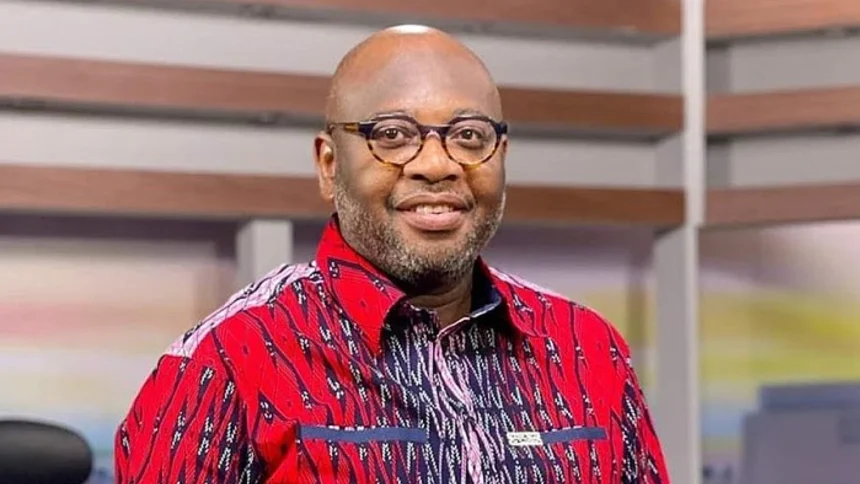

If Dr. Randy Abbey had not been appointed by President John Mahama as the Chief Executive Officer of COCOBOD, the Ghanaian public might never have discovered how profoundly hollow his moral posturing truly was. Power, it is often said, does not corrupt; it merely reveals. And in Randy Abbey’s case, power has pulled back the curtain with brutal clarity.
For years, he occupied the lofty moral high ground as host of Good Morning Ghana on Metro TV. From that influential platform, he spoke with unrestrained confidence, dissecting the conduct of politicians, questioning their integrity, and casting himself as a fearless defender of the public purse.
He lectured endlessly about probity, accountability, and the sacred duty of public officers to separate personal interest from state responsibility. To many viewers, he appeared principled, incorruptible, and morally superior to the very political class he so passionately condemned.
But rhetoric, no matter how eloquent, is cheap when it is not tested by responsibility. Once entrusted with executive authority at COCOBOD, Dr. Randy Abbey has proven to be far worse than the politicians he once demonized.
The illusion collapsed the moment he confused public office with personal entitlement and state resources with private convenience. The transformation from loud critic to reluctant subject of accountability has been swift and deeply disappointing.
Nothing illustrates this betrayal of principle more starkly than his decision to deploy COCOBOD’s Legal Department in pursuit of a personal defamation suit.
A man who once warned against the reckless bleeding of the public purse has now been exposed as someone willing to dip his hands into it for personal benefit. This is not an error of judgment; it is a fundamental failure of character.
Why should a public institution, funded by the sweat of Ghanaian taxpayers, be turned into a private law firm for the personal grievances of its CEO?
What possible justification exists for converting a state agency into a weapon against critics? These are questions Dr. Abbey himself would have thundered from the studio had another public officer dared attempt such an act.
And therein lies the tragedy and the hypocrisy.
The court’s dismissal of the case only affirmed what had already become painfully obvious, that the moral purity Dr. Abbey advertised for years was largely performative.
When stripped of the microphone and placed behind the desk of authority, the principles evaporated. The standards he imposed on others suddenly became inconvenient when applied to himself.
The uncomfortable truth is that you people were not as good as you made Ghanaians believe.
The difference between you and the politicians you vilified was not morality, but proximity to power. Once power came, the restraint disappeared. The discipline vanished. The respect for public resources collapsed.
This is once again a sobering reminder that some media activists do not oppose bad governance because they are virtuous, but because they are excluded. Once included, they replicate, and sometimes exceed, the very abuses they once condemned.
Dr. Randy Abbey’s issues have proved my long-held principle, that the loudest critics of power are not always its best custodians.
The true test of integrity is not how fiercely one speaks against abuse, but how carefully one behaves when authority is finally placed in one’s hands.