
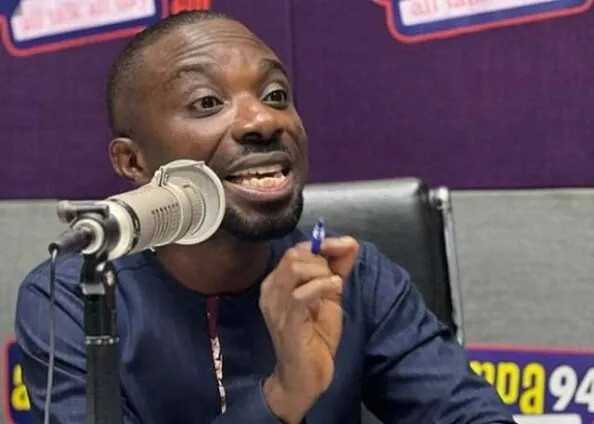

Kay Cudjoe has expanded his canvas. Part One prosecuted COCOBOD. Part Two prosecutes the entire Republic. By the time he gets to Part Seven, one suspects he will have implicated the Atlantic Ocean. The ambition is impressive, but as Dennis Miracles Aboagye has pointed out in a blistering exposé on Facebook, the evasion is now institutional.
In this second installment, longer and more dramatically scaffolded than the first, Kay Cudjoe has managed something genuinely remarkable. He has written about pensioners in Mankessim, mid-sized banks in Accra, warehouse supervisors, and the IMF. He has talked about sovereign restructuring and the fiscal destiny of the Republic. Yet, through thousands of words, he has still not written a single sentence explaining why the Ghanaian cocoa farmer earns less per bag today under this NDC government than he did under the NPP administration being prosecuted.
The DDEP Argument Exposed
Codjoe’s Part Two makes a sweeping claim: that COCOBOD’s debt under the NPP was the weight that tipped the sovereign scales toward the Domestic Debt Exchange Programme (DDEP). This is not historical analysis; it is “COCOBOD-washing” a national crisis to avoid a government-level conversation.
Miracles Aboagye correctly notes that Ghana’s fiscal crisis was a broad storm with many drivers: an energy sector debt exceeding US$7 billion, a financial sector bailout costing over GH¢21 billion, and the global shock of COVID-19. To suggest that jute sack contracts at COCOBOD triggered the DDEP requires a level of forensic selectivity that only a partisan writer could provide. The DDEP was not triggered by procurement anomalies; pinning it to COCOBOD’s bond schedule is a desperate attempt to shield the current administration from its own policy failures.
The Pensioner vs. The Farmer
Codjoe introduces a pensioner in Mankessim whose bond coupons were deferred. It is a genuine human story, but Miracles introduces a more foundational character: the farmer in Sefwi. The farmer in Brong-Ahafo who wakes before sunrise to tend the pods this entire industry depends upon.
That farmer is not a rhetorical device; he is the reason COCOBOD exists. Today, under the NDC government Kay Cudjoe is carefully avoiding, that farmer earns less per bag than before. The pensioner’s suffering was born of a national crisis across many years. The farmer’s suffering is born of a specific decision made by this NDC government in this specific moment. Codjoe chose the pensioner because it fits his narrative; Miracles chooses the farmer because he is the victim of the people currently in power.
The Restructured Inheritance
The most inconvenient truth exposed by Miracles is that the NDC did not inherit a “raw” debt architecture. Because of the DDEP, they inherited a restructured balance sheet. Maturities were extended, coupons were reduced, and the near-term pressure was made “breathable” by the very program Codjoe now uses as a weapon.
With that restructured runway and the full benefit of reduced repayment pressures, the NDC still found it necessary to cut the farmer price. This is not “inherited pressure.” This is fresh policy. If the DDEP gave the NDC space, and they used that space to reduce what the farmer earns, then who exactly was the restructuring protecting? It certainly wasn’t the man in the buying centre.
Rhetoric Running from Truth
We are only two parts into a seven-part series. The geographic scope is growing, and the emotional palette is widening to every corner of the Republic. Yet, the silence on the farmer’s price cut grows right along with it. At this rate, by Part Seven, Kay Cudjoe will have prosecuted every institution in the state except the one that actually reduced the farmer’s income.
A forensic series that expands its frame every time it approaches the present crime is not journalism closing in on the truth. It is rhetoric running from it. As Miracles Aboagye puts it, the farmer is still at the buying centre, still earning less, and still waiting for just one sentence of honesty from the man writing seven parts about the institution supposed to serve him.