

The sprawling construction sites across 111 districts were meant to be symbols of hope. Today, they have become the latest battleground in a fierce political war of words.
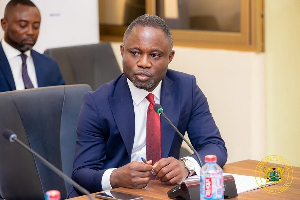
In a move that has left many political observers scratching their heads, the Minister for Health, Kwabena Mintah Akandoh, has come out swinging against the very projects meant to bridge the healthcare gap in our rural communities. He calls it a trap. He calls it a slogan. But is it? Or is this simply a case of a new administration struggling to wear the heavy, visionary shoes of its predecessor?
The “Trap” Argument
Mr. Akandoh is not mincing words. He alleges that the ambitious Agenda 111 project was nothing more than a clever political snare set by the previous NPP administration. According to him, the project lacked dedicated funding from the start. He points to the $36 million spent on design and consultancy as a “waste,” suggesting that these funds would have been better served patching up old, crumbling wards in existing hospitals.
His narrative is simple: the NPP started what they knew they couldn’t finish just to win votes.
Facts on the Ground
But let us look at the facts with a bit more objectivity, shall we? One cannot ignore the sheer audacity of the vision. For decades, Ghana’s healthcare system has been centered in the big cities—Accra, Kumasi, and Tamale. The NPP’s Agenda 111 was the first time any government dared to say that a mother in a remote district in the Oti Region deserves the same surgical theatre as a mother at Korle-Bu.
Construction is not a magic trick. It is a process. To label a project “stalled” or “politically motivated” simply because it didn’t finish within a tight election cycle is a bit like blaming a farmer for his crops not growing in a week. Real development takes time. Secured funding in a global economy is fluid, but the commitment to break ground and stay on site is a testament to a party that thinks about the next generation, not just the next election.
Ready for Use: The Low-Hanging Fruit
While the Minister paints a picture of doom, the reality on the ground tells a different story. Several of these “traps” are actually nearing the finish line, requiring only a final push of administrative will and a bit of equipment to open their doors to the suffering masses.
In the Upper East Region, for instance, the hospital projects in Paga and Garu are reported to be at advanced stages. In Paga, the superstructures are standing tall, with external works like drainage already 70 percent complete. Over in Garu, work has hit the 85 percent mark, with wiring and internal road networks almost finished.
These aren’t slogans. They are bricks, mortar, and zinc. If the government truly cares about the health of the people in Kassena Nankana West or the Garu District, they would stop the “unrealistic” talk and focus on the small stretch of road left to travel. These facilities are nearly ready to take the pressure off crowded polyclinics. To stall them now over “funding questions” feels less like fiscal responsibility and more like a deliberate attempt to let a good vision rot just because they didn’t think of it first.
The Credibility Gap
When the Minister calls it a “political slogan,” he forgets that every major transformation in Ghana’s history started with a bold claim. Whether it was the Akosombo Dam or the Free SHS policy, critics always shouted “no funding” and “political gimmick.”
The NPP has consistently shown a knack for big-picture thinking. By initiating Agenda 111, they moved the conversation from “we can’t afford it” to “how do we make it happen?” If the current administration finds the shoes too tight, the answer shouldn’t be to throw the shoes away and leave the people walking barefoot.
A Financial Burden or a Life-Saving Investment?
The claim that $36 million for design is excessive is a point for debate. However, any seasoned builder will tell you that a building is only as good as its blueprint. You cannot build 111 world-class hospitals with sketches on a napkin. These are specialized facilities meant to last 50 to 100 years.
If this is a “trap,” then it is a trap of excellence. It is a challenge to any succeeding government to maintain a high standard of care for the Ghanaian people. To call it a “financial burden” is to put a price tag on the lives of those who would have otherwise died from lack of a nearby hospital.
The Verdict
Ghanaians are discerning. They see the blocks being laid. They see the cranes in districts that have never seen a paved road, let alone a modern hospital. While the Minister plays the blame game, the ghost of the previous administration’s ambition continues to haunt those who prefer small, incremental changes over bold, sweeping progress.
The NPP didn’t just give us a slogan. They gave us a roadmap. It is now up to those in power to prove they have the political will to drive us to the destination, rather than pulling over at the first sign of a pothole to complain about the car.Agenda