
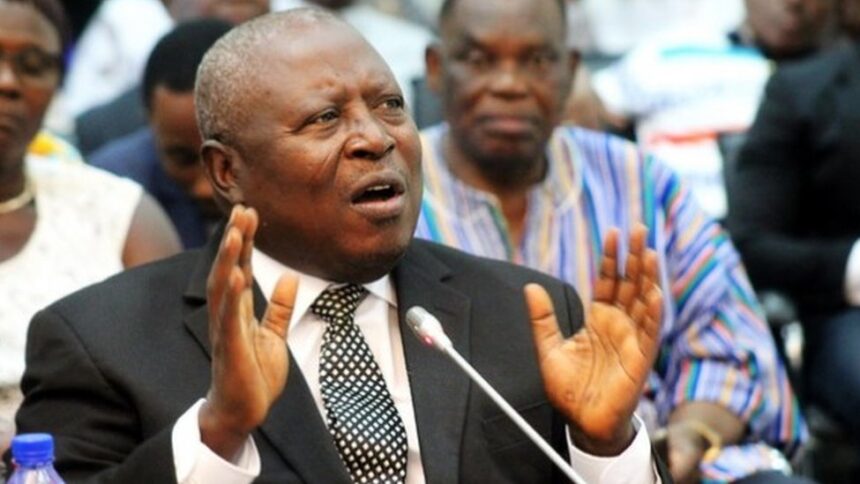

Former Special Prosecutor Martin Amidu has sharply criticised the Attorney-General for failing to file a defence within the stipulated time in a constitutional case challenging the prosecutorial powers of the Office of the Special Prosecutor (OSP).
In a statement issued on 17 April 2026, Mr Amidu highlighted that the Attorney-General applied for an extension only on 8 April 2026 in the suit filed in December 2025 by Noah Ephraem Tetteh Adamtey. He suggested the Attorney-General’s Statement of Case appeared to align with the plaintiff’s position rather than robustly defending the state’s interest.
The High Court, on 15 April 2026, ruled that the Attorney-General’s Department must assume responsibility for all ongoing criminal prosecutions previously handled by the OSP. The court declared such prosecutions null and void until formal authorisation is granted, citing Article 88 of the 1992 Constitution.
Mr Amidu warned that the relationship between the Attorney-General and the OSP has broken down beyond repair. He stated that the two institutions “cannot co-exist and cooperate” effectively due to the deepening tensions over prosecutorial independence under the Office of the Special Prosecutor Act, 2017 (Act 959).
The OSP was established to investigate and prosecute corruption cases involving public officials and state assets. Sections 3 and 4 of Act 959 define its mandate and relationship with the Attorney-General.
This institutional rift directly undermines Ghana’s fight against corruption and graft. Effective prosecution of high-level cases requires seamless coordination between the two offices. The current breakdown risks delays in ongoing cases, loss of momentum in anti-corruption efforts, and weakened public confidence in the country’s ability to hold public officials accountable.
Mr Amidu maintained that the OSP does not enjoy excessive independence beyond what the law provides. He expressed concern that the dispute is eroding the framework needed for robust graft prevention.