
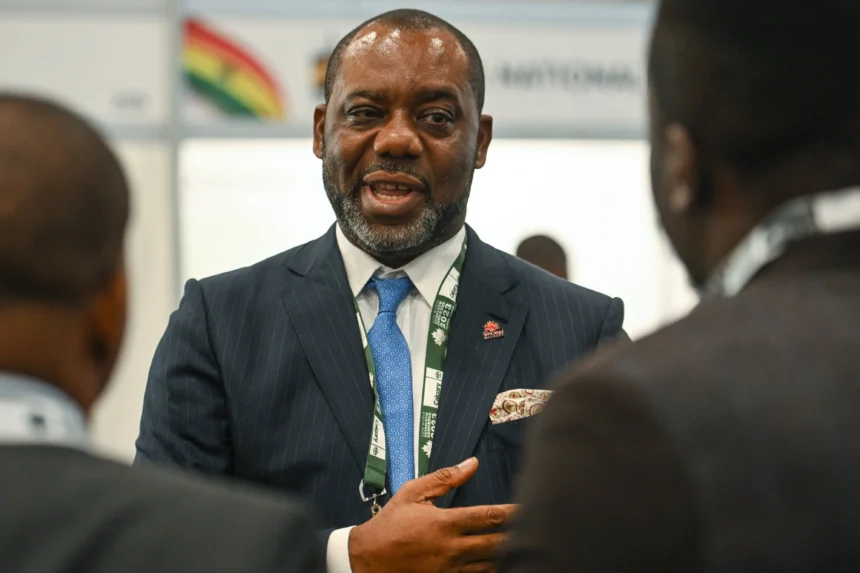

Leadership is often measured by the promises politicians make. Dr Matthew Opoku Prempeh believes it should instead be measured by the results citizens experience.
In what has become another widely discussed installment of his Execution is Leadership series on Facebook, the former Education and Energy Minister offered a compelling reflection on what separates leaders who merely occupy office from those who deliver meaningful change.
The piece, titled Authority and Expertise: The Partnership Behind Delivery, presents what many political observers describe as the leadership philosophy that underpinned Dr Opoku Prempeh’s stewardship of two of Ghana’s most demanding ministries.
Rather than portraying leadership as the ability to command, the former minister argues that genuine leadership lies in recognising one’s limitations and deliberately surrounding oneself with capable experts whose knowledge can be translated into tangible outcomes.
According to him, political authority and technical expertise are not rivals competing for influence. They are partners whose success depends on each other.
“A mandate confers authority, not expertise,” he wrote, adding that expertise without leadership is equally incapable of producing meaningful results.
For Dr Opoku Prempeh, effective governance begins when leaders abandon the misconception that occupying high office automatically makes them the most knowledgeable people in the room.
Instead, they must create an environment where experienced professionals, technocrats, policy experts and career public servants are empowered to contribute meaningfully to national development.
Drawing on his tenure as Minister for Education, he explained that many of the landmark reforms introduced under the Akufo-Addo administration were not conceived overnight after the NPP assumed office.
Rather, they were the product of years of consultation involving educationists, policy analysts, researchers and sector experts who had carefully studied Ghana’s educational challenges and proposed practical solutions.
When he assumed office, he said, he made a conscious decision not to centralise decision making around political authority.
Instead, he brought experts into the heart of government decision making.
According to him, consultation was not treated as a ceremonial exercise but became an institutional culture within the ministry, where agencies regularly reviewed performance, examined emerging challenges and refined policy interventions before implementation.
Political analysts say this collaborative style of leadership became one of the defining features of Dr Opoku Prempeh’s administration at the Education Ministry.
It coincided with some of the most significant reforms undertaken in Ghana’s education sector in recent decades, including the implementation of the Free Senior High School policy, curriculum reforms, restructuring of technical and vocational education, reforms in teacher education and a series of legislative changes aimed at strengthening the sector.
For the former minister, however, these achievements should not be credited to political authority alone.
Neither, he argues, should they be attributed solely to technical experts.
They were the result of partnership.
He describes this relationship as the “Yin-Yang of execution”, where authority creates the conditions for action while expertise determines the direction that action should take.
His reflections also draw heavily on lessons from his tenure as Minister for Energy, a sector widely regarded as one of the most technically complex areas of government.
Managing energy policy, he noted, required constant collaboration with engineers, regulators, planners, utility companies, financiers and other specialists whose knowledge no single minister could hope to possess in full.
Yet expertise alone, he observed, cannot overcome political obstacles.
Leadership must build consensus, secure institutional cooperation, manage competing interests and create the enabling environment within which technical solutions can be successfully implemented.
In his words, leadership creates the room for expertise to work, while expertise ensures that room produces meaningful outcomes.
The Facebook post has attracted widespread engagement, with many readers praising what they describe as a thoughtful and mature approach to public leadership.
Several contributors noted that the philosophy mirrors the leadership style they witnessed during Dr Opoku Prempeh’s years in government, particularly in the education sector where many of the reforms continue to shape Ghana’s educational landscape.
Others described the article as a timely reminder that effective governance is not about concentrating power in the hands of political office holders but about harnessing the knowledge of competent professionals in pursuit of national development.
The discussion comes at a time when questions of leadership, governance and public sector performance continue to dominate Ghana’s political discourse.
Against that backdrop, Dr Opoku Prempeh’s reflections offer more than a theoretical discussion on leadership.
They provide insight into the governing philosophy that informed his stewardship of two key ministries and explain why many supporters continue to regard him as one of the New Patriotic Party’s strongest performers in government.
Perhaps the most enduring message from his latest piece is that leadership is ultimately judged not by authority itself, but by the lives it changes.
Citizens, he argues, do not experience authority.
They experience better schools, improved public services, stronger institutions and policies that make a real difference in their daily lives.
It is this emphasis on delivery over rhetoric, collaboration over arrogance and results over symbolism that has earned Dr Matthew Opoku Prempeh a reputation among many political observers as a leader who understands that governance is not about knowing everything, but about bringing together the right people to achieve extraordinary outcomes.
For him, that is where leadership truly begins.
And more importantly, where lasting national development is achieved.