

The Centre for Indigenous Knowledge and Organisational Development (CIKOD) has sounded alarm over the safety of vegetables sold in Ghanaian markets, revealing that cabbage samples tested in a recent study contained pesticide residues above acceptable limits.
Speaking on Asaase Radio’s Breakfast Show, Wilberforce Laate, Head of Programmes at CIKOD, disclosed that all six cabbage samples collected from Madina Market and Agbogbloshie Market failed to meet food safety standards. Three samples were taken from each market, and none passed the residue test. Okra samples produced mixed results, with some compliant and others failing.
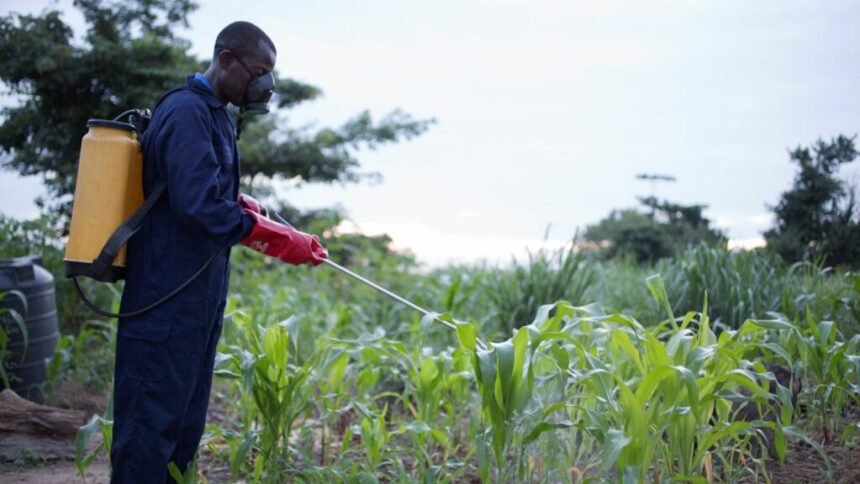
Laate explained that one of the residues detected was dimethoate, a pesticide widely used by vegetable farmers despite restrictions. He admitted that during his time as an agricultural extension officer, he had applied dimethoate himself, unaware that it was unsuitable for vegetables.
The vegetables tested were traced to farming communities across the Ashanti, Volta, Eastern, and Greater Accra regions, showing that the problem is widespread and not confined to a single location. Laate noted that consumer demand for visually attractive vegetables, particularly cabbage, has driven farmers to rely heavily on synthetic pesticides. “When consumers go to the market, they want clean cabbage without holes. Farmers are therefore tempted to use synthetic pesticides to ensure the vegetables look attractive and can be sold,” he said.
CIKOD is urging a shift towards agroecological farming systems, which rely on biological pest control methods rather than synthetic chemicals. Laate stressed that expanding agroecology is the long-term solution to protect consumers from harmful residues. “That’s why we are promoting agroecology. Once farmers adopt natural and organic alternatives, consumers will be much safer,” he added.
The findings coincide with growing food safety concerns in Ghana, with pesticide misuse or abuse posing risks to public health and undermining confidence in local produce. Experts have warned that prolonged exposure to pesticide residues can have serious health implications, including neurological disorders and cancers, making the revelations particularly alarming for households that rely heavily on cabbage and okra as staple vegetables.
CIKOD’s call adds to growing advocacy for stricter regulation of pesticide use, improved farmer education, and stronger consumer awareness campaigns. It also highlights the need for government and stakeholders to invest in sustainable farming practices that balance productivity with safety.