
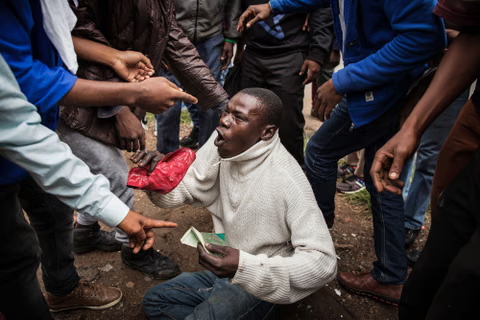

A Ghanaian tailor has been shot dead in Cape Town during violent xenophobic protests in South Africa, the Ghana High Commission has confirmed. The incident occurred on Tuesday, June 30, 2026, when anti-immigration demonstrations turned deadly across several provinces.
According to JoyNews reporting, the victim, who had lived in South Africa for nearly two decades, was killed inside his shop. He leaves behind three children, the eldest aged 10. Ghanaian authorities say arrangements are underway to repatriate the body for burial.
The protests were organised by a civic group known as March and March, led by Jacinta Ngobese-Zuma, which had set a “30 June deadline” for undocumented foreigners to leave South Africa. More than 20 civic groups staged demonstrations nationwide, including in Johannesburg’s central business district, with marches spreading across all nine provinces.
South Africa’s government deployed a R600 million ($36.4 million) security operation, cancelling police leave and placing the National Defence Force on standby. President Cyril Ramaphosa cautioned that violence “would not be justified under any circumstances,” but unrest still escalated, leaving foreign nationals exposed to vigilante attacks.
The killing of the Ghanaian tailor adds to a growing list of xenophobic incidents that have shaken South Africa in recent weeks. Rights groups have documented the deaths of Mozambican nationals in Mossel Bay and a Malawian man in Pietermaritzburg, alongside reports of widespread intimidation of migrants. At least two people had already died before the June 30 deadline, prompting several African governments to begin repatriation of their citizens.
The Ghanaian mission has assured that it is engaging South African authorities to ensure a full investigation and to support the bereaved family during the repatriation process. The tragedy underscores the vulnerability of African migrants in South Africa and the urgent need for regional cooperation to address xenophobia. With governments across the continent increasingly forced to repatriate their nationals, the crisis has become both a humanitarian and diplomatic challenge.
South Africa’s recurring waves of xenophobic violence have long strained relations with neighbouring countries, raising questions about the country’s ability to balance domestic pressures with its obligations under the African Union’s migration and human rights frameworks. The death of the Ghanaian tailor is a stark reminder of the human cost of these tensions and the pressing need for collective action to protect African migrants.