
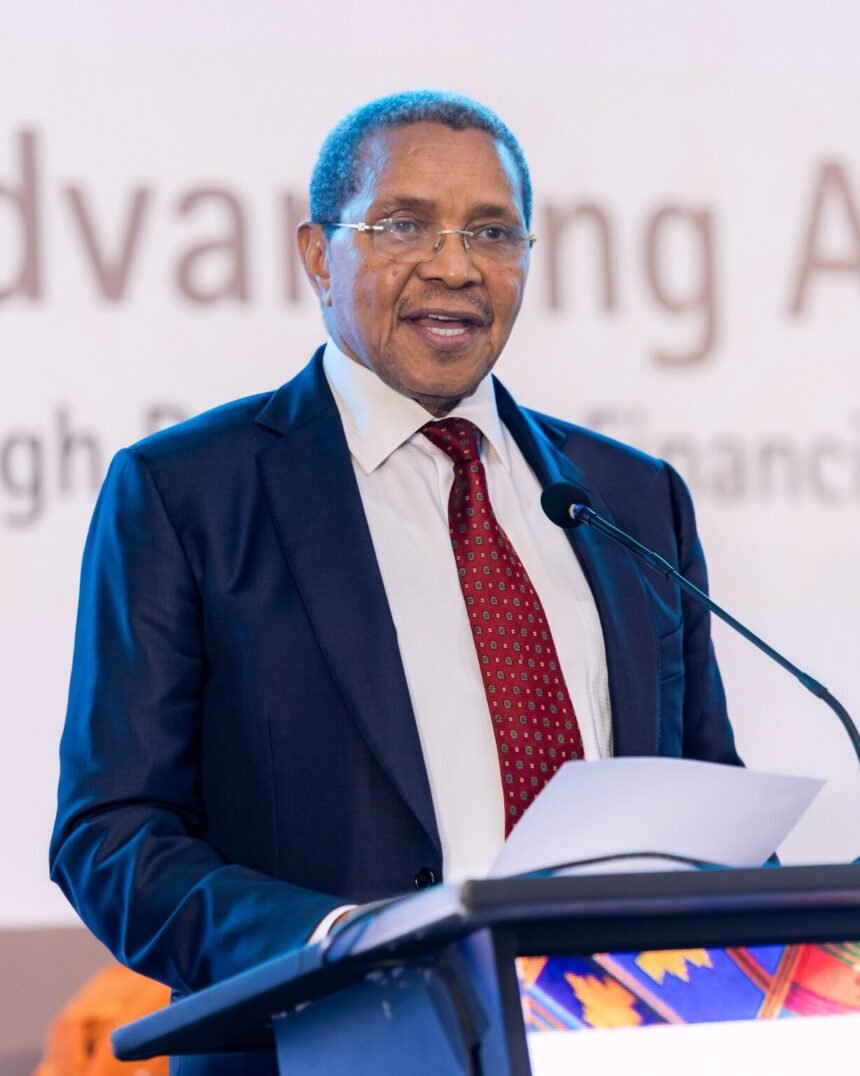

Former President of Tanzania, Dr Jakaya Mrisho Kikwete, who is also the Patron and RMNCAH and Sustainable Health Financing Champion, has warned African governments to accelerate efforts towards domestic health financing after external health assistance recorded a 40% decline.
Dr Kikwete said the drop in donor support exposes the vulnerability of African health systems that have historically relied heavily on external funding to sustain healthcare programmes.
Speaking at a high-level interactive policy dialogue on “Advancing Africa’s Health Agenda through Domestic Financing, Accountability, and Strategic Innovations” during the African Union Extraordinary Summit on Health, he said the traditional model of relying on foreign aid is no longer sustainable.
“Official economic assistance fell by 23% in 2025, and external aid for health dropped by as much as 40%. This is the largest annual decline ever recorded,” he said.
Dr Kikwete, who is the Patron and RMNCAH and Sustainable Health Financing Champion, said African countries must now strengthen domestic financing, local manufacturing capacity, and partnerships with the private sector to secure the continent’s health future.
“The message from the president is one and the same: Africa must increasingly finance, manufacture, and secure its own health future,” he said.
He said health ministers across the continent have begun responding to the funding challenge by pushing for national budgets to become the primary source of healthcare financing while developing transition plans for donor-supported programmes.
COVID-19 exposed Africa’s dependence
Dr Kikwete said the COVID-19 pandemic demonstrated the risks associated with Africa’s dependence on external suppliers for critical health products.
He recalled that African countries struggled to access vaccines and other essential supplies when wealthier countries prioritised their own populations.
“That was an important lesson. We may not be able, as individual countries, to build that capacity. But at the continental level, we can work on this,” he said.
He called for stronger support for the African Medicines Agency, the Pharmaceutical Manufacturing Plan for Africa, and the African Continental Free Trade Area to help the continent achieve pharmaceutical sovereignty.
“The African Medicines Agency, working with the pharmaceutical plan for Africa and the continental free trade area, offers the pathway to pharmaceutical sovereignty,” he said.
Accountability key to health investment
The former Tanzanian leader said increasing health budgets alone will not improve outcomes unless governments ensure resources reach the people who need them.
He said citizens judge healthcare systems by the availability of medicines, healthcare workers, and quality services rather than government spending figures.
Dr Kikwete also warned against waste within health systems, arguing that better management of existing resources could significantly improve healthcare delivery.
“There are problems of financing, but there is a lot of waste. If there is proper spending and accountability, the little that we have can have an impact,” he said.
Scorecards pushing leaders to act
Dr Kikwete highlighted the role of accountability tools such as the African Leaders Malaria Alliance (ALMA) scorecard in encouraging governments to respond to health challenges.
He said the scorecard allows leaders to track progress using indicators that show areas of success and failure, creating pressure for action.
“When leaders can see performance, leaders act,” he said.
He added that Africa must apply similar approaches across other health areas to ensure commitments translate into measurable improvements.
Source: asaaseradio.com