
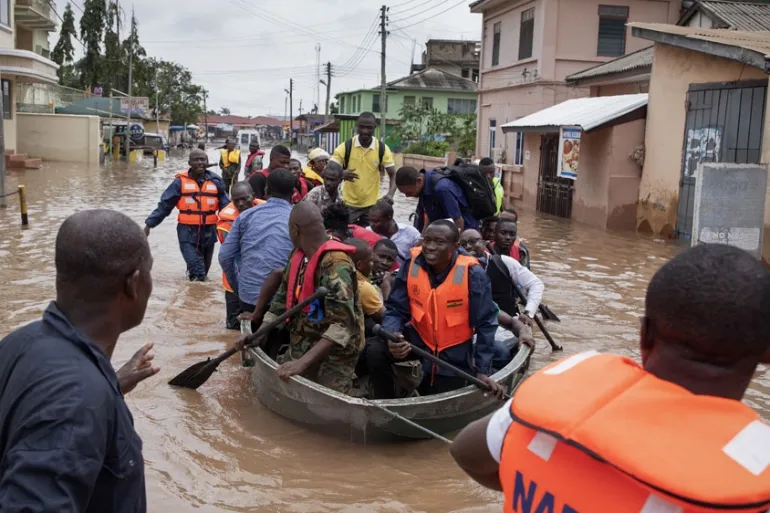

As heavy rains continue to expose Accra’s long-standing flooding challenges, environmental concerns are once again taking centre stage, with Nana Sarpong warning that the capital could face an even greater disaster if the Achimota Forest is sacrificed to urban development.
In a strongly worded Facebook post, Sarpong argued that the Achimota Forest remains one of the city’s last natural flood defences and cautioned that replacing it with buildings and concrete infrastructure could dramatically worsen flooding across several communities in the capital.
According to him, many residents wrongly believe the recent flooding represents the worst Accra can experience. However, he contends that the city has so far been spared an even greater catastrophe largely because the Achimota Forest continues to absorb significant volumes of rainwater.
“If you think today’s rain is worse, wait until the Achimota Forest is turned into another concrete jungle,” he wrote.
Sarpong warned that if development within the forest reserve continues unchecked, communities including Dzorwulu, Airport Residential Area, Roman Ridge, Abelemkpe, Achimota, Kisseman, Westlands, Haatso, North Legon and Dome could all become increasingly vulnerable to flooding.
He claimed that many individuals have already acquired parcels of land within the forest and are waiting for the opportunity to begin construction, a development he believes could have serious environmental consequences for the capital.
Beyond the Achimota Forest, Sarpong expressed concern over what he described as widespread encroachment on wetlands, waterways and Ramsar sites, areas that naturally serve as flood retention basins during heavy rainfall.
According to him, continued construction on these environmentally sensitive lands is steadily reducing Accra’s ability to manage stormwater.
He accused some politicians, traditional authorities and family heads of placing financial gain above public safety by facilitating the sale of lands that should remain protected.
“Our politicians, chiefs and family heads sell everything, even land in waterways,” he stated.
Sarpong also criticised the practice of filling lagoons and natural drainage channels with sand for construction purposes, arguing that such activities inevitably obstruct the natural flow of water to the sea.
“When it rains, you expect the rain not to find its way to the ocean,” he remarked, suggesting that many of the flooding problems experienced today are the result of human actions rather than natural causes alone.
He concluded his post by lamenting what he described as growing indiscipline in the country, insisting that ordinary citizens also bear responsibility for environmental degradation.
His comments come at a time when flooding continues to dominate national conversation following recent downpours that caused widespread disruption in parts of Accra. Environmental experts have consistently identified uncontrolled urbanisation, destruction of wetlands, poor waste management and encroachment on waterways as some of the key drivers of flooding in the capital.
While government agencies continue to implement drainage improvement projects and other flood mitigation measures, Sarpong believes lasting solutions will require stronger enforcement of environmental protection laws and a collective commitment to preserving the few remaining natural ecosystems that continue to protect the city from even greater flooding.
His warning adds to growing calls for authorities to safeguard the Achimota Forest, widely regarded as one of Accra’s most important ecological assets, before development pressures permanently alter its role in protecting the capital from flood disasters.